




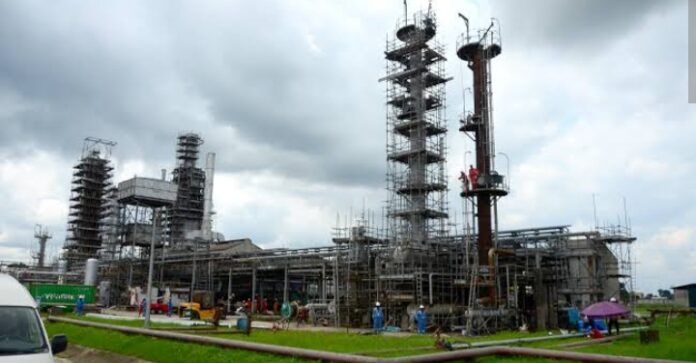
After roughly six delays, the NigerianNational Petroleum Company Limited-run refinery in Rivers State, Port Harcourt Refining Company, has once again been unable to start up.
It was noted that the Federal Ministry of Petroleum Resources and NNPC have repeatedly broken their commitments to Nigerians on the refinery, BrandSpur national news stories report.
Nigerians have been promised numerous dates by NNPC, the company in charge of all government refineries, since December 2023. The assurance was that refined products would be sold by the refinery shortly.
The NNPC’s Group Chief Executive Officer, Mele Kyari, declared unequivocally in July that the refinery would start up in early August. The same Kyari declared in 2019 that before the former president Muhammadu Buhari’s term ended, the NNPC will deliver all four of the nation’s refineries.
In a July appearance before the Senate, Kyari bragged: “I can confirm to you, Mr Chairman, that by the end of the year, this country will be a net exporter of petroleum products.
“Specific to NNPC refineries, we have spoken to a number of your committees, and it is impossible to have the Kaduna refinery come into operation before December, it will get to December, both Warri and Kaduna, but that of Port Harcourt will commence production early August this year,” he added.
But as August draws to a close, the refinery still hasn’t started up, raising questions about if this is just another broken promise from NNPC.
Citing a response to questions from The PUNCH’s correspondent on Tuesday, the NNPC stated that it was still on track—even after the early August commitment had passed.
Furthermore, in a chat that BrandSpur News was able to access, Olufemi Soneye, the NNPC spokeswoman, responded curtly: “We are on course.”
When asked if he meant the refinery would still be in operation this month, Soneye did not respond.
According to the local news brand, the NNPC said that the 210,000 barrels per day refinery had attained mechanical completion of restoration work in December.
It said that following the Christmas break of the previous year, the facility will begin refining 60,000 barrels of crude oil each day.
Kyari stated later in January that the refinery was undergoing testing and would be operational by the end of the month.
Marketers anticipated that production would start when the Shell Petroleum Development Company of Nigeria Limited finished supplying the Port Harcourt refinery with 475,000 barrels of crude oil in the second month of the year.
This occurred a few weeks after NNPC declared in January that it was looking to hire respectable and legitimate companies to manage the Port Harcourt refinery’s operations and upkeep. NNPC refrained from revealing if it has found bidders to operate the refinery.
Kyari announced in the middle of March that the Port Harcourt refinery would start up in two weeks, in April.
He made these remarks following his appearance before the Senate Ad-hoc Committee, looking at the different refinery turnaround repair projects throughout the nation: “We are serving this country with honor and dignity. And we will make sure that the promises we make on the rehabilitation of these refineries will take place.”
Independent petroleum marketers informed the Brsndspur national news brand desk as the April deadline approached that the facility would start production by the end of July.
Soneye, the Chief Corporate Communications Officer of NNPC, commented on this and stated that the only thing holding up the refinery’s operational start-up was regulatory approvals from foreign agencies.
In May, he stated: “We have said that the mechanical completion has been done and every other thing is done. There is crude oil and all the pipes are working; we are only waiting for regulatory approvals. As I said, some of our materials and the things we use have to do with nuclear, and we need the nuclear authorities to give us approval to use all those things at the site.
“And some of these approvals come from bodies outside of Nigeria. Until they give us those approvals, we can’t begin operations. We are ready to go, but if something happens without it, it will be another issue. Everything has been completed in terms of our work, and once we get those approvals, it will start operations,” he added.
The fact that Nigeria’s refineries have been abandoned for years has disappointed some Nigerians. Since then, the nation has relied on imported fuel due to a shortage of refining capacity, incurring monthly costs of up to N2 trillion.
Aliko Dangote, the president of the Dangote Group, stated that the federal government has invested $4 billion to revitalise the country’s refineries.
Speaking to a group of House of Representatives members who paid him a visit in Abeokuta on Friday, former President Olusegun Obasanjo remembered how, while he was president, Shell turned down his requests for assistance in managing the refineries, citing bad management and corruption.
Obasanjo claimed that after several Nigerians paid $750 million to take control of the refineries, his successor reversed the decision.
Also read: https://brandspurng.com/2024/08/14/pilot-allegedly-steals-helicopter-crashes-into-hilton-hotel/
He disclosed that: “I ran to him, I said, ‘You know this is not right’. He said, ‘Well, NNPC said they can do it’. I said ‘NNPC cannot do it’. I told my successor that ‘the refineries, from what I heard and know, will not work and when you want to sell them, you will not get anybody to buy them at $200m as scrap’. And that is the situation we are in.
“So, why do we do this kind of thing to ourselves? NNPC knew that they could not do it, but they knew they could eat and carry on with the corruption that was going on in NNPC. When people were there to do it, they put pressure. In a civilized society, those people should be in jail,” he added.
He informed the lawmakers that he was aware of their investigation into the NNPC’s $1.5 billion refinery expenditure in Port Harcourt. Situated in the oil-rich Niger Delta region of Nigeria, the refinery was operational from 1965 until it was abandoned for several years. The distance between the Alesa Eleme refinery complex and Port Harcourt is about 25 km.
Former vice president Atiku Abubakar, who favoured selling all government refineries, attacked the Nigerian government’s decision to obtain a $1.5 billion loan in March 2021 for the refinery’s rehabilitation and upgrading. Atiku attacked former President Muhammadu Buhari and current President Bola Tinubu for disobeying his recommendation that the refinery and other government-owned properties be sold to private parties in response to the proposal to turn the refinery up to private operators.
NNPC previously revealed that it has inked a contract with African Refinery Port Harcourt Limited for ARPHL to subscribe for 15% of the Port Harcourt Refining Company’s stock.
The agreement’s signatories stated that the Port Harcourt refinery’s capacity for refining would rise from 210,000 barrels per day to 310,000 barrels per day.
PHRC is one of the three refineries in the country that are managed by NNPC. In the meantime, the Senate has expressed concerns regarding the $1.5 billion that was authorised in 2021 for refinery renovations.
The upper house bemoaned the fact that it is: “unfair and wrong to treat government businesses or public companies as an orphan while private businesses were flourishing and thriving.”
During a meeting with industry stakeholders in Abuja, Opeyemi Bamidele, the Senate Leader and Chairman of the Senate ad-hoc Committee to examine the alleged economic sabotage in the Nigerian Petroleum Industry, raised the questions.
During the meeting, Bamidele voiced his worries about the government-owned refineries’ dysfunctionality despite investments made to perform turnaround maintenance.
However, when the refinery is finished, Nigerians hope that it will stop importing petroleum and drive down the price of petrol at the pump.
