




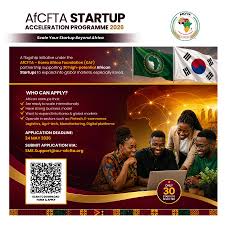
The Federal Government has announced the commencement of applications for the AfCFTA Startup Acceleration and Partnership Programme 2026, a continental initiative designed to support African startups and strengthen trade collaboration between Africa and South Korea.
The programme, coordinated by the African Continental Free Trade Area Secretariat in partnership with the Republic of Korea and the Korea-Africa Foundation, is targeted at innovative businesses operating in key sectors including fintech, digital commerce, logistics, manufacturing and agricultural value chains. Nigerian startups with scalable business models have been encouraged to apply before the May 31, 2026 deadline.
Successful applicants will receive access to business acceleration support, mentorship programmes, investment connections, market expansion opportunities and enterprise development training designed to improve cross-border trade competitiveness and innovation capacity across Africa.
Brandspur Business News Desk reports that about 30 startups from across the continent are expected to be selected for the programme as part of efforts to deepen economic integration and private-sector collaboration under the AfCFTA framework. The initiative is also expected to strengthen commercial partnerships between African entrepreneurs and Korean investors while promoting sustainable economic growth.
The Ministry of Foreign Affairs said the programme aligns with Nigeria’s broader economic agenda focused on youth empowerment, innovation-driven entrepreneurship and increased participation in continental trade opportunities. Officials noted that the initiative would provide Nigerian startups with greater exposure to international markets and strategic business networks.
Interested applicants have been advised to visit the official AfCFTA portal for eligibility requirements, application procedures and additional programme guidelines. The Ministry also urged entrepreneurs to take advantage of the initiative to position their businesses for emerging opportunities within Africa’s expanding single market economy.
