




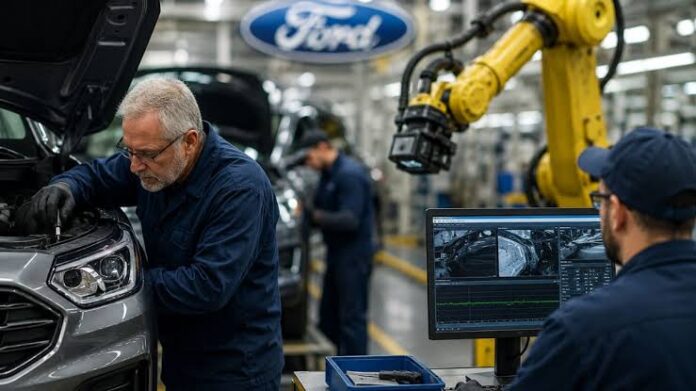
Ford has reinstated more than 300 experienced engineers after artificial intelligence systems deployed for vehicle quality inspections failed to consistently meet the company’s manufacturing standards, marking a significant shift in its approach to automation.
The US automaker said the move follows a review of its production processes, which found that AI-powered quality control tools could not fully replicate the expertise built by engineers over decades of vehicle development. The returning specialists are now helping improve inspection standards while also training AI systems and mentoring younger employees.
According to Brandspur Brand News, Ford had expanded the use of artificial intelligence across its industrial operations as part of a wider strategy to improve efficiency, reduce costs and strengthen manufacturing performance. The company also installed hundreds of AI-powered cameras across its factories to identify production defects at an early stage and minimise disruptions in the supply chain.
Company executives, however, acknowledged that the technology delivered weaker-than-expected results because it lacked the practical experience and institutional knowledge possessed by veteran engineers. They said the company’s earlier decision to rely heavily on automation overlooked the importance of retaining highly experienced personnel whose expertise could have been used to develop more effective AI systems.
Ford has since integrated those experienced engineers back into its operations, assigning them key roles in refining machine learning models, strengthening quality assurance processes and transferring knowledge to the next generation of employees.
The development comes despite the company’s continued investment in artificial intelligence across its manufacturing network. Ford maintains that AI remains an important tool for improving productivity but believes better outcomes depend on combining advanced technology with experienced human oversight.
The renewed emphasis on human expertise appears to be yielding results. Ford recently regained the top position among mainstream automakers in the United States in the latest JD Power Initial Quality Study, ending a gap that stretched back to 2010. The company attributed the achievement to broad leadership changes across engineering, manufacturing and supply chain operations, alongside the return of veteran engineers whose experience has helped strengthen product quality.
