




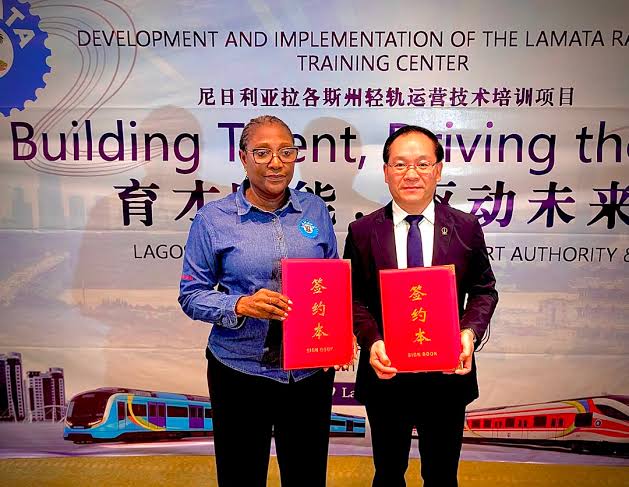
The Lagos Metropolitan Area Transport Authority (LAMATA) has entered into a partnership with China Civil Engineering Construction Corporation (CCECC) to establish a dedicated railway training centre aimed at developing skilled professionals to support the expansion and long-term sustainability of Lagos State’s rail transport system.
The agreement covers the development and implementation of the LAMATA Railway Training Centre, a project designed to strengthen technical capacity, standardise railway training and reduce the shortage of qualified professionals in Nigeria’s growing rail sector.
According to Brandspur Banking News Desk, the three-year training programme is expected to produce at least 500 railway professionals annually in specialised areas including signalling, electrification, maintenance and rail operations, while creating an internationally recognised certification system for the industry.
The initiative is intended to support the long-term sustainability of Lagos’ expanding rail network by building local expertise capable of operating and maintaining modern railway infrastructure without excessive reliance on foreign technical support.
LAMATA said the training centre aligns with broader goals of industrialisation, infrastructure development and economic growth, positioning Lagos as a future centre of excellence for railway skills development across Nigeria.
The state currently operates two rail lines and plans to significantly expand its urban rail network, with five additional lines already incorporated into its strategic transport master plan alongside a proposed monorail system, bringing the long-term vision to 11 rail lines in total.
Officials say the rapid expansion of rail infrastructure makes investment in local human capital essential to ensuring efficient operations, safety and maintenance as the network continues to grow.
The railway training centre will feature modern learning facilities, including simulators, smart classrooms and practical on-site technical training, providing structured education in railway maintenance and operational skills over a three-year period.
The programme is also expected to support employment generation by equipping Nigerians with globally competitive railway expertise. More than 400 Nigerians have already secured jobs through ongoing rail development projects linked to the initiative.
CCECC described the partnership as an important step towards strengthening technical capacity for sustainable rail transport, noting that the collaboration will help develop a skilled workforce capable of supporting Lagos’ ambition to become a leading railway hub in Nigeria and across the region.
The new training centre is expected to play a key role in supporting the continued expansion of Lagos’ mass transit system while enhancing local capacity to manage increasingly sophisticated railway infrastructure in the years ahead.
