




Dek: Malagasy Vanilla sold only to wholesalers for years, because
shipping a single pack to a shopper could cost as much as the vanilla
inside. On Temu it began selling direct to consumers at home, and now
ships to them across Europe
Malagasy Vanilla expanded beyond its traditional wholesale model to
launch direct-to-consumer sales on Temu.
For African producers, the distance between growing a world-class
product and selling it directly to global consumers has always been the
hard part. Malagasy Vanilla, a family business rooted in Madagascar’s
vanilla trade for three generations, has closed that gap — moving from
wholesale-only supply to direct-to-consumer sales across 14 European
markets through Temu’s Local Seller Program.
Malagasy Vanilla [1], a Belgian supplier of Madagascan vanilla to
European restaurants, bakeries and wholesalers, is now selling directly
to consumers for the first time after joining Temu’s Local Seller
Program in November 2025.
Direct retail had long been out of reach for specialty food businesses
like Malagasy Vanilla due to logistics costs – a single pack can cost as
much to ship as the vanilla inside it. Temu’s partnership with Belgian
postal operator Bnode changed that. Malagasy Vanilla’s domestic
shipping costs fell by nearly half, and the company quadrupled its sales
within four months on Temu. The platform now accounts for 5% to 10% of
revenue, said Belinda Rabenandrasana, co-CEO of Malagasy Vanilla.
Temu “opened a new avenue for us,” she said. “We were finally able
to explore selling to individuals.”
From Belgium to 14 markets
Malagasy Vanilla is part of Temu’s Local Seller Program, which
launched in Europe in 2024 and is active in more than 30 markets. The
program enables local sellers to scale their businesses and expand their
reach.
To support that growth, Temu connects sellers to a network of more than
150 logistics partners across Europe, including national postal
operators such as Bnode in Belgium, La Poste in France and DHL Group in
Germany, alongside regional carriers. Rather than requiring sellers to
build their own delivery infrastructure, the network gives smaller
businesses access to competitive shipping rates and operational
capabilities.
For Malagasy Vanilla, the partnership with Bnode first made
direct-to-consumer sales viable in Belgium by reducing shipping costs.
As the company grew, the same Temu-enabled logistics network helped it
expand beyond its home market.
Today, Malagasy Vanilla sells directly to consumers in 14 European
markets, among them Germany, France, Spain and Poland.
“Without Temu and its partnership with Bnode, it would have been very
difficult for a small business like ours to start selling directly to
consumers,” Rabenandrasana said. “The logistics costs are
competitive, the visibility is much stronger, and the support from the
seller team has helped us grow with confidence.”
Temu also helps sellers manage cross-border requirements, including
registration and payments under the EU’s extended producer
responsibility (EPR) system, allowing a small business like Malagasy
Vanilla to reach multiple markets and navigate each country’s rules.
A family trade in vanilla
Belinda Rabenandrasana, co-CEO of Malagasy Vanilla, oversees packaging
and shipping in Belgium
Also read: https://brandspurng.com/2026/07/31/the-future-belongs-to-those-who-show-up/
Three generations of Rabenandrasana’s family have worked in vanilla.
Belinda’s grandfather operated locally in Madagascar and her father
grew the trade across the country. She began international business in
2017, building Malagasy Vanilla into a supplier of Madagascan vanilla to
European restaurants, pastry shops and food wholesalers. They opened in
Belgium in 2023.
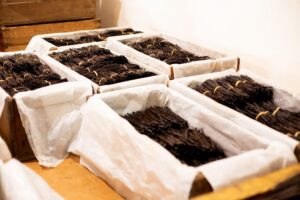
The company works with local producers and grower associations in
Madagascar for cultivation and collection. Depending on the season,
between 20 and 40 people oversee the six-to-10-month curing process that
turns green pods into premium black vanilla.
In Belgium, Rabenandrasana and her business partner handle packaging,
quality control and shipping. The company is planning a physical store
and production space in Belgium and intends to hire by the end of the
year.
Earning visibility through reviews
On Temu, Malagasy Vanilla sells gourmet-grade Madagascan vanilla under
the product brand Lavani, whole pods aimed at professional chefs and
home bakers who value premium ingredients.
Building visibility for a niche product usually requires substantial
advertising spend, Rabenandrasana said. On Temu, customer reviews and
product discovery tools do more of that work, giving smaller sellers a
route that doesn’t depend on large marketing budgets.
“If the product is good and customers leave strong reviews, visibility
can grow naturally,” Rabenandrasana said. “We have been able to get more
traffic and increase sales.” The brand holds a positive review rate
above 99% on Temu.
New markets, new products
Rabenandrasana is broadening what Malagasy Vanilla offers and where it
sells. She wants to reach several thousand sales across Europe and is
looking at a warehouse in France to support that growth.
At its Belgian facility, Malagasy Vanilla is developing a vanilla
extract and vanilla sugar. A social-impact arm to support grower
communities in Madagascar is also in the works.
“My grandfather worked locally, my father expanded nationally, and now
we are building internationally,” Rabenandrasana said.
Additional pictures
Malagasy Vanilla employees prepare the dried vanilla pods.
Malagasy Vanilla sells gourmet-grade Madagascan vanilla in whole pods.
Raw green vanilla pods before the months-long curing process begins.