




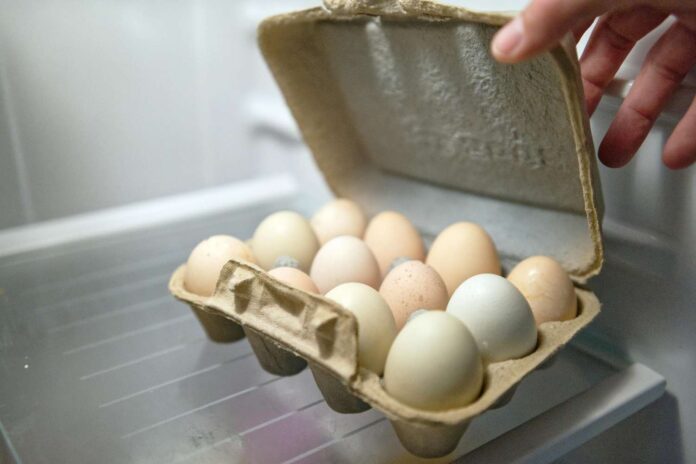
Nigerians buying eggs from open markets, roadside sellers or poultry farms can carry out a few simple checks to determine their freshness and quality before taking them home.
While buying directly from a poultry farm may give consumers more information about where their eggs came from, the source alone does not guarantee that every egg is fresh. Proper handling, storage and the condition of the shell also matter.
Brandspur Health News reports that shoppers should first examine the eggs carefully before paying, particularly when buying from crates containing eggs of different ages.
The shell should be clean and free from cracks, as damaged shells can increase the risk of contamination. Buyers should also inspect several eggs from different parts of a crate rather than checking only the ones placed on top.
Freshness can also be assessed after purchase. One commonly used method is the water test, in which an egg is placed in a bowl of water. A fresh egg generally sinks and lies flat, while an older egg may stand upright because the air cell inside it becomes larger as moisture is lost through the porous shell.
Read also: https://brandspurng.com/2020/08/22/prices-of-tomatoes-rice-yam-eggs-increase-in-july-nbs/
However, a floating egg should not automatically be thrown away simply because it floats. The United States Department of Agriculture notes that floating mainly indicates that the egg has developed a larger air cell and is of poorer quality. It may still be safe to eat, so it should be cracked into a separate bowl and checked for an unpleasant smell or unusual appearance.
Another useful check comes after cracking the egg. A very fresh egg tends to have a thicker, cloudier white that holds more closely around the yolk. The USDA also identifies cloudy albumen as a sign of freshness, while a clearer white indicates that the egg is ageing.
The yolk of a fresh egg will generally appear firm and rounded rather than immediately spreading across the plate. Consumers should also pay close attention to smell. An unpleasant or sulphur-like odour is a strong warning sign and the egg should be discarded.
Shell strength is another practical consideration. Cracked eggs should be avoided, while eggs with clean, intact shells are preferable when shopping. Food-safety guidance recommends choosing eggs with clean, uncracked shells.
Consumers should also remember that freshness and safety are not exactly the same thing. An older egg can still be usable, while an improperly handled egg can pose food-safety risks regardless of how fresh it appears.
For households buying eggs in large quantities, checking the eggs before purchase, keeping them properly stored and discarding any egg with an unusual smell or appearance can help reduce unnecessary food waste while protecting consumers from spoiled food.
