




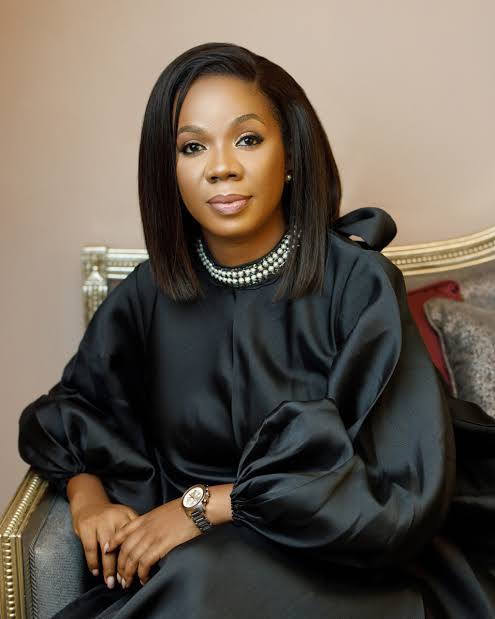
Beatrice Nnedili Eneh has outlined an ambitious plan to help transform Africa’s beauty industry into a $100 billion economic ecosystem by 2030, with greater local manufacturing, access to affordable capital, stronger distribution networks and harmonised trade regulations at the centre of the strategy.
Eneh, the entrepreneur behind Beauty in the Motherland (BITML), said Africa’s beauty opportunity extends far beyond cosmetics and personal care products, arguing that the continent can capture significantly more economic value by processing its own botanical resources, developing indigenous brands and building the infrastructure required to take them into international markets.
The Brandspur Brand News reports that Eneh’s approach is shaped by her background in supply-chain optimisation, manufacturing, logistics, business strategy and entrepreneurship. She said the same structural problems she encountered in other industries — particularly around access, value retention and inefficient supply chains — are also visible across Africa’s beauty sector.
Africa possesses major raw-material advantages, including shea butter, indigenous oils and other botanicals used in skincare and haircare. But Eneh argues that much of the value generated from those resources is still captured outside the continent, with raw materials exported before being processed, packaged and sold back to African consumers as finished products.
Her proposed solution is to build more of the value chain within Africa. That includes regional manufacturing plants, packaging facilities, certified production hubs and distribution networks capable of serving multiple African markets rather than forcing individual brands to build separate infrastructure in every country.
Eneh said the industry also needs access to patient and relatively affordable financing. Many beauty businesses require money not only for inventory but for formulation, testing, certification, production equipment, packaging and regulatory approvals before a product can reach large markets.
She has therefore identified access to single-digit financing as one of the structural changes required to move indigenous beauty businesses from small-scale operations into commercially competitive companies.
Regulatory fragmentation is another major obstacle. Eneh wants greater alignment of product certification and market-access requirements across African countries, particularly under the African Continental Free Trade Area, so that a brand that meets the required standards in one market can more easily expand across the continent.
The scale of the ambition is reflected in BITML’s Vision 2030 target of helping drive the African beauty industry towards a $100 billion valuation. For Eneh, however, the figure is intended to represent more than the financial value of cosmetics companies. She wants growth to translate into factories, jobs, investment-ready businesses, stronger African-owned brands and greater participation in global retail markets.
BITML says it has already trained more than 600 beauty professionals, while its events have attracted tens of thousands of participants. Its 2026 edition is expected to bring together more than 300 brands, over 400 exhibitors, more than 10,000 beauty professionals, 60-plus speakers and more than 20 partners at the Eko Convention Centre in Lagos.
The platform is also using its pitch competition to connect emerging businesses with funding, mentorship and enterprise-development support. Uzodinma Esther of Estebare, for instance, won the ₦5 million grand prize in the competition, while other finalists received seed funding, mentorship and business-development opportunities.
Eneh said the objective is to create a continuing pipeline of businesses capable of attracting institutional investment rather than limiting support to individual winners. The Enterprise Development Centre is involved in training founders on areas including financial modelling, business strategy and operational development.
Partnerships with Fidelity Bank, Unilever and the Enterprise Development Centre form part of that model. Fidelity Bank is positioned around financial access and business banking, while Unilever brings multinational experience in areas such as manufacturing, product development, packaging and supply chains. The Enterprise Development Centre provides enterprise training and mentorship.
The partnerships reflect a broader argument at the heart of Eneh’s strategy: Africa’s beauty industry cannot scale on creativity and consumer demand alone. It also needs capital, industrial capacity, technical expertise, formal distribution and businesses capable of meeting international standards.
The opportunity extends beyond skincare and cosmetics. Africa’s beauty economy encompasses haircare, fragrance, wellness, nails, personal care, traditional beauty practices, manufacturing, packaging, retail and technology. Building stronger connections between those segments could create opportunities for businesses at very different stages of development.
BITML is also attempting to connect established corporations with smaller indigenous businesses. Eneh describes the platform as a meeting point where multinational companies, manufacturers, beauty professionals, independent founders and traditional producers can identify commercial relationships that might otherwise never develop.
For emerging entrepreneurs, that access could be particularly significant. A small beauty company may have a commercially attractive product but lack the machinery, working capital, regulatory knowledge or distribution network required to move from small-batch production to national or international sales.
Eneh’s long-term measure of success is therefore not simply the size of BITML’s annual exhibition. She wants to see African-owned brands occupying shelves in major international markets while more raw materials are processed within Africa and local manufacturing capacity expands.
That ambition would require sustained investment across the value chain. Packaging, specialised ingredients, testing laboratories, manufacturing equipment, logistics, certification and export infrastructure all carry costs that smaller businesses may struggle to absorb individually.
The potential economic impact is correspondingly broader than the beauty sector itself. Stronger local manufacturing could create demand for packaging producers, chemical and laboratory services, logistics companies, retailers, technology providers and financial institutions, while successful exporters could bring additional foreign-currency revenue into African economies.
For consumers, the growth of competitive indigenous brands could also mean greater choice and potentially more products designed specifically around African skin tones, hair textures, climates and consumer preferences.
Eneh’s $100 billion target remains an ambition rather than an established projection, and achieving it would depend on investment, consumer demand, regulatory reforms, manufacturing expansion and the ability of African businesses to compete beyond their domestic markets.
But the strategy places a clear emphasis on where she believes the greatest opportunity lies: moving Africa further up the beauty value chain.
Instead of exporting raw shea, oils and botanicals and importing finished products, the objective is to develop the factories, brands, financing and distribution systems that allow more of the economic value to remain on the continent.
For Eneh, the transformation of African beauty is therefore not simply about selling more cosmetics. It is about building an industry in which African resources are processed locally, African entrepreneurs own scalable brands and African businesses compete for a larger share of a global market.
