
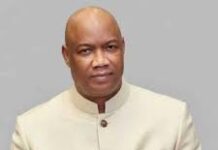




The Federal Government may spend close to N2tn on electricity subsidies this year as it maintains its decision not to increase electricity tariffs in the immediate future, a move aimed at shielding consumers from higher power costs while the sector grapples with deep financial and infrastructure problems.
Minister of Power, Joseph Tegbe, disclosed the government’s position during a media briefing in Abuja to mark his first 100 days in office. He said the administration was focused on making the electricity market commercially viable without exposing vulnerable consumers to an immediate increase in tariffs.
The development comes after the government incurred N1.93tn in electricity subsidy obligations in 2025, according to figures contained in the Nigerian Electricity Regulatory Commission’s 2025 Annual Report. The Brandspur Business News Desk reports that the amount represented 57.44 per cent of the total Nigerian Bulk Electricity Trading invoice for the year, averaging N160.69bn every month.
Under the existing arrangement, electricity tariffs paid by consumers remain below the cost of supplying power in many cases. The government therefore covers the difference between the approved tariffs and the cost-reflective rate through subsidies. NERC said the framework was designed partly to prevent unpaid subsidy obligations from piling up on the books of distribution companies and restricting their ability to secure financing for network investment.
Tegbe said there were no immediate plans to raise electricity tariffs, while stressing that the government wanted to protect vulnerable consumers and improve the commercial sustainability of the sector. The position means the government is expected to continue shouldering a substantial share of electricity costs as reforms aimed at improving revenue collection and service delivery continue.
The subsidy burden has remained a major concern across the electricity value chain. Although the Band A to E tariff structure was introduced in 2024, only Band A customers pay tariffs designed to reflect the actual cost of electricity, while consumers on other bands continue to benefit from government support.
Power generation companies have also questioned whether the government’s N4tn Presidential Power Sector Debt Reduction Programme can resolve the sector’s liquidity crisis. The Association of Power Generation Companies warned that additional liabilities could continue to accumulate while the existing debt is being settled.
APGC chief executive, Joy Ogaji, said generation companies, distribution companies and the Nigerian Bulk Electricity Trading system continued to face payment shortfalls. She argued that settling the N4tn legacy debt without addressing new obligations would leave the industry facing another cycle of unpaid bills.
Ogaji also questioned the sustainability of the subsidy system, saying the government should establish a clear amount it can afford to subsidise and make proper budgetary provisions for it. She maintained that the absence of corresponding funding has contributed to uncertainty across the electricity market.
Meanwhile, Tegbe said his first 100 days in office had focused on identifying problems across the electricity value chain, stabilising existing infrastructure and restoring market discipline. He identified inadequate gas supply, ageing generation equipment, deferred maintenance, stalled projects and weak payment discipline as major constraints.
According to the minister, generation companies were receiving payment for only 27 per cent of their bills, weakening their ability to maintain power plants and settle obligations to gas suppliers. He also cited damaged gas pipelines and commercial conditions that have discouraged investment in gas supply to power plants.
Transmission infrastructure, he added, was under pressure from vandalised towers and lines, overstretched equipment and repeated system trips. The government is therefore expected to balance its decision to maintain current tariffs with efforts to improve infrastructure, revenue collection, gas supply and financial discipline across the sector.
