




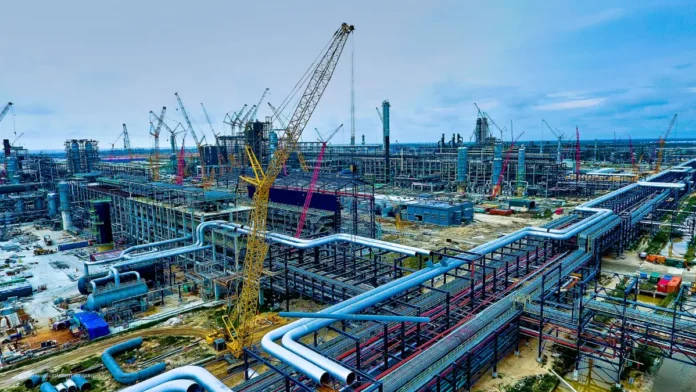
Nigeria has exported refined petroleum products worth £1.02 billion to the United Kingdom, highlighting the growing international significance of the Dangote Refinery and the country’s changing position in the global petroleum trade.
The value of British imports of Nigerian petroleum products accounted for 53.5 per cent of the UK’s total merchandise imports from Nigeria, making refined fuel the largest component of trade between both countries, according to a UK government factsheet published on November 6, 2026.
The figures also show that the UK’s purchases of refined petroleum products from Nigeria more than doubled in the 12 months to June 2026 compared with the corresponding period a year earlier.
Read also: Nigeria’s Petrol Import Fight Puts Pump Prices And Supply Security Back In Focus
The Brandspur Brand News Desk reports that the development represents an important shift in Nigeria’s downstream petroleum industry, as the country increasingly moves beyond its traditional dependence on imported refined fuel to supply international markets.
How Dangote Refinery Is Changing Nigeria’s Fuel Trade
At the centre of this transformation is the Dangote Refinery, the $20 billion industrial facility established by the Dangote Group in the Lekki area of Lagos. With an installed refining capacity of 650,000 barrels per day, the refinery has become a major part of Nigeria’s ambition to strengthen domestic fuel production and expand petroleum exports.
For decades, Nigeria faced the contradiction of being Africa’s largest crude oil producer while importing substantial quantities of petrol and other refined petroleum products. Limited domestic refining capacity meant that crude oil was frequently exported for processing abroad before finished products were brought back into the country.
That arrangement exposed the economy to international supply disruptions, foreign exchange pressures and fluctuations in the cost of imported fuel.
The emergence of the Dangote Refinery has introduced a different possibility by providing substantial domestic capacity to process crude oil into products that can serve both Nigerian consumers and overseas markets.
The changing export position was already becoming visible earlier in 2026. Data from energy intelligence firm Kpler showed that Nigeria exported approximately 44,000 barrels of petrol daily in April, exceeding imports and producing a net export surplus of about 3,000 barrels per day.
The development marked a notable change for the country’s petroleum sector, where the ability to refine crude locally has long been viewed as essential to reducing dependence on imported fuel.
The latest UK trade figures provide another indication of how domestic refining capacity is beginning to influence Nigeria’s international commercial relationships.
Britain’s £1.02 billion petroleum imports demonstrate the growing importance of refined fuel in the country’s merchandise trade with the UK. Rather than relying solely on crude oil exports, Nigeria is increasingly participating in the market for finished petroleum products, which have undergone domestic processing before shipment.
What Refined Fuel Exports Mean For Nigeria’s Economy
For the Nigerian economy, the potential benefits extend beyond the refinery itself.
A stronger domestic refining industry could support export earnings, create demand for logistics and maritime services, strengthen industrial activity and provide opportunities for businesses involved in petroleum distribution and related operations.
It could also improve Nigeria’s position in negotiations and commercial relationships within international energy markets.
However, the benefits to the wider economy will depend on how effectively the country sustains production, manages crude oil supply and develops the infrastructure required to support exports.
The Dangote Group is also pursuing further expansion of its refining business, including plans to establish another refinery in East Africa and increase the processing capacity of its existing Lagos facility.
The proposed East African investment would represent an expansion of the group’s refining ambitions beyond Nigeria, potentially strengthening its presence in another important regional energy market.
Dangote Refinery’s Financial Turnaround
The group’s expansion strategy comes alongside a reported improvement in the refinery’s financial performance.
The Dangote Refinery reportedly recorded earnings of $4.725 billion after posting a loss in the corresponding period of the previous year. Its revenue also rose to $22.5 billion, more than twice the previous year’s figure, reflecting increased business activity and higher processing volumes.
The refinery was also reported to have achieved crude oil processing levels of up to 700,000 barrels per day, above its installed capacity of 650,000 barrels per day.
Its reported cash position stood at $650.8 million, compared with a debt position of $1.7 billion recorded a year earlier.
These financial figures point to a significant improvement in the company’s reported operating position as it expands production and strengthens its participation in the petroleum market.
Nevertheless, the distinction between installed capacity and actual production remains important when assessing the refinery’s long-term contribution to Nigeria’s energy industry. Sustaining high processing volumes requires reliable crude oil supplies, efficient operations and access to markets capable of absorbing the products.
Competitiveness And Domestic Supply
For Nigeria, the growing export relationship with the UK also raises the importance of maintaining international competitiveness. Refined petroleum products must compete with supplies from other producing countries, making production costs, quality, transportation and market conditions important factors.
There is also a domestic dimension to the refinery’s expanding export business. Nigerian consumers will be watching whether increased local refining capacity can support more stable fuel availability and reduce the country’s exposure to imported petroleum products.
The relationship between export growth and domestic supply will therefore remain important as the Dangote Refinery expands its international business.
The UK’s latest trade figures provide evidence of the increasing role of Nigerian refined petroleum in international commerce. They also offer a measure of how the country’s downstream industry has evolved since the commencement of operations at the Lagos refinery.
With exports to Britain exceeding £1 billion and the Dangote Group pursuing additional investments, Nigeria’s petroleum industry is entering a period in which domestic refining capacity could play a much larger role in determining the country’s position in global energy trade.
