




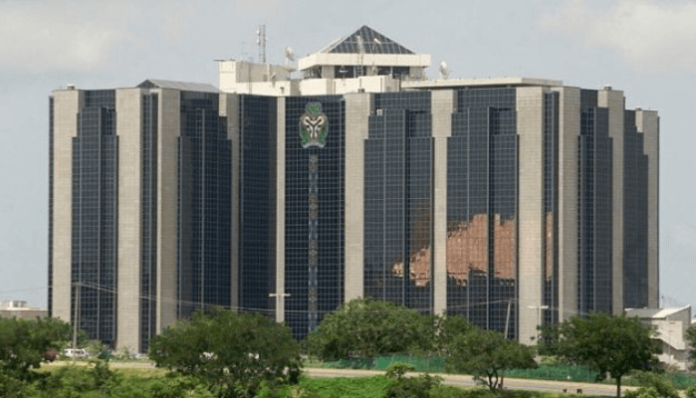
Nigeria’s business activity strengthened in September 2026, with the composite Purchasing Managers’ Index rising to 53.0 points, even as households became more pessimistic about the economy, their finances and future price movements, the Central Bank of Nigeria has reported.
The latest PMI marked the fourth consecutive month of expansion, improving from 52.7 points in August. The survey, conducted among 1,900 purchasing and supply executives between September 7 and 11, showed that 23 of the 32 subsectors covered recorded growth.
The improvement was driven largely by the industrial sector, whose PMI climbed to 52.0 points from 50.6 points in August. Brandspur Banking News Desk reports that the sector’s output index also increased to 53.2 points, supported by stronger new orders and employment.
The raw materials inventory index moved back into expansion territory, rising to 51.1 points from 49.4 points a month earlier. The services sector remained firmly in expansion at 53.2 points, although it edged down from 53.3 points, while agriculture slipped slightly to 53.1 points from 53.4 points.
Despite the stronger business performance, companies continued to face rising input costs. The composite input price index increased by 0.8 points during the month, while the output price index declined by 0.5 points.
The CBN described the September figures as evidence of a broadening recovery in economic activity but cautioned that renewed pressure on input prices would require monitoring.
For households, however, the economic picture remained considerably weaker.
The CBN’s September Household Expectations Survey showed that the Overall Consumer Sentiments Index dropped to -18.7 points from -9.9 points in August. The Economic Conditions Index stood at -21.5 points, while the Family Financial Situation Index fell to -23.9 points and the Family Income Sentiments Index stood at -10.5 points.
The figures indicate that consumers were increasingly uneasy about their present financial circumstances, even as business conditions improved.
Concerns over prices also intensified. The average price sentiment index rose to 33.5 points from 23.0 points in August, suggesting that households continued to perceive prices as high. The CBN said respondents expected price pressures to remain elevated over the following three and six months.
The pressure was reflected in spending priorities. Food remained the biggest household expenditure, followed by transportation, other household goods, education, and electricity and water.
Major purchases remained particularly unattractive to consumers. Sentiment towards buying homes, motor vehicles, investments and consumer durables remained negative, at -68.2, -67.3, -50.7 and -49.5 points respectively.
Buying conditions were also weak, with the indices for consumer durables, motor vehicles, and buildings and landed properties all remaining below the 50-point threshold.
The cautious mood comes despite a marginal easing in Nigeria’s headline inflation, which fell from 15.43 per cent in July to 15.39 per cent in August 2026, according to the National Bureau of Statistics. Month-on-month inflation recorded a sharper decline, dropping from 1.57 per cent to 0.71 per cent.
The survey also showed differing views on interest rates. While 62.2 per cent of respondents preferred lower lending rates, 45.1 per cent supported higher interest rates when presented as a measure for controlling inflation. Another 44.8 per cent favoured lower rates even if that could result in higher inflation.
Households nevertheless expected their confidence to improve gradually. The Overall Consumer Sentiments Index was projected to rise to -8.7 points in the following month, -0.4 points over the next three months and 7.1 points over six months.
The contrasting data underline a widening gap between business activity and household experience: companies are recording continued expansion, but consumers remain cautious as financial pressures, high prices and weak appetite for major purchases continue to shape spending decisions.
