




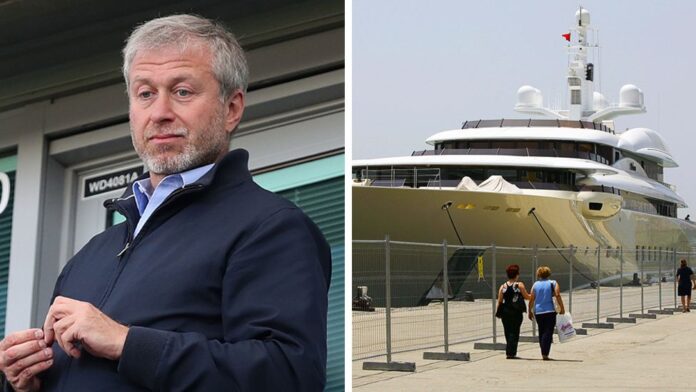
A BBC investigation has uncovered documents suggesting that financial advisers working for Russian billionaire Roman Abramovich used backdated paperwork to conceal assets worth billions of dollars and potentially help his companies evade taxes in Cyprus.
The investigation by BBC Panorama and the Bureau of Investigative Journalism found that accounts approved by Deloitte in Cyprus omitted luxury properties, private jets, helicopters and superyachts valued at $672 million. The findings also point to a separate arrangement involving a company holding almost $2 billion in a bank account, where altered financial records allegedly helped reduce its tax liability.
According to Brandspur Brand News, the findings are based on thousands of leaked documents detailing the operations of offshore companies linked to Abramovich between 1995 and 2022. The records raise questions about the conduct of professional advisers involved in managing the billionaire’s international business interests.
One case involved Amiscan Investments, an Abramovich linked company in Cyprus. Draft accounts prepared for 2003 listed expensive properties in the United Kingdom and France, alongside aircraft and boats, including the superyacht Pelorus, valued at $147.5 million at the time.
After Cyprus introduced a law requiring company accounts to be made public, documents were reportedly backdated to make it appear that the assets had been transferred to a parent company in the British Virgin Islands in 2003. Deloitte Cyprus subsequently approved the accounts in 2006, leaving only $75,000 in assets recorded for Amiscan.
The investigation also examined Kravin Investments, another Cyprus based company that held almost $2 billion in 2003 and earned interest that could have attracted tax. Emails from 2005 indicated that advisers discussed changing financial statements and accounting records for earlier years.
Documents were subsequently created to make it appear that Kravin was holding and investing the money on behalf of its parent company in the British Virgin Islands, rather than owning the funds itself. The investigation said the arrangement appeared to have allowed the company to avoid millions of dollars in tax.
A third case involved Electus Investments, a Cyprus company linked to a fortune exceeding $10 billion. Documents were allegedly backdated to transfer beneficial ownership of the assets to a separate company with the same name in the British Virgin Islands, making the Cyprus entity appear to hold only $145,000.
Legal and accounting experts who reviewed the findings questioned the legitimacy of the arrangements. Andrew Mitchell KC, a barrister specialising in financial services law, described the alleged tax scheme as clear evasion, while Lord Sikka, an accounting professor at the University of Sheffield, criticised the misrepresentation of transaction dates in company accounts.
Abramovich’s lawyers denied that he evaded tax or concealed his wealth. They said there was no evidence that he knew about, authorised or directed the alleged falsification of documents, adding that he was entitled to rely on professional advice and was not involved in the day to day running of the companies.
Deloitte Cyprus said it complied with applicable laws but declined to comment on the specific allegations, citing the age of the documents and their lack of access to the records. MeritServus, the Cyprus based corporate services firm involved in administering Abramovich’s offshore network, closed after the Cyprus Confidential leak.
Abramovich became widely known in Britain after buying Chelsea Football Club in 2003 and financing a period of major success for the team. Following Russia’s full scale invasion of Ukraine in 2022, the UK government sanctioned him, forcing the sale of the club.
The investigation comes as £5.4 billion of Abramovich’s assets remain frozen in Jersey, where a criminal investigation has been ongoing for four years. His lawyers have rejected allegations in that investigation, describing it as politically motivated.
The latest findings do not establish a criminal conviction against Abramovich or Deloitte. However, they raise questions about how offshore structures and professional accounting services may have been used to obscure ownership of substantial assets and limit tax liabilities across jurisdictions.
