




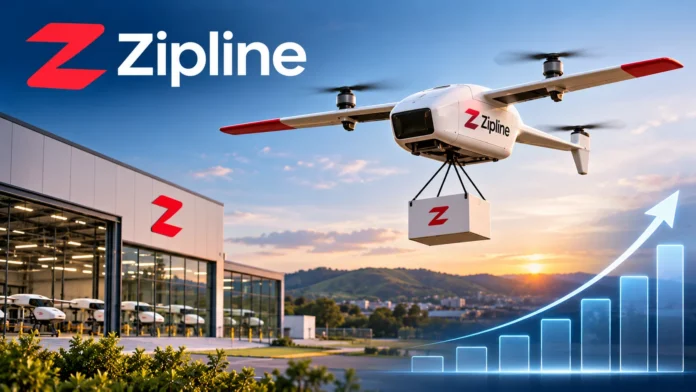
Drone delivery company Zipline has raised $1.5 billion in fresh funding, pushing its post-money valuation to $21.5 billion and highlighting the growing investor interest in autonomous delivery technology.

The latest valuation represents a nearly threefold increase in about 10 months, marking a significant milestone for the company, which began commercial operations in Africa before expanding into the United States.
According to Brandspur Banking News Desk, Zipline’s growth has been shaped partly by regulatory restrictions in its home market, which initially prevented it from operating its commercial drone delivery model in the United States. The company launched in Rwanda before expanding into Ghana, Nigeria, Kenya and Côte d’Ivoire.
Its operations across these African markets helped establish the business before it eventually began commercial operations in America, where the drone delivery sector is attracting increasing investment and commercial partnerships.
The latest funding round attracted major investors, including Uber, JPMorgan, Fidelity, Tiger Global and Salesforce Ventures. The investment comes as Zipline continues to expand its delivery network and strengthen its presence in the global logistics market.
Walmart is also planning to add 300 Zipline delivery sites, a move that could significantly increase the company’s reach in the United States and bring autonomous deliveries to more consumers.
For Nigeria and other African markets where Zipline operates, the company’s growth highlights the potential of drone technology to support delivery services across different sectors.
The company’s expansion from Rwanda into several African countries before entering the US also underscores how businesses can develop commercial models in markets where regulatory conditions permit operations, then expand into larger economies.
However, the latest valuation does not necessarily reflect the company’s profitability, with its long-term prospects depending on its ability to scale operations, attract customers and navigate regulatory requirements across markets.
