



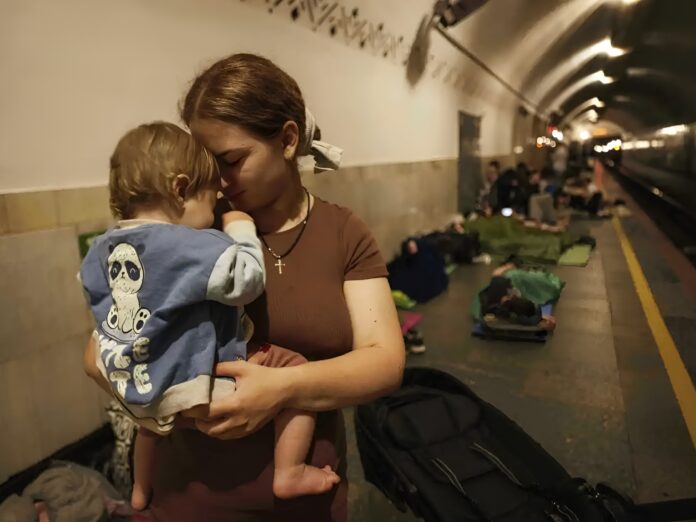
A study by Ukrainian research firm Gradus Research has found that 91 per cent of Ukrainians experience high levels of stress, highlighting the growing psychological toll of the prolonged war on the country’s population, workforce and consumer behaviour.
The findings also reveal how years of conflict have changed the way people shop, interact with brands and approach work, with economic uncertainty and emotional exhaustion increasingly influencing everyday decisions.
Speaking in an interview published by Research World on November 3, 2026, Gradus Research founder and Chief Executive Officer, Evgeniya Blyznyuk, said the company had documented significant changes in Ukrainian society through continuous research conducted during the war.
According to Brandspur Brand News, the findings challenge conventional market research approaches that assume consumers make decisions based largely on stable preferences and predictable economic conditions.
Blyznyuk disclosed that the company’s research has recorded a shift towards smaller, more frequent purchases as consumers seek immediate emotional comfort amid uncertainty about the future.
SEE ALSO: UN General Assembly Meets To Settle Russian-Ukraine Dispute, U.S. Sides Russia
She explained that shopping has increasingly become a coping mechanism, with people purchasing affordable treats to improve their mood while remaining highly conscious of prices, discounts and household spending.
The behaviour creates a difficult balance for businesses, as consumers seek emotional satisfaction without abandoning their need to manage limited financial resources.
Blyznyuk said brands must recognise these realities in their marketing strategies, noting that consumers are less receptive to advertising that portrays an unrealistic picture of perfect living conditions.
Research cited in the interview found that only 14 per cent of respondents were willing to engage with such idealised marketing content. Communications that acknowledge everyday difficulties while offering practical value and genuine optimism were more likely to resonate.
The psychological pressure also extends into the workplace. Gradus Research’s 2026 Workplace Environment and Psychological Wellbeing study found that 58 per cent of employees trusted their colleagues, while 56 per cent expressed trust in their management.
The findings suggest that workplace relationships have become an important source of stability for employees dealing with uncertainty outside their organisations.
Blyznyuk said managers needed to pay greater attention to employee wellbeing, workload and transparency rather than focusing exclusively on performance targets.
The research company’s methods have also evolved to accommodate the realities of conducting studies in a war zone. Following Russia’s full-scale invasion, the displacement of millions of Ukrainians disrupted conventional sampling and made face-to-face interviews dangerous or impractical in several locations.
Gradus responded by relying on its mobile application-based research panels, shortening some survey periods to between 24 and 48 hours and excluding temporarily occupied territories and areas experiencing active combat from its sampling parameters.
The company also uses artificial intelligence to support operational processes, including fraud detection, quality control and preliminary data organisation.
However, Blyznyuk said human judgement remains central to interpreting sensitive findings, particularly those involving psychological conditions, social values and employee experiences.
A separate study conducted ahead of Forbes AI Day found that 85 per cent of Ukrainians already used artificial intelligence, although only six per cent paid for subscriptions.
For Blyznyuk, the figures demonstrate that widespread adoption does not automatically translate into complete trust, particularly when decisions require cultural understanding, accountability and human sensitivity.
She argued that research organisations must combine technological efficiency with human interpretation, especially when examining communities experiencing prolonged crises.
Gradus Research was founded in August 2019, initially focusing on technology-driven market intelligence through mobile research panels. Its work has since expanded to include continuous monitoring of social attitudes, consumer behaviour and psychological wellbeing.
Blyznyuk, who completed a programme at the London School of Economics in June 2025, was named among the Insight250 winners for 2026, an international recognition of influential professionals in market research, consumer insights and data-driven marketing.
Her findings highlight the growing importance of understanding the emotional and economic circumstances shaping consumer decisions, particularly in societies where prolonged instability has become part of everyday life.
