





Nearly 90% of food and beverage manufacturers worldwide are already using artificial intelligence (AI) and machine learning or intend to adopt the technologies soon, but businesses are struggling to turn their investments into measurable operational gains.

The finding is contained in Rockwell Automation’s 2026 State of Smart Manufacturing Report, which highlights a gap between the growing adoption of AI and manufacturers’ ability to use the technology effectively.
Despite collecting vast amounts of operational information, manufacturers are currently making productive use of only about 45% of their available data. Poor connectivity between systems and isolated information platforms remain major obstacles to expanding AI applications across production operations.
The Brandspur Brand News Desk reports that the findings raise important questions for food manufacturers, including businesses in Nigeria, where improving production efficiency, controlling costs and maintaining product quality remain important to competitiveness.
Rockwell Automation’s research indicates that manufacturers expect AI-supported processes to account for more than 60% of their operations by 2030, compared with approximately 37% currently.
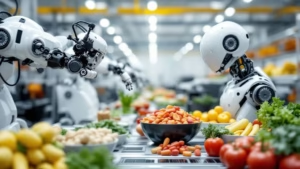
Achieving that level of integration will require businesses to address how information moves between their technology systems. The report identifies closer integration between information technology (IT) and operational technology (OT) as an important step towards making manufacturing data more useful for AI applications.
When production equipment and business systems operate without adequate connections, manufacturers may struggle to obtain the complete information needed to make informed decisions. Better integration could help businesses identify production problems, improve quality control, reduce waste and manage operating expenses.
Greg Schmidt, vice president of CPG Global Industry at Rockwell Automation, said manufacturers were increasingly focused on expanding successful AI projects across their organisations rather than simply testing whether the technology could deliver results.
He identified connected data, integrated operations and clear business objectives as important requirements for scaling AI investments.
Beyond technology, workforce readiness is emerging as another challenge for the manufacturing industry.
The report found that 93% of manufacturers expect smart manufacturing initiatives to change their workforce, while 40% said they had retrained employees within the previous year.
As automated and data-driven processes become more common, employees will need additional skills to operate alongside new technologies. This will make staff training and reskilling important parts of manufacturers’ digital transformation plans.
For food and beverage businesses, the findings suggest that purchasing AI systems alone will not guarantee better production outcomes. Companies must also improve their data infrastructure and prepare employees to work with increasingly sophisticated manufacturing equipment.
The research points to a broader shift in the industry, with the next stage of AI adoption likely to depend less on the number of companies experimenting with the technology and more on how effectively they incorporate it into everyday production.
