


The Lagos State Government has rejected claims that political parties must pay as much as N700 million to secure billboard permits in the state, insisting that the figure does not reflect the charges imposed by the Lagos State Signage and Advertisement Agency (LASAA).
Commissioner for Information and Strategy, Gbenga Omotoso, dismissed the allegation following a social media post linking the absence of opposition campaign billboards across Lagos roads to the purported fee. The government described the claim as misleading, particularly as political parties begin preparing for the 2027 general elections.
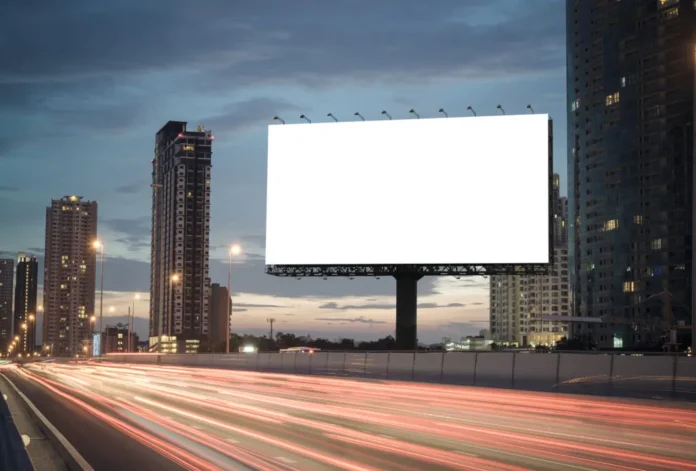
The controversy has drawn attention to the cost of outdoor political advertising in Nigeria’s commercial capital, where billboard visibility remains an important part of election campaigns. Brandspur Politics understands that the government’s clarification centres on the distinction between regulatory charges imposed on outdoor advertising structures and the commercial rates charged by private billboard operators.
Read also: Lagos Takes 73% Of Nigeria’s Outdoor Advertising Spend Despite Weak Returns, Study Finds
What LASAA Regulates – And What It Doesn’t
Omotoso explained that LASAA does not own, operate or sell advertising space on billboards across Lagos. Rather, its responsibility is to regulate the outdoor advertising sector and ensure that advertising structures comply with established requirements.
According to the commissioner, billboard ownership rests with private operators, who independently determine how much advertisers pay to use their platforms. He put the highest commercial billboard placement rate in Lagos at approximately N10 million monthly, stressing that the agency has no control over the prices charged by individual owners.
The clarification is significant for political parties and candidates seeking visibility ahead of the 2027 elections. Campaign advertising involves several expenses, including media space, creative production and the regulatory requirements attached to outdoor structures. Separating these costs is necessary to establish what advertisers actually pay and which charges fall under government regulation.
N7 Million Registration Form, Not A Permit Fee
The commissioner also addressed concerns surrounding the financial requirements for individuals and businesses seeking to operate as outdoor advertising practitioners in Lagos.
He disclosed that prospective practitioners are required to purchase a non-refundable registration form costing N7 million. Applicants must also register with the Advertising Regulatory Council of Nigeria (ARCON) and fulfil other statutory conditions before they can operate in the sector.
However, Omotoso emphasised that the N7 million payment is a one-time registration requirement for practitioners, not a permit fee for every billboard or advertising campaign. He maintained that confusing the two categories had contributed to the misunderstanding surrounding the alleged N700 million charge.
How LASAA Billboard Permits And Charges Work
Under the state’s regulatory framework, advertisements, including political campaign materials, must be displayed on approved structures managed by registered practitioners with valid LASAA permits.
The requirements cover more than payment. Billboard structures must satisfy prescribed standards relating to their locations, physical safety and environmental impact before they can be used for advertising.
Fees payable by billboard owners also vary according to the dimensions, format and location of their structures. Lagos operates designated advertising zones, with different charges applying depending on where a billboard is situated.
These regulatory payments are separate from the commercial expenses incurred by advertisers when purchasing billboard space. Production costs and other advertising services also contribute to the overall amount paid for an outdoor campaign.
The government said Lagos remained committed to providing equal opportunities for political parties, regardless of their political affiliations, to advertise across the state.
Omotoso urged political organisations and other stakeholders to familiarise themselves with the applicable regulations and avoid circulating information that could misrepresent the state’s advertising policies.
The clarification comes at a time when political parties are expected to increase their public visibility as preparations for the 2027 elections gather momentum. For advertisers, campaign organisations and billboard operators, understanding the difference between registration, LASAA regulatory permits and commercial advertising rates will be important in planning their outdoor campaigns.
