



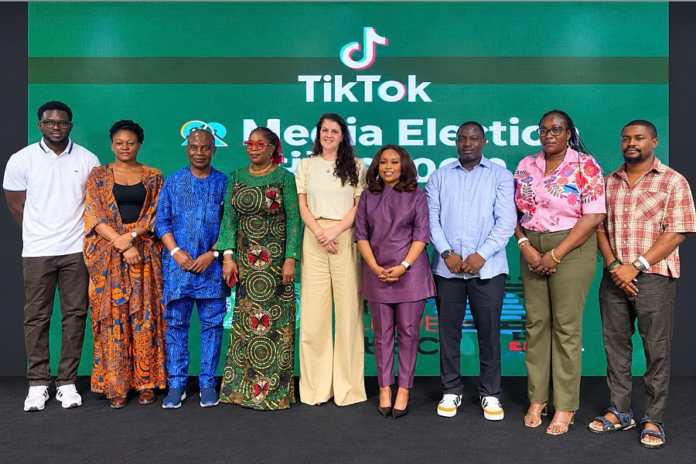
TikTok has stepped up preparations for Nigeria’s 2027 general elections, partnering with the Independent National Electoral Commission (INEC), the Nigeria Union of Journalists (NUJ) and independent fact-checking organisations to tackle election misinformation and improve access to credible voting information.
The social media platform is also training more than 300 media professionals across Lagos, Abuja, Ogun and Oyo states on digital content creation, information verification and responsible election reporting as political discussions increasingly move to online platforms.
The initiative comes as Nigeria prepares for its January 16, 2027 general elections, with concerns over fake news, manipulated videos, misleading political claims and artificial intelligence-generated content placing additional pressure on journalists, electoral authorities and technology companies.
Brandspur Brand News gathered that TikTok’s preparations include dedicated teams responsible for election integrity, cybersecurity, misinformation and deceptive online behaviour. The company said it would combine automated detection systems with local-language moderators to identify and address content that violates its Community Guidelines.
The platform is also drawing on experience managing election-related risks in more than 300 elections globally, although the effectiveness of its measures will depend on how quickly harmful content is identified and addressed in Nigeria’s politically sensitive environment.
One of the major components of the initiative is an in-app Election Centre developed in partnership with INEC and fact-checking organisation DUBAWA. The centre is designed to give Nigerians access to information about voting, election dates and the electoral process.
It also provides guidance on recognising misleading information and directs users to an AI media literacy hub explaining how to identify AI-generated content and use the technology responsibly when creating videos.
For voters who increasingly depend on social media for political information, the initiative could provide another channel for accessing electoral guidance without relying entirely on unverified posts circulating online.
INEC’s Director of Voter Education and Publicity, Victoria-Eta Messie, said the partnership could strengthen public understanding of the electoral process, particularly among young Nigerians and communities that electoral authorities are seeking to reach.
TikTok’s Global Integrity Programmes Lead, Lorenzo Andreozzi, said collaboration with independent fact-checkers, electoral authorities and civil society organisations was necessary to address the information challenges associated with major civic events.
The journalist training programme, organised alongside NUJ and Code for Africa, is another major part of the company’s strategy.
Participants are expected to learn how TikTok’s content ecosystem works, how digital trends influence news consumption and how to verify information before publishing election-related material.
Philip Nwosu, Vice-Chairman of the NUJ Lagos State Council, said the programme would strengthen journalists’ capacity to produce accurate and responsible reports as the country approaches another general election.
The platform has also disclosed the scale of its enforcement activities in Nigeria. Between April and June 2026, TikTok removed more than 210,000 videos for violating its civic and election integrity policies. The violations included misinformation and harmful AI-generated material.
Read Also: TikTok Removes Over 210,000 Election Videos In Nigeria Ahead Of 2027 Polls
According to the company, more than 99 per cent of those videos were removed before users reported them, suggesting that its automated systems and moderation teams detected the content independently.
Separately, TikTok said it removed more than four million videos across Nigeria during the second quarter of 2026 for violating its broader Community Guidelines. About 98 per cent were taken down before users reported them, while 91.7 per cent were removed within 24 hours.
Beyond removing misleading videos, TikTok is tightening measures against accounts and networks attempting to manipulate political conversations. The platform prohibits impersonation of politicians and news organisations, as well as false claims about election procedures.
It can also attach labels to unverified election-related claims, issue warnings before users share certain content and restrict the distribution of violating material through its For You feed.
Artificial intelligence is another area receiving attention. TikTok requires creators to label AI-generated content and uses technologies including Content Credentials based on the C2PA standard and invisible watermarking to help identify such material.
The company said more than five billion videos had received AI-generated content labels through its tools and technologies since the feature was introduced.
Political advertising is also restricted on the platform. Politicians and political parties cannot pay to promote content or earn money through TikTok’s monetisation programmes. However, electoral management bodies can advertise essential public information, including voter registration guidance and polling instructions.
With political campaigns, voter mobilisation and public debate expected to intensify ahead of January 2027, TikTok’s partnerships place the platform among the technology companies preparing to manage the risks associated with online election conversations.
However, the removal figures and new safeguards will ultimately be tested by the speed at which false information spreads, particularly during politically sensitive incidents when misleading videos and unverified claims can circulate widely before they are challenged.