



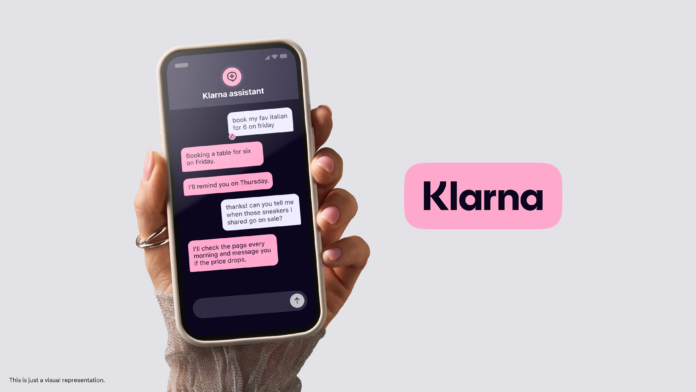
Klarna has launched an artificial intelligence assistant designed to help users manage shopping, product returns, bookings and other everyday tasks, expanding the Swedish financial technology company’s services beyond its established buy now, pay later business.
The new assistant, announced on Tuesday, November 17, 2026, is currently available to a small group of early users, with other interested customers able to join a waiting list. The company describes the tool as a digital concierge capable of handling activities that ordinarily require users to move between different online services.
The launch marks another step in Klarna’s expansion into AI-powered consumer services, placing the company in a market where technology businesses are exploring ways to turn conversational artificial intelligence into practical tools for everyday transactions. Brandspur Brand News reports that the initial rollout remains limited, with no indication yet of when the assistant will become generally available.
Klarna is widely known for its buy now, pay later payment model, which allows consumers to spread the cost of eligible purchases rather than pay the full amount immediately. Its latest product development takes the company beyond the payment stage of online shopping by targeting other parts of the customer experience, including finding products, managing returns and making bookings.
For consumers, the appeal of an AI assistant lies in the possibility of completing several tasks through a single service rather than navigating multiple websites and applications. Shopping, for instance, can involve comparing products, placing orders, arranging returns and tracking transactions. Booking services can require separate searches, forms and confirmation processes.
Klarna’s new assistant is intended to take on some of these activities. However, the company has not provided detailed information in the announcement about the full range of supported services, the platforms it can access or the extent to which it can independently complete transactions on a user’s behalf.
Read Also: Apple And Klarna To Launch New Lease-To-Own Programme For iPhones, Macs And iPads In 2026
That distinction will matter as consumers assess how much responsibility they can safely hand over to an automated assistant. A tool that can recommend a product is different from one authorised to make a purchase, change a booking or initiate a return. Users will also want clarity about how the system handles personal information, payment details and errors involving transactions.
The decision to begin with a small group of early users suggests that Klarna is taking a gradual approach to introducing the service. A waiting list will allow interested customers to register their interest while the initial rollout remains restricted.
The company has not disclosed the number of people participating in the early access programme, the criteria for joining or a timetable for wider availability. It has also not announced whether the assistant will attract a separate subscription charge or be included in existing Klarna services.
For businesses, the development could have implications for how customers discover products and interact with online retailers. If AI assistants increasingly handle searches, purchases and post-purchase requests, retailers may need to consider how their services work with automated shopping tools. However, Klarna has not outlined specific arrangements with merchants for the new assistant.
The launch also adds to the expanding use of artificial intelligence in consumer-facing financial technology. Companies in the sector are exploring applications that go beyond payments, with a focus on reducing the number of steps customers take to complete routine activities.
For Nigerian consumers and businesses watching developments in international fintech, Klarna’s announcement offers an indication of how AI could reshape digital shopping and customer service. It does not, however, establish that the assistant is available in Nigeria or that local retailers and payment providers are currently supported.
The immediate test for Klarna will be whether its assistant can move beyond offering convenience as a concept and reliably complete the tasks users expect it to handle. With access currently limited to early users, the wider capabilities and availability of the service remain to be established.