



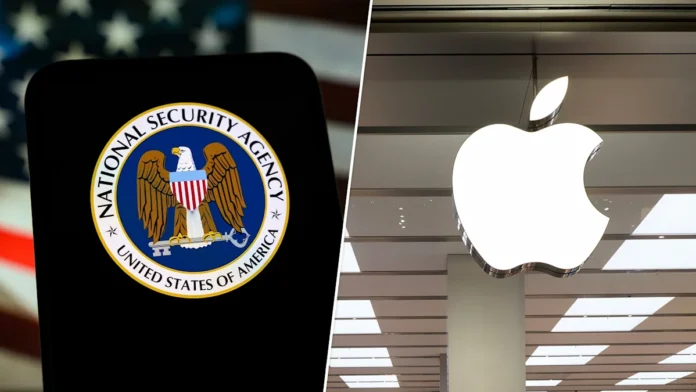
Apple and the United States National Security Agency (NSA) have been hit by fresh technology outages, extending a series of disruptions that have affected major banks, aviation services, government institutions and technology companies in recent days.
The latest incidents occurred on Tuesday, when an internal NSA network used by employees to transmit highly classified information became unavailable. The agency attributed the disruption to routine maintenance, describing it as a temporary degradation affecting some internal systems.
It maintained that its mission-critical operations were unaffected and that its ability to protect national security remained intact. However, the NSA did not disclose what caused the network failure or how extensively its internal operations were disrupted.
Apple also experienced service interruptions after an internal update affected iCloud, Apple Pay and Apple Music. The technology company said the incident was not the result of a cyberattack, although it did not provide further information about the update or the extent of the disruption. Brandspur Brand News reports that the latest failures have renewed attention on the reliability of digital infrastructure used by governments, businesses and consumers.
The incidents follow disruptions involving other major American institutions. Last week, a Microsoft outage affected schools, government departments and healthcare systems, interrupting services relied upon by organisations across different sectors.
The aviation industry also experienced a significant setback after a system failure forced the Federal Aviation Administration (FAA) to temporarily ground flights at airports across the United States. The incident prompted the country’s transportation secretary to seek congressional approval for a $50 billion investment in the national air transportation system.
Banking customers have faced difficulties as well. On Monday, customers of several major US financial institutions, including JPMorgan Chase, reported problems accessing banking services. Chase said a software bug was responsible for its disruption and stressed that the incident was not cyber-related.
The concentration of failures across different sectors has raised questions about whether the incidents are connected. US Secretary of State Marco Rubio, however, said the government had found no evidence suggesting that hackers, criminal groups, foreign governments or other hostile actors were responsible.
Read Also: Elon Musk’s Grok AI Faces Global Backlash Over ‘Digital Undressing’ And Child Safety Risks
Rubio described the developments as unsettling but maintained that the individual incidents had no established connection to malicious activity. President Donald Trump also played down concerns about a wider problem, saying technical difficulties could occur even at large, well-resourced organisations.
Cybersecurity specialists have nevertheless warned that repeated outages can create vulnerabilities, even when they are caused by technical mistakes rather than deliberate attacks.
Cynthia Kaiser, a former senior FBI cyber official, said the recent disruptions demonstrated how a single software failure or update could spread across interconnected critical systems. She also highlighted the growing influence of artificial intelligence in identifying weaknesses in software.
According to Kaiser, AI is speeding up the discovery of vulnerabilities, putting pressure on organisations to address them before criminals or hostile actors can exploit them. But the process of identifying and fixing weaknesses can also introduce operational friction. Periods when organisations are occupied with resolving technical problems may create opportunities for attackers.
Separately, a security researcher reported on Monday that several widely visited websites, including those belonging to Zoom, HSBC, CNN and IKEA, had been compromised. The reported operation allegedly sought to steal cryptocurrency and infect iPhones, adding another dimension to concerns about online security.
Public anxiety has also been heightened by a nationwide test of the Federal Emergency Management Agency’s Emergency Alert System. The exercise, broadcast on television and radio on Tuesday, coincided with the technology disruptions and prompted questions about how households should prepare for a major emergency.
The issue of stockpiling food, water and other essential supplies was raised during an interview with Fox News. US Vice-President JD Vance advised against building bunkers or accumulating supplies out of fear of an imminent crisis, while saying people should remain prepared for unexpected situations.
For consumers and businesses, the incidents highlight the practical consequences of depending on digital services for everyday activities. Interruptions to payment platforms, banking applications, cloud storage and communication tools can affect access to money, information and essential services.
That dependence is relevant beyond the United States, including in countries such as Nigeria, where consumers and businesses increasingly use digital platforms for payments, communication and commercial transactions. However, the reported American outages do not establish that Nigerian services have been affected or that the separate failures share a common cause.
The immediate challenge for the affected organisations is restoring confidence in the systems they operate, while determining how technical failures can be prevented from disrupting services on which millions of people rely.