Polaris Bank Partners Ikoyi Club Golf Section, Sponsors Unity Golf Tournament

0

Polaris Bank has announced its sponsorship of the Unity Golf Tournament organized by the Golf Section of the prestigious Ikoyi Club 1938.

The Unity Golf Tournament is an Open Amateur Golf tournament is expected to parade about 350 golfers who are members of registered Golf Clubs across the country. Specifically, five players each will come from about 70 Clubs across the country. Other highlights of the three-day tournament include a cocktail at the Clubhouse on March 25. On the second day, March 26, ladies, veterans, and some guests will take to the field.

The three-day tournament promises to gather the very best golfers around the country in an atmosphere of unity through recreation and sports. The event will receive guests from Thursday, March 25, tee-off on Friday, March 26, and end on Saturday, March 27, with a grand finale which will see hcp 0-14 male and guests play before the presentation of awards to winners at a Gala Night.

Expressing delight on the partnership with Polaris Bank, the newly elected Captain of the Golf Section of Ikoyi Club, Chief (Dr) M.I. Okoro thanked the Bank and expressed optimism that the sponsorship would strengthen the already existing relationship between the Bank and the Ikoyi Club community.

Speaking on the competition, the Acting Managing Director/CEO of Polaris Bank, Mr. Innocent C. Ike, said the Bank is pleased to associate with the Ikoyi Club 1938, adding that sponsorship of the tournament underscores the Bank’s conviction on the role of sports, particularly golf, in enabling national unity, and socio-economic development.

Mr. Ike noted that Ikoyi Club 1938 is an iconic brand that has transcended from being just a club for socialization to a nursery for raising stars who have gone ahead to get listed in World Amateur Golf Ranking. According to the Polaris Bank CEO, “We are excited to partner with the Golf section and, by extension, the Ikoyi Club 1938 in hosting this tournament. Our position stems from the fact that Ikoyi Club Golf Section is a foremost Golf Association in Nigeria, and hence provides us with the platform for bonding, business and social good”.

“As a future-determining Bank and an enabler of enterprise, we are always willing to be part of any social and business partnership that holds opportunities for the larger society,” he added.

Ikoyi Club 1938 Golf Section originally existed as two clubs: European Club and The Lagos Golf Club. A merger saw the birth of the Ikoyi Club in 1938. It is an 18-hole golf course where various golf tournaments and championships are played throughout the year, attracting golfers worldwide.

The lush green Golf Course of Ikoyi Club 1938, Lagos. is within the 456 acres of land, providing first-class facilities for about 10,000 members. Several of the A-list open and close golf tournaments/championships hosted at the Club have attracted recognition and endorsement from global Golf bodies like United States Golf Association (USGA), Royal and Ancient (R & A) of Scotland, with some of the ones listed amongst golf tournaments in the World Amateur Golf Ranking (WAGR).

The gala-night would have in attendance the Governors of Imo State, Senator Hope Uzodinma, and his Lagos State counterpart and host Governor, Babajide Sanwo-Olu. The Innoson Auto manufacturer/Founder, Chief Innocent Chukwuma will also attend alongside other top dignitaries. Royal Father of the day is the Oniru of Iruland, Lagos, His Royal Majesty, Oba Abdulwasiu Omogbolahan Lawal, Abisogun II.


11 Survey Design Best Practices To Increase Effectiveness

0
Well-designed surveys increase respondent engagement and overall research effectiveness. Here are Kantar’s 11 best practices for conducting online surveys.

Conducting effective online research with today’s consumers requires surveys that respondents can take when they want, where they want, and on their device of choice. This means your online surveys must work well on smartphones. But how do you go about this effectively?

Best Practices For Conducting Online Surveys:

1. Design mobile-first

To access a representative audience online, it’s important to make your surveys accessible to people where they are – and that’s often on smartphones. Designing for mobile devices is more than getting a question to fit on their screen and overall compatibility, it’s making the entire survey-experience enjoyable on mobile device, so you receive the best possible results.

The best practices laid out below account for length, language, complexity and more – all of which can impact the rate at which people complete surveys, and the quality levels of data you receive back.

2. Keep the survey short: 12 minutes or less

While smartphone and PC respondents alike might take surveys at home or in their office, a smartphone user’s attention is likely more limited than others. They may be interrupted by the environment or by the device itself, whether it be notifications from other apps, a TV programme starting, or being next in line at the checkout if they are out shopping. They may also be short of battery life or have download issues. Whatever the reason, it is important to get respondents through the survey before they run out of time or patience.

There isn’t an exact time limit, but it is recommended to keep all surveys, especially those running on smartphones, under 12 minutes – ideally below 10. As you will see throughout our recommendations, survey design has a large impact on keeping respondents engaged.

3. Limit the length of list options

Scrolling on a small screen can make it challenging for respondents to focus and follow. To avoid this, reduce the number of items shown in any list. This can be done by splitting them into logical groupings or only expanding an option list if the overarching group is selected.

It also might help to consider the purpose of your research and only include items that are relevant to your objectives. Perhaps group unlikely, low-incidence choice together into a single item.

Many survey questions include an “other, please specify” option. These can be useful, but only give the option if you are going to use the data collected from the open response.

4. Reduce repetition

Having to repeat yourself in a conversation is never fun. And the same goes for surveys. Many surveys contain banks of agreement or approval scales, which can be particularly tiresome for respondents and can lead to speeding, straight-lining or random pattern answering. This will be compounded if a respondent doesn’t have much experience with the subject (see point 6 below) or if some statements seem to overlap or duplicate each other. For example, asking a respondent if they consider a brand as high quality, then asking if they feel it is a premium brand, can be seen as overlap and be frustrating for respondents.

Try to place limits on the number of iterations of a repetitive bank of statements and remove anything that is either not important to the research or is duplicated by other statements asked. A limit of 12 statements is a good target to aim for and will reduce noise in the data.

5. Reconsider the need for grids and scales

If you’re using grid and scale question types, think again. You might find that many questions don’t need to be asked via a scale at all. If during analysis you are only reporting on the top-two or bottom-two options, then consider asking the bank of questions as a pair of multi-code questions. For example, asking a respondent first what they like about the brand followed by what they do not like. Another example is taking a traditional 11-point scale question on the likelihood of recommending a brand and asking, “would you recommend this brand to someone else?” with a much simpler yes/no multiple-choice option.

Removing scales and replacing with binary choices can greatly reduce the length and repetition of a survey and can also neutralise interpretation measures. For example, what might be a 7/10 rating for one respondent might be a 6/10 to 9/10 rating for another.

6. Ask meaningful questions

Only ask questions that respondents are qualified to answer. For example, asking detailed questions based on brand awareness might include several questions that the respondent cannot answer. Being aware of a brand does not mean they have had any exposure to that brands customer service or delivery options, and being asked questions on these topics may stall respondents, cause them to dropout or answering without having a relevant answer – all of which will impact your final dataset.

Consider whether a familiarity or usage question could be used to filter the follow up questions or whether the question is necessary to include.

7. Use clear and concise language

Consider who is taking your survey and how best to speak to them. We recommend simplifying the language and avoiding research jargon as fundamentals to aid engaged feedback. Keeping question text worded in a short and concise manner is also important, especially on small screen devices, as shortening the text will reduce scrolling and improve your data.

It’s also important to ensure respondents can navigate through questions with ease. Add instructional text only when it’s really needed to make a task clear.

8. Leverage open-ended questions wisely

Although open-ended questions can be used to provide valuable insights, these questions are more difficult to answer on smartphones due to the small screen size and on-screen keyboards. Ask such questions only as necessary and avoid using them consecutively, as they can lead to frustration and prompt respondents to drop out of the survey.

9. Use responsive survey designs

Use scripting tools that will intelligently adapt the layout of content based on the type of question being presented and the respondent’s screen size and device orientation. Intelligent layouts will not simply shrink a question designed for a laptop to fit on a smaller device – when viewed on a smartphone, intelligent tools will respond based on the device and screen orientation to provide respondents with best possible layout. This creates a better and easier experience for respondents – one where they can be considerate with their responses rather than focus on making sense of a question or locating the “next” button.

10. Make it fun!

Ask questions in a way that connects with respondents and makes them feel at ease to answer your survey openly. Explain the purpose of the research and thank them for their consideration and involvement, especially on serious subject matter. Utilise light-hearted or humorous language, images and even memes when appropriate. These can get respondents thinking and drive engaged, honest responses.

Compelling tasks are also a valuable tool. Mini personality tests or games are not only a fun format to complete, they are also a great way to encourage respondents to give detailed and meaningful responses. You’re collecting data, but they are also benefiting by learning a little about themselves and others.

11. Critically test the survey

Finally, take the survey yourself. It’s a simple recommendation but extremely effective. When proof-reading or testing a survey link, put yourself in the shoes of the respondent. Ask yourself the following: Do all the questions make sense? Have you avoided being repetitive or boring? Are you motivated to finish the survey and provide considered answers?

If the answer to any of the above questions is a “no”, then seriously consider what could be done to make the survey more enjoyable and encourage respondents to give better answers. Rewrite or remove questions or sections that don’t work.

Impact Of COVID-19 On Debt Capital Markets In Africa — FBNQuest

Traditionally, corporates and states in Africa use debt capital markets to raise huge funding. As the coronavirus bites harder against the increasing debt-to-GDP ratios coupled with increasing risks in African countries, the pricing of new issuances in the international debt capital markets became relatively unattractive. Consequently, African governments turned to other concessionary sources like the International Monetary Fund (IMF), World Bank and Development Finance Institutions for funding.

Africa’s depiction of the international debt capital markets is dominated by sovereign issuances. While its debt capital markets offer investors better returns than in developed markets, its domestic markets remain shallow and least diversified compared to other emerging and frontier markets. Also, African corporates are less likely to raise substantial amounts of funding via debt capital markets due to various reasons including lack of depth in the domestic markets and institutional weaknesses.

Between 2014 and 2018, sovereign bonds accounted for 51.5 per cent of the total $140.3 billion raised from 437 international bond transactions in Africa. Within 2016 and 2018, African issuers raised about $120 billion of non-local currency debt which further culminated to $245.9 billion of non-local currency debt from 759 issues within the last decade. The largest sovereign issuer of non-local currency debt in 2019 was Egypt raising $8.2 billion. Next to Egypt is South Africa which raised $5 billion in September of the same year from its largest-ever Eurobond issuance.

However, in 2020, the effect of COVID-19 impacted the African economy resulting in a pullback from African markets as countries faced crisis on all levels including health and social services. These unprecedented shocks call for a temporary debt standstill for all African countries as economic fundamentals deteriorated. A 2020 study on the economic impact of COVID-19 by the African Union (AU) showed that while countries in Africa could lose up to $500 billion, they may be forced to borrow heavily to survive after the pandemic, hence the need for the debt standstill—suspension of debt service.

For example, Mozambique’s debt overtook its overall economic output as its debt-to-GDP ratio, which was 100 per cent in 2018 billowed to 130 per cent in 2020; even as the country struggles to repay its $14 billion external debt. Asides from Mozambique, there are other poor and highly indebted African countries with little fiscal space to provide a robust response and recovery from the pandemic. Some of these countries like Angola, Djibouti, Congo, Cabo Verde, and Egypt have a higher than 100 per cent external debt-to-GDP ratio, yet, they still seek more funds.

Consequently, the G-20 agreed to suspend debt repayment for the world’s 75 poorest countries until the end of 2020. UN Secretary-General António Guterres further advised that debt suspension should be extended to all developing countries, while the UN Economic Commission for Africa (ECA) recommended a complete temporary debt standstill for two years for all African countries, without exception.

Over the years, there have been calls by multilateral institutions for debt forgiveness for Africa’s most impoverished states. However, some experts opine that such cancellation or debt standstill would be perceived as a default in today realities of the international capital markets and will greatly compromise the future access of African countries to international markets.

For example, states like Benin and Ghana which were able to access capital markets over the past year at 5.75 per cent for 7 years (500 million) and 8.875 per cent for 40 years ($750 million) respectively might find it difficult to do so if they are perceived to be in default. On the other hand, perception of default would likely also be priced into future borrowings by African countries.

Following the above, in April 2020, China, which accounts for most of the lending to African countries through its China Development Bank and the Export-Import Bank of China, expressed a willingness to provide Africa debt relief, but not forgiveness. In June, China offered to cancel Africa’s interest-free loans, which is less than 5 per cent of Africa’s debt to China, based on bilateral negotiations.

With the already rising value of the total public debts in many African countries, to combat the prevailing crisis of the coronavirus, some African countries opted for multilateral financing. One of such countries is Nigeria. The country, in the second quarter of 2020, requested $6.9 billion of multilateral financing from the International Monetary Fund (IMF), World Bank and African Development Bank (AfDB) to minimise the impact of the upsurge of the global pandemic.

Source: NBS

Part of these funds was to establish a $1.2 billion COVID-19 crisis intervention fund to upgrade healthcare facilities across the country and to provide intervention funds to the 36 states including the Federal Capital Territory (FCT).

Similarly, against the backdrop of the pandemic, the African Union launched several programmes, like the African Union Development Agency (AUDA-NEPAD) COVID-19 Response Plan to help countries fight the pandemic and recover better. Using Nigeria as a case study, activities in the domestic bond market significantly increased year-on-year given the relatively low yields in the market. In H1 2020, seven corporate bond issuances were raised to the tune of N152.7 billion compared to N54 billion raised in three issuances in the corresponding period of the previous year.

According to the data by the Debt Management Office (DMO), the nation’s debt stock data at the third quarter (Q3) 2020 showed that the total public debt portfolio of the federal and state government combined stood at N32.22 trillion ($84.57 billion), an increase of 22.9 per cent but a decrease of 1 per cent in dollar equivalent due to the different exchange rate values within the periods.

Nigeria’s total public debt showed that $31.99 billion (or 37.82 per cent of the debt) was external while $52.59 billion (or 62.18 per cent of the debt) was domestic. Further disaggregation of Nigeria’s foreign debt showed that $16.74 billion of the debt was multilateral; $502.38 million was bilateral (AFD) and another $3.26 billion bilateral from the Exim Bank of China, JICA, India, and KFW while $11.17 billion was commercial which are Eurobonds and Diaspora Bonds.

The debt conundrum leaves Africa in a dilemma considering the rising budget deficits coupled with the need to fund the deficits. If Africa is to stop depending on donors and multilateral funds to finance its economic development, it needs to evolve towards market-based financing for the quantum of financing required. In addition, African countries need to promote market-friendly policies that will attract capital to underserved sectors and allow the states to focus its limited financing on priority sectors such as education, health, and social services.


David-West, Bakare, Adesakin, Ezekwesili Headline Second Edition Of Zimvest Economic Conversations

0

In celebration of Women’s History Month, ZIMVEST (Zedcrest Investment Managers), a new-age digital wealth management firm, has rolled out plans to host a two-hour virtual event to steer economic conversations on the financial gaps that exist among young and middle-aged women in Nigeria and provide plausible strategies and ideas to addressing them.

The event which will be the second edition of Zimvest Economic Conversations series will take place on Tuesday, March 30th, 2021 from 11:00 am to 1:00 pm via Zoom [https://bit.ly/3cXtDgS].

Speakers at the session, themed: ‘Filling the Blanks: Addressing gender investing gaps among women in Nigeria’ are Professor Olayinka David West, Senior Fellow and Academic Director, Lagos Business School (Pan Atlantic University); Adesola Adesakin, Founder and CEO, Smart Stewards; Mojisola Bakare, General Manager, Corporate and Investment Banking, Sterling Bank PLC; and Sandra Ezekwesili, On-Air Personality, 99.3 Nigeria Info FM.

Other sub-themes to be discussed are ‘Financial inclusion: why are women disadvantaged and how do we close the gaps?’ by Prof. David-West; ‘Bridging the investing gap among women – What should success look like for women, at various levels?’ by Bakare, General Manager, Corporate and Investment Banking, Sterling Bank and ‘Financial habits of highly successful women: How can women invest at different levels and stages’ by Adesakin, Founder and CEO, Smart Stewards.

According to Nwaka Uzum, Private Wealth Manager, Zedcrest Investment Managers, Zimvest is committed to educating and supporting its existing and potential investors by providing financial advisory as value-added service to them.

She stated that there is a chronic funding mismatch between impactful businesses (including small businesses owned and managed by women) looking for growth finance, and investors decrying the lack of bankable opportunities in frontier markets.

She added that the role of women in Nigeria’s socio-economic development cannot be overemphasized, hence women need to prioritize financial education and investing to salvage their financial future.

Promoting gender equality has been considered a great economic game-changer by the International Monetary Fund (IMF). Women accounted for 36% of the 38.6% (38.6 million) financially excluded Nigerians according to the Central Bank of Nigeria (CBN) and EFInA 2020 report on women’s financial inclusion. It is believed that to tackle the financial inclusion gap in Nigeria, the challenge of gender inequality must be addressed.

The IMF’s latest economic review of Nigeria’s economy further supported that closing the gender gap would mean higher growth and productivity, and greater economic stability.

Zimvest, the Asset Management subsidiary of Zedcrest Group, plans to be at the centre of a continuing conversation series around Investment management and economic policy landscapes.

The event promises to be educative, informative, and enriching for intending participants. For more information, please visit Welcome! You are invited to join a webinar: Zimvest Economic Conversations Series – IWD edition. After registering, you will receive a confirmation email about joining the webinar.

Nigerian Breweries Commissions New Solar Plant In Ibadan

0

Nigerian Breweries Plc announces the commissioning of a 663.6 kWp solar plant at its factory in Ibadan, Nigeria.

Brand Spur Nigeria learnt that the Solar plant will be managed by Crossboundary Energy, an investment firm that focuses on solar projects and facilities.

This fully financed solar Power Purchase Agreement with Crossboundary Energy is the first of its kind for a major Nigerian business customer.

The solar plant is expected to supply approximately 800 MWh to the brewery annually, at a significant discount to their current cost of power, while reducing the site’s CO2 emissions by over 10,000 tonnes over the lifespan of the plant.

Cross-boundary Energy will operate the rooftop facility on behalf of Nigerian Breweries as part of a 15-year solar services agreement. Under the agreement, Nigerian Breweries will only pay for solar power produced, receiving a single monthly bill that incorporates all maintenance, monitoring, insurance, and financing costs.

This agreement is set to change the dependence on the distribution company in Ibadan to supply electricity for factory use.

Pre-MPC March 2021: A Hold Decision In View But MPC To Soften Dovish Tone

The Monetary Policy Committee (MPC) will hold its second set of meetings of the year on the 22nd and 23rd of March 2021. We expect the Committee to review the domestic and external macroeconomic conditions and financial markets developments since its last meeting in January and provide forward guidance on how it intends to balance the competing goals of price and exchange rate stability.
As in its prior meetings, we expect the Committee to reiterate that supply-side factors remain the main drivers behind domestic inflationary pressures.
Thus, there is still the need to maintain an accommodative monetary stance to recover from the pandemic-induced slump in the prior year.
Against this backdrop, we expect the majority of the members to vote to retain key monetary policy parameters but expect a soft dovish tone given the growing need to address external sector imbalances and ultimately attain macroeconomic stability.
Optimism on Sustained Economic Recovery
Surprisingly, the domestic economy exited the COVID-19 induced recession in Q4-20, with real GDP growth growing marginally by 0.11% y/y (Q3-20: -3.62% y/y). The increase was primarily driven by the (1) agricultural sector (+3.42% y/y vs Q3-20: +1.39% y/y), which had its highest growth since Q4-17 (+4.23% y/y), (2) robust growth in the telecoms sector (+17.64% y/y vs Q3-20: +17.36% y/y) and (3) growth in the real estate sector (+2.81% y/y vs Q3-20: -13.40% y/y) after six quarters of recession. We believe the positive GDP outturn in Q4-20 will bring some comfort to the Committee that the knock-on effects of monetary and fiscal responses to the pandemic are gradually beginning to yield results.
Nonetheless, we think the growth’s fragility will remain a significant concern for the Committee. The oil sector is also recovering progressively with the Agbami field’s classification as condensates even as the country continues to take additional cuts for overproduction in Q2-20 and Q3-20. Indeed, data from the OPEC Monthly Oil Market Report (MOMR) showed that Nigeria’s crude oil production (excluding condensates) increased by 161kb/d to 1.49mb/d in February (January: 1.33mb/d).
With the arrival of an estimated 3.94 million doses of COVID-19 vaccines, we are now more confident about the sustainability of the economy’s full re-opening. The preceding should support improved informal sector activities (which contributes over 60% to GDP) as supply chain networks gravitate towards pre-pandemic levels. Consequently, we think the preceding lays the ground for sustained economic recovery over the rest of the year. We have revised our 2021FY GDP growth forecast to 2.75% y/y from 1.98% y/y. Overall, we expect the Committee to express their confidence about continued expansion in economic activities, maintaining the positive growth trajectory over Q1-21 and beyond.
 
Mounting Inflationary Pressures
Despite the partial re-opening of the land borders in December 2020, domestic inflationary pressures show no signs of respite. In our view, the persistent increase is price level has been primarily due to the combined effects of (1) ongoing security challenges in the country, (2) FX liquidity challenges, and (3) poor distributional networks. The headline inflation has risen from 15.75% in December 2020 to 17.33% as of February 2021 – the highest in four years. Given the prior year low base effect alongside the persistent increase in food prices, we think the headline inflation is on track to exceed the 18.72% recorded in January 2017, the highest inflation rate since the NBS started the current data series.
Although a dovish monetary policy contradicts rising inflationary pressures, we expect the Committee to reiterate that a hike in interest rate will oppose its current growth mandate, given the adverse impact on the rising cost of borrowing for households, businesses and the government. To a considerable extent, we think the Committee’s views may be justified because the persistent rise in inflation is primarily driven by supply-side factors outside monetary policy’s confines.
Accordingly, we expect the Committee to call on the fiscal authority to address the country’s security and distribution challenges to compliment the CBN’s direct interventions in the economy. Our baseline expectation over the medium term is for the headline inflation to reach a peak of c. 19.25% y/y in June before a high base effect gradually sets in over the rest of the year.
 
Global Growth Prospects have brightened on Vaccination Efforts and Stimulus Package
On the external front, the general administration of vaccines in advanced economies has raised prospects of a cyclical upswing in global economic activities. We also expect the recent USD1.9trillion COVID-19 relief bill signed by the U.S President to drive consumption expenditure in the U.S with a spillover effect on commodity prices due to increased activities in the manufacturing sector.
Since the last meeting in January, conditions in the oil markets have also tightened further, with Brent price rising by 23.4% to USD67.57/bbl. as of 17th March 2021 (January average: USD54.77/bbl.). The increase is due to the confluence of (1) the decision of OPEC+ to maintain production cuts of 7.2 mb/d through April at its meeting in March, (2) Saudi Arabia’s decision to maintain its voluntary cut output of 1.0 mb/d, (3) gradual decline in global crude inventories, and (4) optimism surrounding the efficacy of COVID-19 vaccines.
Despite the myriad of positives in the external economy, we do not think the Committee will be overly worried about the rising yields in the U.S. It is driven mainly by growth expectations instead of a hike in interest rate by the U.S Fed. That said, we believe the seemingly bright outlook on the external economy will bring some comfort to the Committee that the days of grim oil prices may be behind us.
Indeed, this will enhance oil earnings and help shape the FX reserves to enable the apex bank to address the liquidity challenges in the FX market. We note that the FX reserves have decreased by USD1.92 billion (-5.3%) since the last policy meeting to USD34.48 billion as of 16th March 2021. Overall, we believe the crude oil market developments bode well for accretion to the FX reserves in the near term.
Odds are in Favour of a HOLD Decision
Like the January meeting where all Committee members voted for a HOLD decision, we anticipate a similar outcome this time around, albeit the underlying tone from the Committee will be less dovish. We think most Committee members believe that the MPC still needs to maintain its accommodative monetary stance, despite rising inflationary pressures, to enable economic growth and gain more foothold.
Moreover, we think a hike in interest rates will trigger another wave of selloffs in the bond market, amplifying deficit financing pressures for the federal government. Additionally, it will also push borrowing rates upwards, constraining credit flow to the private sector.
Lastly, we expect the Committee to highlight its recent initiatives on diaspora remittances as a policy action that will help ease the local currency pressures in the short term until the CBN can step up its intervention across the official windows. On a balance of factors, we believe the Committee will keep the monetary policy parameters unchanged and affirm the continued adoption of its secondary “toolbox” in addressing the imbalance in the external account and restoring macroeconomic stability.

E-commerce Through And Through With Konga

0

Edward Mekoma shares his experience with Konga.com

With the covid-19 pandemic still threatening global economies and altering hitherto established social orders, the world is looking to e-commerce as both today’s and tomorrow’s trade solution to overcome the drawbacks created by the pandemic.

Last December, in the midst of the pandemic and its many restrictions on movement, online purchase came in handy for my family. We had stocked up for the Yuletide but we needed to add more choice wines to our wine cellar and guaranty our power supply with a back-up generator. Having not been an e-commerce freak and still old-fashioned about shopping, my wife and I turned to our children for a guide in online shopping.

It was no brainer for them to recommend Konga as our surest bet. On matters of this nature, it was easy to trust their judgement. They are internet denizens and cyberspace is their playground. We had no locus whatsoever to doubt their recommendation or suspect their verdict. But why Konga? Almost in unison, they ran up a SWOT analysis of the top e-commerce outfits in Nigeria and concluded that with Konga, what you see is what you get (WYSIWYG). They also added that while others may not only deliver a lower or substandard version of what was advertised, they are more likely not to deliver in good time. We trusted their judgement and decided to take the risk with Konga.

An assortment of bottles of wine and a generator was on our shopping list. Because as at the time we placed our order, the hours have raced from morning to afternoon, we had concluded that delivery would happen the next day or in the next 48 hours. But to our pleasant shock, we got our order delivered same day, in the evening which was our preferred option. This was a pleasant shock. Knowing all the downsides listed by our children about delivery services offered by almost all the other e-commerce houses, we were ecstatic when the delivery man made a call and in a matter of minutes showed up at our gate.

Our shock did not end with the urgency in delivery. Guess who showed up with our order? A senior manager at Konga whom we have never met but was well known to us by reputation. So, why would you be the one to make our delivery, navigating through the often crazy Lekki, Lagos traffic to locate our address? We asked.

“All our delivery staff are on transit, making deliveries. This period is usually our busiest and I thought to make the delivery myself as I reckon you might be needing the services of the generator tonight,” he intoned, betraying no emotions but only exuding a rare sense of dignity in labour and professionalism. We could barely suppress our elation at such sense of duty. He did not only make our delivery; he took time to give us a short tutorial on how to identify sub-standard generators in an apparent show of confidence in the product (a 7.5kva iTEC generator) he has just delivered. And then, another pleasant surprise: the 7.5kva iTEC generator was able to power the same appliances that a 9.5kva of another brand could not power which include the two air-conditioning units in our sitting room.

Suddenly, it was the turn of our children to say ‘we told you so.’ This singular encounter stirred an emotional and perception switch in me, especially with the sad tales usually told about online shopping in Nigeria. Making physical in-store bargains in Nigeria often presents some challenges, particularly challenges bordering on product quality. You could therefore imagine our apprehension when placing our order online.

But all that disappeared with the professionalism demonstrated by the Konga staff. Amazon is currently the largest online store in the world and by current rating one of the biggest companies on earth valued at $1.7 trillion. But, it has not always been so. Jeff Bezos, a rabidly unconventional character who pumped in huge cash into the business for over one decade when many people scuffed at his ‘folly’, has turned the table with a diversity of unique offerings and deliberate quest for customer satisfaction.

Obviously, Konga is building on pleasurable customer experience as one of its key strength. Making customer experience pleasurable is an essential ingredient in the success of any e-commerce company. Make the customers happy. Give them a feel good service. Treat every customer like a king or queen. If you have to break protocol to pleasantly surprise a customer, please do. My recent experience with Konga despite the drawbacks associated with online shopping in Nigeria has eroded every cynicism. Customer experience more than anything else sells a brand. In this era of social media buzz and expanding internet penetration, a shabby treatment meted out to a customer will spread globally like wild fire. Same with giving a customer a pleasurable experience, it will trend and become a marketing tool for the company.

We were made to understand that such culture of ‘get the job done’ even if it means breaking protocol runs from top to bottom at Konga, a company that showed great promise at launch but later floundered until it was acquired by the Zinox Group which injected the philosophy of ‘innovation, quality service and promptness.’ In Konga, there is no boss. The real boss is the customer and every staff, from top to bottom, has ingrained this value into their work ethics.

This is why the value of devotion to duty and sacrifice to make customers happy by the staff of Konga is commendable. It’s the type of commitment that has shot top global corporations to the zenith. And this is the work ethic that makes Asians sought after all over the world – individuals rolling up their sleeves to do little things conscientiously in order to create big things. It is lacking in Nigeria where a manager considers himself a big man and therefore should not condescend to do the job of a driver even in moments of emergency. There has been reports that Konga is considering listing at the London Stock Exchange. It’s these positive attributes exhibited by its staff that would make it a huge success in the global arena.

Global e-commerce market is growing faster than anticipated. Valued at USD 9.09 trillion in 2019, e-commerce is projected to grow at a compound annual growth rate (CAGR) of 14.7% from 2020 to 2027. This is further enhanced by the deepening of internet penetration and growing preponderance of internet-enabled smart phones.

In Nigeria, the number of active telephone lines has significantly increased from about 400,000 (analogue) in 2001 to over 204 million as of December 2020. This a great leap forward and its direct implication is a boost for e-commerce. Going forward, the exponential growth in internet deployment and its concurrent expansion of broadband penetration is a plus for e-commerce and will ultimately drive indigenous e-commerce players into the global stage. For the old-fashioned analogue shoppers like us, Konga has given us a sense to believe and a reason to convert to on-line shopping.

  • Author: Edward Mekoma, an estate developer, lives in Lagos.

RAK Foundation Empowers Badagry Women With Grinding Machines, Freezers, Generator Sets

0

The Real Acts of Kindness (RAK) Development Foundation on Friday empowered over 70 women from Badagry West communities with grinding machines, freezers, generator sets, microwaves, fans and cylinders.

Mr. Mobolji Ogunlende, the Pioneer, RAK Development Foundation made the support during Mrs Sesi Ogungbe’s Birthday Celebration at Suntan Beach, Badagry.

Ogungbe is the Supervisor for Women Affairs and Poverty Alleviation (WAPA), Badagry West Local Council Development Area (LCDA).

According to Ogunlende, the items were to improve the standard of living of Badagry women.

Badagry Parrot News reports that the items donated by RAK to empower the women are 10 pieces of grinding machine, three microwaves, three generating sets, one freezer, one fridge and five standing fans.

Others are five 6kg cylinders and five 3kg cylinders with burners and 100 bags of different souvenirs.

RAK Foundation Empowers Badagry Women With Grinding Machines, Freezers, Generator Sets-Brand Spur Nigeria

Speaking at the ceremony, Ogunlende said he was delighted when Ogungbe told him she would use her birthday ceremony to support women in the area.

“I was excited when she told me she was using her birthday celebration to support women in Badagry West, it was an opportunity to assist women of the west which has been long overdue.

“Ogungbe has always called me and asked when I will support women in Badagry West communities and I think the time has come to contribute my little to the empowerment of women. Said Ogunlende

“When I was told that 50 to 100 women will gather here today, I decided to ensure that at least many of them will not go back home empty-handed,” he said.

Ogunlende commended women for taking charge of their homes.

He thanked God for giving him a good mother that always supports him whenever he wants to assist women in Badagry communities.

” The 10 grinding machines were donated by her to support other items I have planned to support women today.

He commended the supervisor for WAPA for her support in his past endeavours in other parts of Badagry

“Aunt Sesi Ogungbe is a very nice woman, she is always praying for me and she doesn’t play with my matter

“As you are uplifting the life of rural women in Badagry communities, God will continue to lift your hands,” he prayed.

Speaking at the event, Mrs Esther Gbenu, the wife of the Council Chairman, Badagry West LCDA, who is the Chief Host, said women leadership roles could not be over-emphasized in any society.

RAK Foundation Empowers Badagry Women With Grinding Machines, Freezers, Generator Sets-Brand Spur Nigeria

She urged them to be leaders in their various homes.

Also speaking, Mrs Bukola Bamgbose, the wife of former member of House of Representatives, Badagry Constituency (2015-2019) urged mother’s to be faithful and nice to one another.

In her remarks, Hon Sesi Ogungbe said that she never had the mind to celebrate her birthday elaborately.

According to her, I am the happiest person on Earth today.

“I will always clamour for women’s freedom, today if I fail to employ or empower my people at this time when our tenure is gradually rounding up, I’m a failure. Ogungbe said

“My sincere gratitude goes to RAK foundation pioneer for strongly standing by me and supporting me to empower our women,” she said.

Ogungbe also expressed his deep appreciation to Hon. Bamgbose Joseph, Hon Gbenu Joseph, Chief Akinsanya Sunny Ajose OON, Senator Musiliu Obanikoro and other top political leaders for their quality leadership role and contribution towards women development in the area.

Audi Plans To Cut Water Consumption In Production In Half By 2035

Clean drinking water is one of the most valuable resources worldwide: This is why Audi has included the economical and efficient use of water as a key aspect of its Mission: Zero environmental programs.

The company plans to keep its own water consumption to a minimum and stop using drinking water in vehicle production in the future. To this end, Audi is implementing efficient processes and closed water cycles, and increasing the use of rainwater. In the long term, Audi plans to implement closed water cycles at all production locations.

Drinking water is a valuable and scarce resource: 2.2 billion people worldwide do not have regular access to clean water. The United Nations estimates that the demand for drinking water may increase by 55 percent by 2050. Water is also essential in automotive production, for example in the paint shop or for leak tests.

Audi defies the corona crisis with a robust performance in the 2020 financial year Brandspurng1
Photo by Conor Samuel

Peter Kössler, Board Member for Production and Logistics, says: “Our aim is to drastically reduce our freshwater consumption and cut the water consumption per produced vehicle in half by 2035. Where possible, we are already using recycled water that has been used multiple times in the cycle and treated. Our vision is to have closed water cycles at all our production sites.”

In order to prioritize water conservation measures in a targeted manner, Audi uses a site-specific water value that puts the water withdrawal at the locations in relation to regional availability. Taking the regional circumstances into account allows measures to be implemented in areas where water is particularly valuable. This way, the ecologically weighted water consumption in production is to be reduced from the current average of around 3.75 cubic meters to around 1.75 cubic meters per produced car by 2035.

Audi México is a pioneer when it comes to the economic use of water as a resource. The plant is the first production site worldwide to produce vehicles without any wastewater and has been doing so since 2018. A biological treatment facility with downstream ultrafiltration and reverse osmosis system collects the wastewater generated in production, purifies it, and feeds large quantities back into the plant’s water cycle. The location uses the treated water as service water, reuses it in production, or uses it to water the green spaces on the plant premises, for example.

At the Neckarsulm site, a closed water cycle is to be established between the plant and the neighbouring municipal treatment facility of the Unteres Sulmtal wastewater association. Before the cycle and the associated construction of a new water supply facility can start, Audi is testing the procedure with a pilot facility.

The water that returns from the treatment facility is fed into a container in the northern part of the plant premises, where it is treated for reuse in production by means of filter systems and membranes. The water quality is checked continuously throughout this process. Quality control also includes a laboratory analysis that determines the properties of the treated water every two weeks. If the tests are successful, construction of the new water supply facility is to start in 2022, and the plant is to close this water cycle from 2025.

A new service water supply centre has been in use at the Ingolstadt site since 2019. Together with the previous treatment system, roughly half of the wastewater generated at the location can be fed into a circuit where it is treated and prepared for reuse. The facility treats the wastewater in three stages before it can be reused as service water in production.

It first passes through a chemical/physical facility that neutralizes alkaline and acidic elements and removes heavy metals, before entering the membrane bioreactor, the core of the service water supply centre. This is where the production water is mixed with sanitary wastewater, and organic components are removed. First, any remaining salts are transferred out via reverse osmosis. The purified wastewater is then reintroduced into the water cycle as process water. By doing this, Audi saves up to 300,000 cubic meters of freshwater per year.

In addition, Audi uses rainwater retention basins at multiple sites in order to cover its own water demand in the most resource-saving way possible. There is a water reservoir with a capacity of 240,000 cubic meters on the plant premises of Audi México. It fills up during the rainy season that lasts for around six months from May to October. The rainwater that is collected and treated is used in the plant.

Audi also collects rainwater in underground rainwater retention basins at the Ingolstadt site in order to feed it into the water cycle in the plant as process water. Depending on the weather conditions, up to 250,000 cubic meters of rainwater can be used annually. The use of rainwater is also to be increased at the other locations over the next few years.

Lekki Deep Seaport To Begin Operations 2023 — Sanwo-Olu

…Winds Up 2-Day Working Visit to Free Trade Zone

Commercial operations at the Lekki Deep Seaport in Lagos Free Zone (LFZ) will begin in the first quarter of 2023.

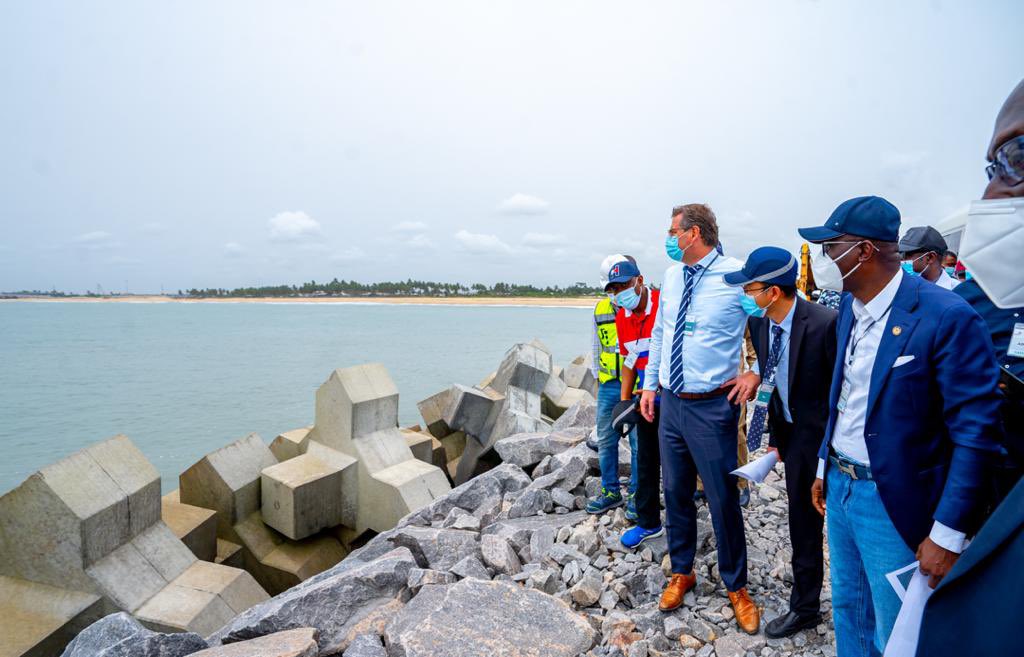
Governor Babajide Sanwo-Olu, on Friday, got the assurance from Du Ruogang, Managing Director of Lekki Port and representative of China Harbour Engineering Company, who is now the major investor of the Lekki port project.

The Governor and members of the State’s cabinet are currently on a two-day working tour of the three free trade zones established in Ibeju Lekki area of Lagos.

The port, which is being constructed by China Habour Engineering firm, is occupying 90 hectares in the entire 830 hectares of land carved out for the Lagos Free Zone, created in 2012 to enhance the economic position of Lagos as a manufacturing and logistics hub in West Africa.

Lekki Deep Seaport To Begin Operations 2023 — Sanwo-Olu
Sanwo-Olu and board members in a meeting on the progress of Lekki Deep Seaport, other constructions-Brand Spur Nigeria

The first phase of the seaport project, which is being financed by $629 million facilities from China Development Bank (CDB), is at 48 per cent completion.

After going through the project master plan, Sanwo-Olu said his administration remained committed to delivering the project, stressing that the deep seaport and other investments happening in the corridor had the potential to increase the State’s GDP in multiple folds.

He said: “Given the report I got and what I have seen here, I can say that Lagos Free Zone has made tremendous improvement. We have seen the level of partnership Tolaram Group is bringing in terms of international investment and local brands on this corridor.

“I commend all stakeholders that are with us on this journey we have found ourselves. With the level of work we have seen, I’m truly excited. It is more gratifying that, we are taking up this assignment with all energies required and we all can see what we can achieve when we work together.

“Since we signed a loan agreement less than 18 months ago, we have demonstrated strong capability in bringing the project to reality. This is the first quarter of 2021 and we have seen the project in about 48 per cent completion. The investors have given us the commitment on first quarter of 2023 completion date. We will fulfill all our parts to make sure this date becomes reality.”

Image
Lekki Deep Seaport To Begin Operations 2023-Brand Spur Nigeria

Sanwo-Olu, who noted that he had been part of the conversation for the development of the free zones as a Commissioner for Commerce and Industry in 2006, said his administration had recorded significant progress in bringing the projects to reality.

The Governor said the priority accorded to the construction of complementary infrastructure projects along the corridor was a demonstration of his Government’s fulfillment of its pledge to Lagos residents. He promised the State would work with the timeline to ensure all projects mapped out in the zones are deliver.

Sanwo-Olu said the size of the deep seaport will allow 18,000 TEU capacity vessels, which are four times bigger than the ones berthing at Apapa seaports, thereby scaling down the cost of container transportation from any part of the world.

He said: “The interesting part is that, our youths and young women will be the beneficiaries of this project. The project managers have engaged large number of our citizens in the construction parts of the work; all personnel are not expatriates. All the technical work and technology deployed have local component to it.

“For us a Government, this is the strongest point we have made with the project. I am fully convinced that the delivery of this project will transform the commercial architecture of West Africa and bring about quick turnaround time in the maritime sector.”

When it is completed, the deep seaport is expected to generate more than 170,000 direct and indirect job opportunities for Lagos residents and serve as an alternative in an effort to decongest the Federal Government-owned seaports in Apapa.

Image

Chief Executive Officer of Lagos Free Zone, Mr. Dinesh Rathi, said Tolaram Group, a Singaporean coy, initiated a $2 billion investment in the Lagos Free Zone, out of which the investor committed $950 million to developing a manufacturing hub in the zone.

When the deep seaport is completed, Rathi said the maritime project was expected to generate more than 170,000 direct and indirect job opportunities for Lagos residents and would serve as an alternative in an effort to decongest the Federal Government-owned seaports in Apapa.

Chairman of Lagos Free Zone Development Company, Mr. Biodun Dabiri, hailed the State Government for its commitment towards changing face of commerce in Africa, stressing that all statutory permits, licences and endorsement for the Lekki port project were already secured.

“There is strong guarantee that the port will be delivered before time, going by the inflow of capital investment and technical services,” Dabiri said.

The Governor and his entourage also visited Africa’s second-largest manufacturing plant of Kellogg Tolaram, manufacturer of cornflakes, which is built in Lagos Free Zone. The Governor toured the processing unit of the firm and inspected the production chain.

Also joining the Government’s team in the tour are the Chief Executive Officer of Lekki Freeport LFZ, Mr Du Ruogang, and Head of Marketing for LFZ, Ms. Chinju Udora, among others.