




The value of Nigeria’s advertising industry as of 2023 was estimated by a new report commissioned by the Advertising Regulatory Council of Nigeria (ARCON) and supported by a number of industry associations. This report clarifies the contribution of the advertising sector to the GDP of the country.
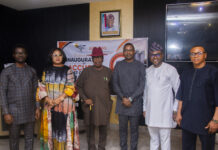
PricewaterhouseCoopers (PwC) completed the study, which was delivered to stakeholders in Lagos on Tuesday.
Olalekan Fadolapo, Director General of ARCON, spoke at the report’s debut and voiced excitement about the industry’s recent advancements, including the introduction of an Audience Measurement programme last week. He expressed gratitude to the sectoral organisations for funding the study, which included the Broadcasting Organisation of Nigeria (BON), Media Independent Practitioners Association of Nigeria (MIPAN), Outdoor Advertising Agencies of Nigeria (OAAN), Association of Advertising Agencies of Nigeria (AAAN), and Experiential Marketers Association of Nigeria (EXMAN).
Insisting that the industry’s size and influence be measured in order to assess its role as an economic facilitator, Fadolapo stated “We cannot continue to guesstimate the size of the industry. This report lays the foundation for us to assess the advertising space and its multiplier effect on the economy every year going forward.”
The report’s results, according to Fadolapo, highlight the industry’s critical position as a driver of consumer demand, company growth, employment, and innovation across industries.
The Multiplier Study Committee Chairman, Femi Adelusi, demonstrated in his presentation the significant contribution of Nigeria’s marketing communications sector to the country’s economic expansion. Speaking to important industry players and media representatives, he provided extensive research results.
“The marketing communications sector has emerged as a formidable economic powerhouse. The study estimates that for every ₦1 spent on marketing communications in Nigeria, the nation’s GDP increases by a staggering ₦16.5 – a multiplier effect that highlights the industry’s substantial value contribution.”
The survey states that the overall amount spent on marketing communications increased from ₦216 billion in 2018 to an astounding ₦605.2 billion in 2023, growing at an astounding compound annual growth rate (CAGR) of 18.7% during the previous six years. According to projections, this tendency will continue, with spending predicted to reach ₦893 billion by 2028, up from 0.7% in 2023 and adding a substantial 1.08% to Nigeria’s GDP.
After breaking down the industry’s categories, he found that cable TV (25.5%), digital media (18.5%), and creative & content production (13.4%) accounted for the top three sources of marketing communication spending between 2018 and 2023. “The proliferation of cable TV, driven by its diverse content offerings and affordable package options, has captivated a wide consumer base. Additionally, the surge in digital media spend, fueled by increased internet and mobile penetration, as well as the rise of social media and video-on-demand platforms, has reshaped the marketing landscape,” he disclosed.
The report highlighted the industry’s strengths while acknowledging challenges like economic pressures, regulatory changes, and competition from international players. These strengths included emerging digital trends, chances for domestic and international collaboration, the capacity to take advantage of technological advancements like artificial intelligence and big data analytics, Nigeria’s sizable and culturally diverse market, and the possibility for creative, locally-tailored marketing strategies.
Continuing, important recommendations were provided by the study to speed up the growth and development of the sector. A Joint Industry Body (JIB) should be established to facilitate operational coordination between broadcasters, agencies, and advertisers. Other measures include encouraging strategic alliances among industry players, adopting a “global” approach that combines local initiatives with best practices from around the world, and using analytics tools to closely monitor consumer behaviour and spending patterns.
The report disclosed that “The marketing communications industry is an economic force that deserves recognition and support. By implementing these recommendations, we can unlock the industry’s full potential, drive sustainable growth, foster job creation, and cement Nigeria’s position as a leading marketing communications hub in Africa and beyond.”
The National Advertising Conference Chairman, Tunji Adeyinka, gave background information on the study’s origins. He clarified that the decision to use PwC for a reliable assessment was made because the 2022 conference revealed a knowledge gap about the GDP contribution of the sector. He went on to say that the study looked at two important areas: the direct financial contribution of the advertising sector to GDP and its multiplier effect, which is the increased influence of advertising expenditure on total economic production.
On the local and national news story, we disclose that stakeholders in the industry have hailed the report in different ways, praising it as a positive step. Tolulope Medebem, President of EXMAN; Brenda Nwagwu, Vice President, MIPAN; Steve Babaeko, President, AAAN; Kenny Ogungbe of BON; and Sola Akinsiuku, President, OAAN, were among the prominent figures in the business present at the event. They assert that the industry has been excited by the study’s results as a result of stakeholders realising the enormous prospects that lie ahead. The marketing communications industry is positioned to play an increasingly significant role in determining Nigeria’s economic future due to its shown capacity to spark economic activity, encourage innovation, and generate employment prospects.
