




Unsold commodities in the manufacturing sector increased to N1.24 trillion in the first half (H1) of 2024, according to the Manufacturers Association of Nigeria (MAN).
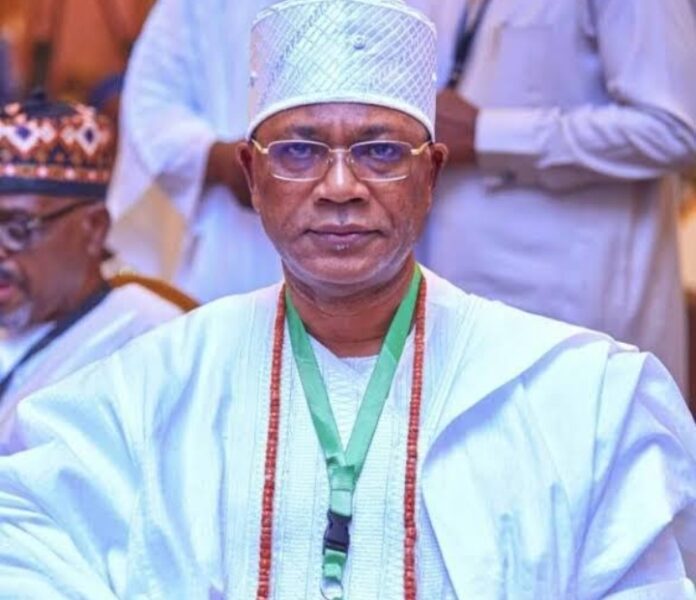
Francis Meshioye, the President of MAN, stated in the association’s first-half economic report available to BrandSpur business and economy news, that the number of unsold products increased by 357.57 percent on an annual basis.
Meshioye ascribed the notable increase in unsold inventories to a decline in consumer purchasing power brought on by the naira’s devaluation, rising inflation, and the elimination of subsidies. He claimed that the large amount of unsold inventory underscores the difficulties that customers are encountering and emphasizes the necessity of taking action to increase demand and improve the sector’s performance.
Continuing, he had this to say: “The inventory of unsold finished products in the manufacturing sector surged by 357.57 percent year-on-year, reaching N1.24 trillion in H1 2024.”
According to him, the manufacturing sector’s capacity utilization fell little year over year, from 56.5 percent in H1 2023 to 56.4 percent in H1 2024. On the other hand, he recorded a 2.8 percent gain over H2 2023, suggesting some recovery, saying: “Real manufacturing output in Nigeria declined by 1.66 percent year-on-year in H1 2024, falling to N1.34 trillion from N1.36 trillion in H1 2023. Despite this decline, the sector saw a 9.97 percent increase compared to H2 2023, driven by a baseline effect. In nominal terms, the manufacturing sector’s output in Nigeria increased by 30.38 percent year-on-year, reaching N5.34 trillion in H1 2024.
“This growth was primarily driven by the sharp rise in domestic prices, as reflected in the Consumer Price Index, which surged to 34.19 percent in June 2024,” MAN’s President added.
Local raw material sourcing in the manufacturing sector increased marginally to 56.03 percent in H1 2024 from 55.4 percent in H1 of the previous year, according to the President
He went on to say that the slight increase is indicative of a slow shift towards domestic sourcing, which is being fueled by difficulties obtaining foreign exchange. The challenges of shifting away from imported raw materials are reflected in the losses in local sourcing in some industries, such as non-metallic mineral goods and textiles, clothing, and footwear.
Furthering, he added that investments in the industrial sector grew steadily, rising 29.63 percent year over year to N250.13 billion in H1 2024. He claimed that the depreciation of the naira, which increased the price of importing machinery and other essential assets, was the primary cause of the increase.
He stated: “In real terms, investment spending did not increase, as manufacturers focused on maintaining current production levels rather than expansion due to the challenging economic environment. Also, electricity supply to industries showed some improvement in H1 2024, with average daily supply hours increasing to 11.28 hours per day.
“However, the cost of providing alternative power continued to rise, with manufacturers spending N238.31 billion on alternative energy sources in H1 2024, a 7.69 percent increase from H2 2023.
“The surge in costs was driven by higher prices for diesel, gas, and other energy sources, as well as the need for manufacturers to invest in self-energy generation due to unreliable power supply from the national grid,” he added
MAN’s President spoke further that the H1 2024 report on the manufacturing sector emphasizes the pressing necessity for the adoption of significant and well-thought-out economic changes. He stated that the goal of the reforms is to address the issues that manufacturers face.
Meshioye claims that the time under review was characterized by serious difficulties for Nigeria’s manufacturing industry, including rising inflation, decreased consumer demand, and high operating expenses. He claimed that while certain industries showed development and resilience, others struggled with falling production values, rising inventories, and decreased employment.
According to him, the report’s primary focus was on manufacturing metrics such as capacity utilization, production value, inventory levels, domestic raw material usage, investments, and spending on alternative energy sources. He determined that improving the business climate, encouraging economic diversification, and fortifying policy coherence were the main areas of concentration.
He went on to say: “The success of these reforms will be crucial in reversing the current economic downturn, creating jobs, reducing inflation, and improving the overall welfare of Nigerian citizens.
“As the country navigates through these turbulent times, the resilience of its policy framework and the effectiveness of its economic management will determine the path forward,” he added.
According to Meshioye, the world economy held up well throughout that time, with major economies avoiding a sharp decline and lowering inflation without raising unemployment.
However, Meshioye stated that growth was still hampered by the residual effects of high interest rates, difficulties with debt sustainability, ongoing geopolitical conflicts, and escalating climate concerns. He cautioned that the elements endangered decades of progress, especially for small island governments and developing nations.
Additionally, MAN’s President stated that political instability, high inflation, growing borrowing costs, and continuous exchange rate pressures had made the economic prospects for many African countries worse. He went on to say that Nigeria’s economy continues to face major obstacles that have hampered its capacity for expansion and threatened its stability. He claimed that despite measures to stabilize the economy, such as the Central Bank of Nigeria’s (CBN) strong monetary tightening, the intended outcomes in terms of reducing inflation and fostering growth were still elusive.
