




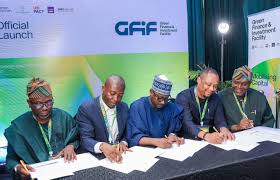
A new $188 million renewable energy financing initiative has been launched in Nigeria to accelerate solar power deployment and improve electricity access for households, businesses, and underserved communities across the country.
The Green Finance Investment Facility (GFiF), unveiled in Lagos, is designed to mobilise large-scale private and institutional investment into Nigeria’s distributed renewable energy sector as demand for alternative power solutions continues to rise.
The initiative is being driven through a collaboration involving the Rural Electrification Agency (REA), First City Monument Bank (FCMB), Barton Heyman Limited, UK PACT, and ARM Harith Infrastructure Investment Limited.
Brandspur Banking News Desk reports that the facility aims to finance 191 megawatts of distributed solar energy infrastructure while supporting Nigeria’s broader clean energy transition and rural electrification objectives.
Stakeholders involved in the project stated that the platform is structured to address financing gaps within the renewable energy industry by combining sovereign-backed pipelines, commercial funding, and results-based financing mechanisms to attract long-term private capital.
According to project partners, the initiative is expected to support electricity access for millions of Nigerians currently facing unreliable power supply, especially in rural and peri-urban communities where grid infrastructure remains inadequate.
Industry experts at the launch noted that renewable energy investments are increasingly becoming critical to Nigeria’s economic growth strategy as businesses and households continue to seek stable and cost-effective electricity alternatives.
Officials from the Rural Electrification Agency described access to finance as one of the biggest barriers limiting renewable energy expansion in Nigeria, adding that the new platform is expected to unlock fresh opportunities for developers and infrastructure investors.
FCMB also reaffirmed its commitment to supporting renewable energy financing in Nigeria, disclosing that the bank has already funded several mini-grid projects and continues to provide financing support for developers participating in national electrification programmes.
The facility’s long-term ambition includes mobilising up to $40 billion in financing and supporting the development of 20 gigawatts of distributed renewable energy infrastructure across Nigeria.
Development partners and industry stakeholders further stressed that stronger collaboration between financial institutions, policymakers, and private investors will be essential to scaling clean energy access and reducing Nigeria’s longstanding electricity deficit.
