



Nigeria’s emerging artificial intelligence ecosystem has triggered fresh conversations around public trust, institutional accountability, and the future of AI-driven governance following comparisons between government and consumer AI platforms.
The discussion gained momentum after technology analyst Femi Ariyo examined how different AI systems responded to a public information query relating to the leadership of the Financial Policy and Regulation Department at the Central Bank of Nigeria.
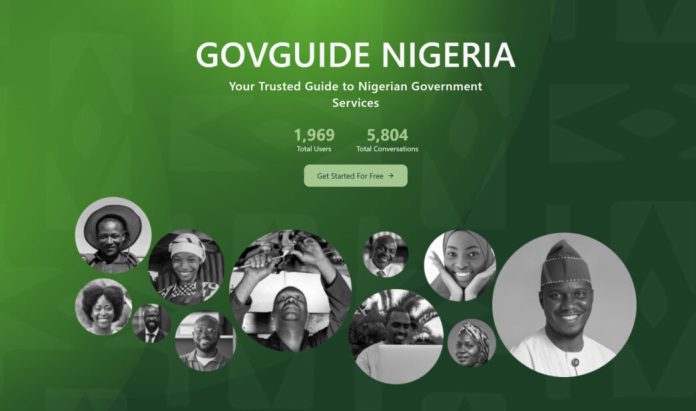
The comparison involved OpenAI’s ChatGPT, Google’s Google Gemini, and GovGuide Nigeria, the newly launched AI-powered government chatbot developed with support from Meta using the Meta Llama large language model ecosystem.
Brandspur Tech News Desk reports that while ChatGPT and Gemini attempted to identify a possible departmental director using publicly available information and contextual reasoning, GovGuide Nigeria declined to provide an unverified answer and instead directed users to official communication channels within the Central Bank of Nigeria.
The differing responses have intensified discussions around the role of artificial intelligence in governance, particularly the balance between conversational efficiency and institutional accuracy.
Analysts say consumer AI systems are typically designed to provide broader knowledge synthesis and conversational engagement, while government AI platforms are expected to prioritise legal compliance, verified data, institutional accountability, and public trust.
Experts also noted that AI hallucination — where systems generate convincing but inaccurate information — remains one of the biggest global concerns surrounding generative artificial intelligence, especially in sensitive sectors such as banking, healthcare, security, taxation, immigration, and public administration.
According to Ariyo, GovGuide Nigeria’s cautious response may reflect a deliberate governance strategy aimed at preventing the spread of inaccurate or unverifiable information through official government channels.
The conversation has also highlighted wider concerns over Nigeria’s public data infrastructure and digital readiness for large-scale AI deployment.
Industry observers argue that effective government AI systems require structured databases, interoperable digital records, machine-readable public information, updated metadata systems, and transparent institutional documentation frameworks to function efficiently.
Without strong digital infrastructure, analysts warn that public-sector AI platforms could struggle between refusing too many requests and risking misinformation through inaccurate responses.
Despite the concerns, stakeholders believe AI adoption within governance could significantly improve multilingual communication, public service delivery, digital inclusion, administrative efficiency, and citizen engagement if implemented with strong oversight and accountability mechanisms.
The development marks another step in Nigeria’s growing interest in artificial intelligence as policymakers, technology companies, and public institutions increasingly explore AI-powered solutions capable of transforming governance and public sector operations nationwide.
