




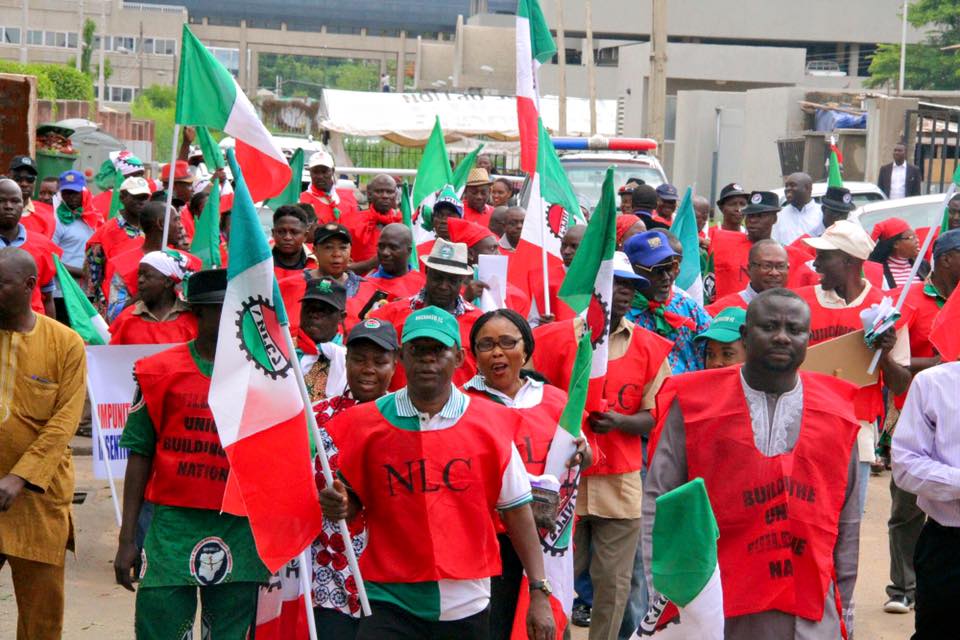
The Nigeria Labour Congress (NLC) has renewed calls for a substantial review of workers’ earnings, arguing that current wage levels no longer reflect the realities of the country’s economic environment. The labour union said rising inflation, currency depreciation and increasing living costs have significantly eroded the purchasing power of Nigerian workers.
The position comes amid fresh discussions on the future of the national minimum wage following a proposal by the Chairman of the Nigeria Governors’ Forum and Governor of Kwara State, AbdulRahman AbdulRazaq, who urged the Federal Government to consider raising the minimum wage from ₦70,000 to ₦100,000.
Brandspur Banking News Desk reports that the NLC welcomed the proposal as a positive contribution to the ongoing conversation on workers’ welfare but maintained that the suggested figure remains inadequate when measured against prevailing economic conditions. The union noted that escalating food prices, higher transportation costs, electricity tariff increases and other inflationary pressures have continued to weaken household incomes across the country.
According to the labour movement, a more realistic wage structure should reflect the true cost of living and enable workers to meet essential needs without falling deeper into financial hardship. Labour leaders argued that recent economic reforms and persistent inflation have widened the gap between earnings and living expenses, making a stronger wage adjustment necessary.
The debate comes less than two years after the Federal Government approved an increase in the national minimum wage from ₦30,000 to ₦70,000. The current legislation provides for periodic reviews to ensure wage levels remain aligned with economic realities and the welfare needs of workers.
Economic analysts say the renewed discussion is likely to shape future negotiations between labour unions, state governments and the Federal Government as policymakers seek to balance workers’ welfare with fiscal sustainability. The outcome of the debate could have far-reaching implications for public sector finances, consumer spending and the broader Nigerian economy.
