




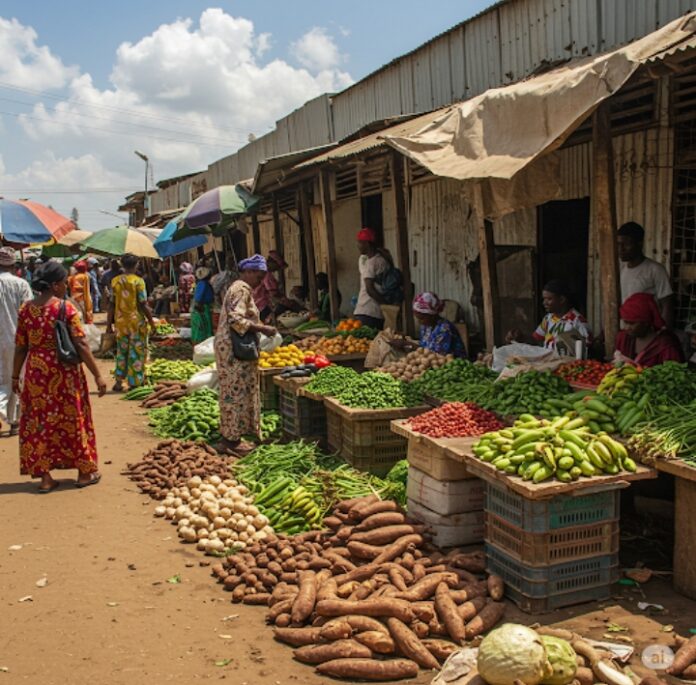
Prices of key staple foods in Nigeria recorded significant year-on-year declines in April 2026, with garri and beans among the most affected commodities, offering some relief to consumers amid easing food inflation pressures across the country.
Data released by the National Bureau of Statistics (NBS) showed that the average price of white garri sold in loose measure dropped by 39.86 percent compared to April 2025, while brown beans recorded an even steeper decline of 44.89 percent over the same period. The figures point to notable shifts in food market pricing dynamics despite ongoing cost fluctuations in monthly comparisons.
Brandspur Banking News Desk notes that the latest inflation-related food report highlights a mixed pricing environment, where broad annual declines coexist with short-term monthly increases across selected food items.
According to the report, white garri fell from N1,345.10 in April 2025 to N808.96 in April 2026, while brown beans declined from N2,429.39 to N1,338.93 within the same period. However, both commodities recorded slight month-on-month increases, indicating continued volatility in short-term market supply and demand conditions.
Other food items showed varied performance. Tomato prices averaged N1,177.92 per kilogram, reflecting a year-on-year decline but a moderate monthly increase. Onion bulbs also fell significantly over the year, while fresh ginger moved in the opposite direction, recording an increase compared to the previous year, underscoring uneven price movements across food categories.
The report also revealed wide disparities in food prices across Nigeria’s regions and states, driven by differences in transportation costs, supply chain efficiency, and local production conditions. Southern states generally recorded higher average prices for several commodities, while northern regions often posted lower averages for select food items.
Food inflation in Nigeria remains elevated but has shown signs of moderation compared to the previous year, easing from higher levels recorded in 2025. Despite this improvement, household purchasing power continues to face pressure due to persistent increases in selected food items and regional price variations.
The NBS attributed ongoing food price movements to a combination of supply factors and market conditions affecting major staples, even as broader inflation trends suggest gradual stabilization in the food sector.
