




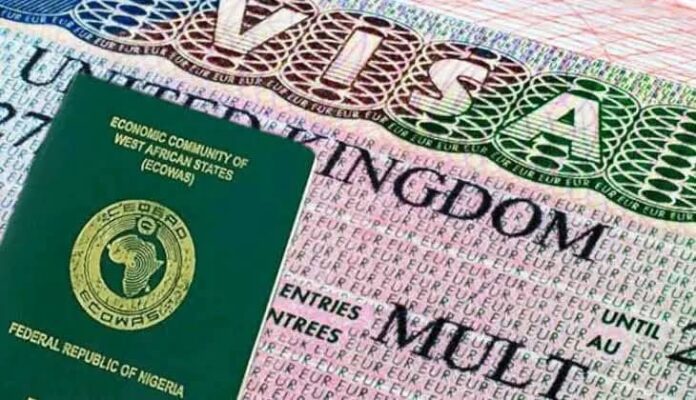
The United Kingdom rejected 1,344,595 visa applications submitted by Nigerian citizens between 2005 and the first quarter of 2026, according to official UK Home Office data, highlighting the significant financial and economic impact of failed applications on individuals seeking to travel, study, work or reunite with family in Britain.
Over the 21-year period, Nigerians lodged approximately 4.09 million visa applications, with 2.72 million approved and 1.34 million refused, resulting in an overall refusal rate of 33.1 per cent. The figure is substantially higher than the UK’s global average refusal rate and places Nigeria among the countries with the highest number of visa rejections worldwide.
The financial cost of these refusals extends well beyond unsuccessful travel plans. Brandspur Banking News Desk reports that UK visa application fees are generally non-refundable, meaning applicants forfeit the full amount once an application is denied. Based on the current standard six-month visitor visa fee of £135, the cumulative cost of the rejected Nigerian applications exceeds £181 million in visa fees alone, equivalent to more than ₦390 billion at prevailing exchange rates. The actual amount is likely significantly higher, as many refused applications were for more expensive work, study and long-term visa categories.
In addition to application fees, applicants often spend considerable sums on passport processing, biometric enrolment, document certification, bank statements, tuberculosis tests where required, English language examinations, courier services, travel to visa application centres, foreign exchange charges and professional immigration advisory services. Many prospective students also incur university application costs before receiving a visa decision.
The economic impact also includes substantial opportunity costs. Applicants frequently devote weeks or months to preparing documentation and waiting for visa outcomes, while students risk losing admission offers or scholarship opportunities if applications are refused or delayed. Business owners may miss investment meetings, trade events and commercial partnerships, while skilled professionals can lose overseas employment opportunities tied to strict relocation timelines.
Official figures show that visitor visas accounted for the majority of Nigerian refusals, with more than 1.13 million applications denied over the period. Study visa applications recorded over 130,000 refusals, while tens of thousands of work and family visa applications were also unsuccessful, reflecting the broad impact of the UK’s immigration decisions across different categories.
Nigeria’s visa refusal rate has fluctuated over the past two decades. It reached nearly 50 per cent in the mid-2000s before improving steadily and falling to around 21 per cent in 2023. However, the rate has risen again following tighter UK immigration policies, including stricter rules for skilled workers and restrictions affecting international students and their dependants.
Despite the high level of refusals, Nigeria remains one of the UK’s largest sources of visa applicants, underscoring the enduring demand for British education, employment, tourism and family reunification. The latest figures illustrate not only the scale of Nigerian interest in travelling to the UK but also the substantial financial losses and missed personal and professional opportunities that accompany unsuccessful visa applications.
