



Abuja, July 2026
The Honourable Minister of Power Joseph Tegbe has declared that Rural
electrification is no longer about extending wires into communities but
about extending opportunity, creating prosperity and enabling
enterprise. He stated this while affirming Federal Government’s
commitment to transforming Nigeria’s rural economy through energy at the
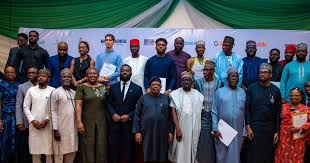
Stakeholders’ Engagement Workshop on Productive Use of Energy (PUE) in
Abuja. The event drew government agencies, development partners,
financiers, manufacturers, farmers’ associations and members of the
diplomatic community to chart a coordinated path for powering
agricultural productivity nationwide.
In his keynote address, the Minister noted that success can no longer be
measured only by megawatts generated or households connected, stressing
that electricity becomes truly transformational only when it powers
productivity, whether that means a farmer irrigating more land, a rice
mill processing more produce, a cold room preserving fish and
vegetables, or young entrepreneurs building agro-processing businesses
within their communities. He identified the Productive Use of Energy
agenda as a convergence point for energy, agriculture,
industrialization, financial inclusion, food security and job creation,
and pointed to the scale of value lost between harvest and market
through inadequate cold storage, limited processing capacity and the
high cost of energy-intensive equipment. He assured stakeholders that
the business case is compelling across the value chain, offering farmers
lower operating costs, financial institutions a new class of bankable
assets, manufacturers a growing domestic market and government stronger
revenue and rural development outcomes, and urged participants to leave
the workshop with greater alignment and confidence in Nigeria’s
potential to lead Africa’s productive-use-of-energy market.
In his welcome address, MD/CEO of the Rural Electrification Agency
(REA), Abba Abubakar Aliyu, commended the Minister for his energy and
drive, and framed the engagement as building a lasting system rather
than a one-off project, affirming that small-scale agriculture and MSMEs
are the main story of Nigeria’s food system. He cited REA’s track
record, including the Energizing Agriculture Programme’s pipeline of
over 120 bankable sites and the Africa Minigrids Programme, disclosing
that the DARES programme has committed 250 million dollars to standalone
solar systems, 100 million dollars to solar-as-a-business and 50 million
dollars to Productive Use Equipment. The Honourable Minister of
Agriculture and Food Security, represented at the event, aligned the
Ministry’s priorities with the PUE agenda, while a representative of the
ECOWAS Commission situated Nigeria’s efforts within the regional
initiative and reaffirmed the Commission’s support for energy-driven
agricultural transformation across West Africa.
The workshop marks the first in a planned series of engagements that
will progressively address financing design, technology standards and
deployment pipelines for productive use equipment. With government, REA,
development partners and the private sector now aligned around a common
framework, stakeholders expressed confidence that the dialogue will
translate into concrete investment, innovation and stronger incomes for
Nigeria’s rural economy.
