




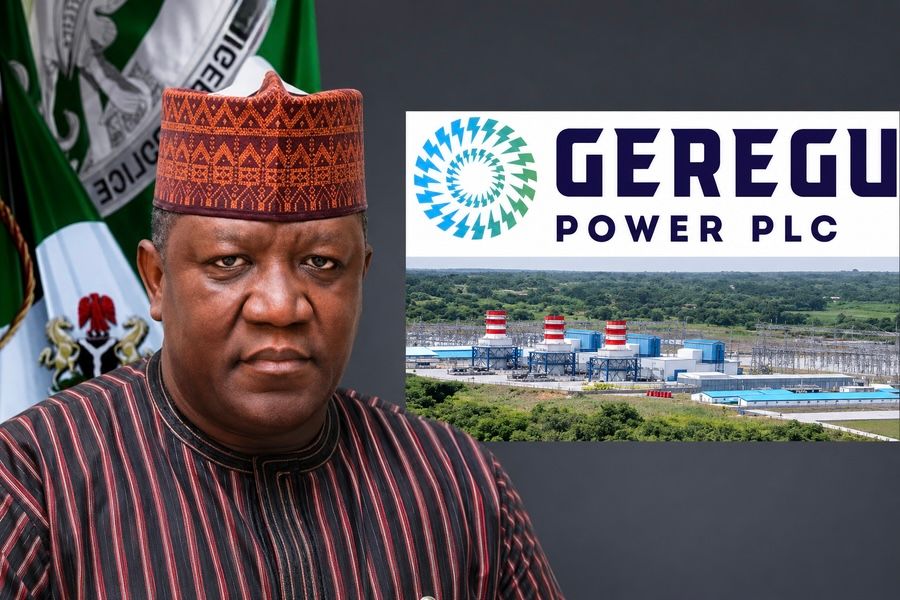
Geregu Power Plc has appointed Mohammed Sani Jaoji as its Acting Chief Executive Officer, days after the electricity producer failed to meet N6.03 billion in obligations linked to its N40.09 billion bond.
Jaoji assumed the role on Monday, August 17, 2026, subject to approval by the Nigerian Electricity Regulatory Commission (NERC). He takes over from Sean Manley, whose interim tenure ended on August 14.
The leadership change comes as Geregu faces mounting financial pressure following its bond default and a steep deterioration in its first half financial performance. Brandspur Banking News Desk reports that the board said Jaoji would provide temporary leadership while the company works towards appointing a substantive CEO.
Jaoji is not new to Geregu. He worked with the power company between 2007 and 2019, where he served as Head of Maintenance Planning and Performance.
He later moved into government, serving as Technical Assistant to the Minister of Power from 2019 to 2023, before returning to Geregu. He has more than three decades of experience in Nigeria’s electricity industry.
The new acting CEO studied Mechanical Engineering at Ahmadu Bello University, Zaria, and is a registered member of the Council for the Regulation of Engineering in Nigeria (COREN).
Geregu informed correspondents that Jaoji’s experience would support the company’s governance and strategic direction during the transition. The board also thanked Manley for his service and wished him well.
The timing of the appointment, however, puts Geregu’s financial position firmly in focus. The company missed its eighth semi-annual coupon payment and fourth scheduled principal repayment under its seven-year bond.
Issued in July 2022 under Geregu’s N100 billion debt issuance programme, the bond carries a fixed interest rate of 14.5 per cent and is due to mature in July 2029.
Geregu’s financial results have added to the pressure. Profit after tax fell by 88 per cent to N2.54 billion in the first half of 2026, compared with N20.27 billion recorded in the corresponding period of 2025.
Revenue also plunged by 78.7 per cent year-on-year, while second-quarter turnover fell sharply to N419 million from N55.87 billion a year earlier.
The company attributed the weaker performance to a N61.47 billion turbine maintenance programme, which reduced its available generation capacity during the period.
The bond default has also affected confidence in Geregu’s credit position. Agusto & Co withdrew its A- rating on both the company and the N40.09 billion bond after the default, saying it no longer had sufficient reliable information to maintain its rating opinion.
GCR Ratings also withdrew or downgraded assessments relating to the company amid concerns over liquidity pressures and dividend payments.
Geregu had said earlier in August that it was engaging stakeholders, advisers and regulators in efforts to resolve issues surrounding its bond obligations.
The company has also undergone significant ownership and board changes. In December 2025, billionaire investor Femi Otedola sold his majority stake in Geregu for N1.088 trillion, ending his controlling interest in the power producer.
A new board under MA’AM Energy Limited, linked to former Zamfara State governor Abdulaziz Yari, subsequently approved a N22.5 billion dividend payment in January 2026.
That dividend decision attracted scrutiny because it came while the company was carrying substantial financial obligations.
Geregu’s latest leadership transition therefore comes at a sensitive time. The company is dealing simultaneously with weaker earnings, reduced power generation, debt obligations and pressure on its liquidity.
The difficulties also highlight the wider financial strain facing Nigeria’s electricity generation companies, which are reportedly owed about N6.5 trillion by the Federal Government and electricity distribution companies.
For generating companies, delayed payments can make it harder to maintain plants, fund operations and meet financial commitments. Geregu’s experience illustrates how pressure within the electricity market can eventually reach the balance sheet of a major power producer.
Jaoji’s appointment is temporary, with Geregu expected to name a substantive chief executive as the company navigates the financial and operational challenges confronting the business.
