




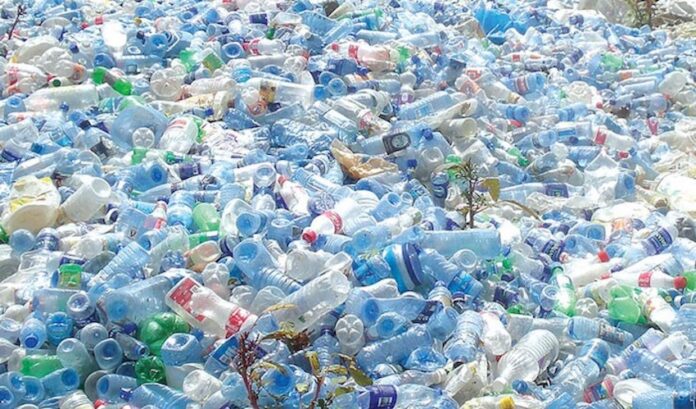
The Federal Government has introduced the National Environmental (Plastic Waste Control) Regulations 2026, placing greater responsibility on manufacturers, importers, brand owners, recyclers and other businesses involved in Nigeria’s plastics industry to manage the waste created by products they put into the market.
The regulations, unveiled in Abuja by the Minister of Environment, Balarabe Abbas Lawal, are aimed at reducing plastic pollution while protecting public health and the environment. They also seek to encourage a circular economy in which used plastic materials are recovered, recycled and returned to productive use rather than simply discarded.
Lawal, who was represented by the ministry’s Permanent Secretary, Salihu Aminu Usman, said the government was not seeking to eliminate the use of plastics, recognising their importance across healthcare, food preservation, manufacturing, agriculture and transportation. Brandspur Brand News reports that the new framework instead shifts greater responsibility for plastic waste towards businesses operating across the product lifecycle.
Under the regulations, companies that manufacture or import plastic products into Nigeria will be expected to take responsibility beyond the point of sale. Their obligations will extend to what happens to those products when consumers have finished using them, strengthening the government’s Extended Producer Responsibility approach to waste management.
The rules cover the wider plastics value chain and establish requirements relating to plastic packaging and the use of recycled materials. Brand owners, recyclers and other operators are also captured, signalling an attempt by the government to build a broader waste-management system rather than focusing only on consumers who dispose of plastic products.
For manufacturers and importers, the development could mean closer attention to how products are packaged, collected and recovered after use. It also increases the importance of recycling and material-recovery systems as companies adjust their operations to meet environmental obligations under the new regime.
The government said the regulations build on measures already introduced through the National Policy on Plastic Waste Management, the Extended Producer Responsibility Guidelines and guidelines covering single-use plastics. Together, the policies are intended to provide a more enforceable framework for tackling the growing environmental challenge associated with discarded plastics.
Lawal stressed that environmental protection must be pursued without unnecessarily disrupting economic activity or placing disproportionate costs on vulnerable consumers. The government’s approach, he said, is intended to be science-based and inclusive while ensuring that businesses responsible for putting plastic products into circulation also play a meaningful role in managing the resulting waste.
Beyond pollution control, the Federal Government is also positioning plastic waste as a potential economic resource. Greater investment in recycling, material recovery and circular markets could create opportunities for businesses and workers involved in collecting, processing and converting discarded materials into reusable products.
The regulations therefore place recycling at the centre of both environmental protection and economic activity. Rather than allowing used plastics to remain solely a disposal problem, the framework seeks to encourage their recovery as materials that can re-enter production and support new investment.
Compliance, however, will be backed by sanctions. The environment minister warned that individuals and organisations found violating the regulations could face financial penalties and, where applicable, imprisonment. Responsible officers may also be held personally liable for breaches under provisions of the new rules.
With the National Environmental (Plastic Waste Control) Regulations 2026 now introduced, manufacturers, importers and other operators across Nigeria’s plastics sector face a more direct obligation to account for the environmental impact of their products after use, as the Federal Government pushes for stronger waste recovery, recycling and pollution control.
