




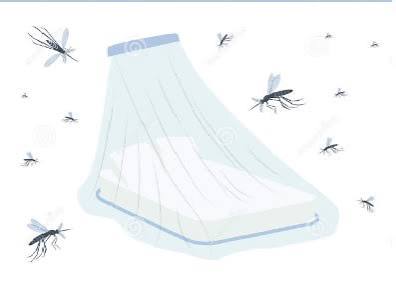
Nigeria has begun local production of next-generation insecticide-treated mosquito nets designed to tackle insecticide-resistant mosquitoes, marking a significant expansion of the country’s domestic capacity to manufacture critical malaria prevention products.
Health Textiles Nigeria is producing the dual-active ingredient nets at its manufacturing facility in Lagos, the first facility in the country equipped to manufacture the advanced mosquito nets locally. At full production capacity, the plant is expected to manufacture about 10 million nets annually and create more than 600 jobs.
Brandspur Brand News reports that unlike conventional insecticide-treated nets that depend on a single active ingredient, the newer nets combine two active ingredients. The technology is intended to provide greater protection in areas where mosquitoes have developed resistance to older insecticides.
The development is particularly significant for Nigeria because of the country’s malaria burden. According to the World Health Organisation, Nigeria accounts for roughly a quarter of malaria cases globally, making effective prevention tools an important part of efforts to reduce infections and deaths.
Local manufacturing could also reduce Nigeria’s reliance on imported mosquito nets and strengthen the domestic supply chain for malaria-control products. Producing the nets within the country creates an opportunity to build technical manufacturing expertise while retaining more of the economic value associated with large-scale malaria prevention programmes.
The Lagos facility’s projected annual capacity of 10 million nets could become particularly important during mass distribution campaigns, where millions of insecticide-treated nets are required to reach households across malaria-endemic communities.
Beyond disease prevention, the investment adds a manufacturing dimension to Nigeria’s healthcare sector. More than 600 jobs are expected when the facility reaches full-scale production, alongside opportunities linked to distribution and other parts of the supply chain.
However, manufacturing capacity alone will not determine the public-health impact. The effectiveness of locally produced nets will ultimately depend on whether they reach households that need them and are consistently used, particularly in communities with high malaria transmission.
For Nigerian families, wider availability of effective mosquito nets could provide another layer of protection against a disease that continues to place a heavy health and financial burden on households across the country.
