




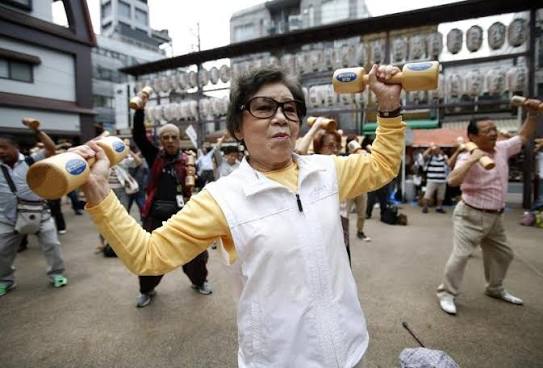
Japan’s population of people aged 100 and above has exceeded 100,000 for the first time, reaching a record 107,677 as the country continues to grapple with falling births and a rapidly ageing society.
The latest figure, released by Japan’s Ministry of Health, Labour and Welfare, represents an increase of nearly 8,000 centenarians from the previous year. It also marks the 56th consecutive annual rise in the number of people aged at least 100.
Women account for the overwhelming majority of the group, with 94,298 women, or about 88% of all centenarians. Brandspur World News reports that the development offers a striking contrast between Japan’s ability to support longer lives and the demographic challenges created by its shrinking younger population.
Japan is among the countries with the highest life expectancies globally. World Bank figures put the country’s average life expectancy at 84 years in 2024, compared with 79 years in the United States.
The country’s longevity has been associated with factors including its healthcare system and dietary habits. Another aspect often linked to Japanese wellbeing is ikigai, a philosophy centred on finding purpose and meaning in everyday life.
The Ministry of Health, Labour and Welfare identified Fuyo Kishimoto, a 114 year old woman from Kyoto, and Hikaru Kato, a 112 year old man from Kumamoto, among the country’s oldest residents.
The milestone, however, comes with a difficult economic reality. Japan’s expanding elderly population is increasing demand for care services while the number of people available to work continues to decline.
Japan, the world’s fourth largest economy, has a population of about 123 million, but its overall population continues to fall as the country records historically low birth rates.
The demographic imbalance has become a major policy challenge, with fewer young people entering the workforce to support an increasingly elderly population. Japan has responded in part by allowing more foreign skilled and labour workers into the country, although it has also moved to tighten some visa requirements amid growing concerns about immigration.
The record number of centenarians therefore captures two sides of Japan’s demographic story: people are living longer than ever, even as the country struggles to produce enough births to sustain its population in the long term.
