




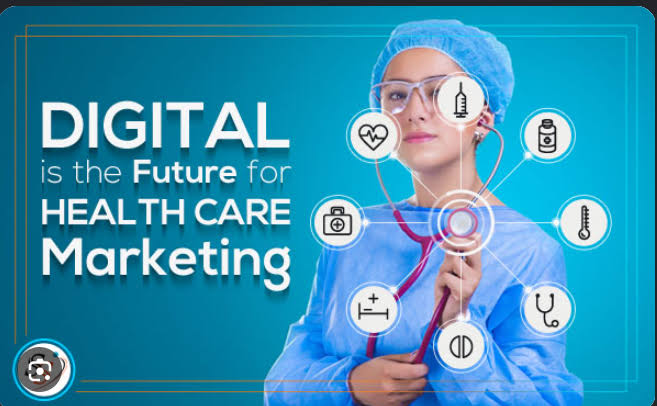
Global healthcare advertising spending is projected to approach $69 billion by 2033, driven by pharmaceutical companies’ growing investment in digital marketing and rising demand for treatments, medical innovation and personalised healthcare.
Market estimates from Health Union and Data Bridge Market Research put the sector’s value at between $44.56 billion and $46.29 billion in 2025 and 2026. Forecasts suggest it could grow to between $67.87 billion and $68.64 billion by 2032 and 2033, representing annual growth of approximately 5.4 to 5.5 per cent.
The Brandspur Brand News Desk reports that digital channels are becoming increasingly important to healthcare marketers, with the segment recording projected annual growth of more than 12 per cent. Pharmaceutical brands are expanding their use of social media, connected television and precision-targeted campaigns alongside traditional advertising to reach specific audiences.
North America accounts for more than 42 per cent of global healthcare advertising expenditure, supported partly by direct-to-consumer prescription drug promotion in the United States. Asia-Pacific, meanwhile, is identified as the fastest-growing regional market.
The expansion in advertising is taking place alongside growth in the pharmaceutical industry itself. Estimates place the global pharmaceutical market at between $1.74 trillion and $1.84 trillion in 2025 and 2026, with projections rising to between $2.78 trillion and $2.82 trillion by 2033. Another forecast puts pharmaceutical revenue at $1.27 trillion in 2026, increasing to $1.60 trillion by 2031.
The differing figures reflect variations in market definitions and research methodologies, but both sets of projections point to continued expansion in pharmaceutical sales and healthcare marketing.
Rising rates of chronic illnesses, ageing populations and increased healthcare spending are among the factors supporting pharmaceutical demand. Advances in biologics, personalised medicine and specialised treatments are also creating new options for patients with cancer, autoimmune conditions and genetic disorders.
Artificial intelligence is emerging as another influence on drug development. Pharmaceutical companies are applying the technology to analyse large datasets, identify potential drug candidates, predict molecular behaviour and improve clinical trials, with the aim of reducing costs and shortening development timelines.
Pfizer and Flagship Pioneering announced a $100 million initiative to develop 10 AI-enabled medicines during 2024 and 2025, according to the supplied industry information. Pfizer has also worked with NVIDIA on AI applications in pharmaceutical research.
BioNTech, meanwhile, announced plans in May 2025 to invest up to €1 billion in UK research and development over a decade. The proposed investment includes facilities in London and Cambridge focused on messenger RNA technology and personalised cancer treatments. The plan was expected to create more than 400 skilled jobs and support clinical trial enrolment of up to 10,000 patients by 2030, with UK government funding of up to €129 million.
The changing treatment landscape is also influencing the composition of the pharmaceutical market. Conventional medicines accounted for 54.74 per cent of pharmaceutical revenue in 2024, while biologics and biosimilars are expected to record strong growth as demand increases for treatments targeting complex and chronic diseases.
Branded medicines represented 86.76 per cent of pharmaceutical revenue in the cited 2024 analysis. However, patent expirations, pressure on healthcare budgets and demand for more affordable treatments are expected to support the growth of generic medicines and biosimilars.
Oncology remains a major pharmaceutical category, with one market estimate projecting drug revenue of $232.50 billion in 2026. The United States is also expected to remain the largest pharmaceutical market by revenue, with the cited estimate placing its 2026 figure at $694.83 billion.
As pharmaceutical companies compete to develop and commercialise new treatments, advertising is becoming an increasingly significant channel for communicating product information and reaching intended audiences. The projected growth of digital marketing points to a wider shift in how healthcare brands engage consumers, although the sector’s expansion also raises the importance of accurate, responsible communication about medicines and treatment options.
