




The evolution of mobile phones over four decades has transformed communication, business and access to information. Devices once reserved for wealthy professionals have become pocket-sized computers used for everything from banking and navigation to photography and entertainment.
From Motorola’s expensive handheld telephone in the 1980s to touchscreen smartphones and foldable displays, the industry’s history reflects a series of innovations that have continually redefined consumer expectations.
The transformation has been driven by advances in cellular networks, computing power, battery technology, cameras and software. Competition among Motorola, Nokia, IBM, Apple, Samsung and Google has also shaped the market, turning mobile phones from basic communication devices into essential digital tools.
Brandspur Brand News examines the milestones behind this transformation.
The early era was dominated by bulky car phones that relied on analogue networks. Motorola’s DynaTAC 8000X, commercially introduced in 1983, marked a breakthrough by allowing people to carry a telephone rather than depend on a fixed location. Despite its large size, limited battery life and high price, it established a new direction for mobile communication.
Motorola’s MicroTAC followed in 1989, introducing a more compact design with a folding mouthpiece. The arrival of second-generation (2G) digital networks later expanded mobile capabilities, supporting SMS messaging and mobile data. Text messaging, first demonstrated in 1992, eventually became a major part of everyday communication.
IBM’s Simon Personal Communicator, introduced commercially in 1994, marked an early attempt to combine telephone and computing functions. Featuring a touchscreen, calendar, address book and note-taking tools, it is widely regarded as the first smartphone. However, its high cost and technical limitations restricted its commercial success.
Nokia advanced the concept with its 9000 Communicator in 1996, combining mobile communication with a computer-style interface and physical QWERTY keyboard. Its mainstream handsets also helped popularise mobile technology, with the Nokia 6110 introducing the Snake game in 1997 and the Nokia 3310 becoming one of the most recognisable phones of its generation after its launch in 2000.
The introduction of camera phones in the late 1990s and early 2000s brought photography into mobile communication. Japanese manufacturers Kyocera and Sharp were among the pioneers, while improvements in connectivity gradually made capturing and sharing images a routine phone feature.
By 2007, Nokia’s N95 demonstrated how much mobile technology had advanced. It combined GPS navigation, a five-megapixel autofocus camera, video recording, high-speed connectivity and multimedia playback, positioning the handset as a portable alternative to several standalone gadgets.
Motorola’s RAZR V3, introduced in 2004, took a different approach by prioritising slim design and visual appeal. Its commercial success demonstrated that appearance could influence purchasing decisions as much as technical features.
A major shift came in 2007 when Apple introduced the iPhone. Its multi-touch interface and simplified software design helped establish a new approach to smartphone computing. The launch of the App Store in July 2008, initially featuring 500 applications, further transformed the market by creating a central platform for developers and consumers.
Google’s Android platform provided another route into the expanding smartphone market. The HTC Dream, also known as the T-Mobile G1, became the first commercially released Android-powered handset in 2008. By making Android available to multiple manufacturers, Google helped expand smartphone choices across different price categories.
Samsung challenged expectations about handset size in 2011 with the Galaxy Note. Its 5.3-inch display and S Pen introduced a new approach to mobile interaction, helping establish the phablet category between smartphones and tablets.
The pursuit of larger displays continued with Xiaomi’s Mi Mix in 2016, Samsung’s Galaxy S8 in 2017 and Apple’s iPhone X later that year. These devices pushed towards slimmer bezels and larger screen areas. The iPhone X also introduced Face ID and an OLED display, marking a significant change in Apple’s flagship design.
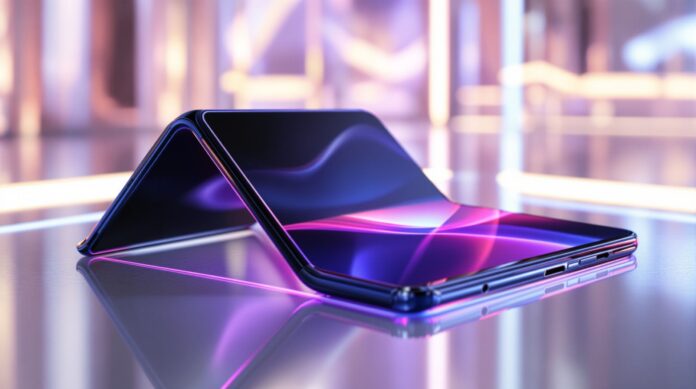
Foldable phones became the industry’s next major experiment. Samsung introduced the Galaxy Fold in 2019, offering a handset that could unfold into a larger display. Its initial release was delayed following reports of screen and hinge problems, prompting design improvements before its eventual release in September that year.
Beyond hardware, mobile phone innovation has reshaped economies and everyday activities. Smartphones have consolidated multiple devices into one, while mobile applications and internet connectivity have created new opportunities for communication, commerce and service delivery.
In Nigeria, smartphones have become important tools for accessing digital services, conducting business and reaching customers, particularly as more activities move online.
The industry’s history also shows that early scepticism does not necessarily determine a product’s long-term prospects. IBM’s Simon struggled commercially, Samsung’s Galaxy Note initially faced criticism over its size, and the first Galaxy Fold encountered technical challenges. Yet each contributed to ideas and features that helped shape subsequent generations of mobile devices.
From bulky handsets designed primarily for voice calls to foldable smartphones with increasingly sophisticated computing capabilities, the mobile phone has undergone a remarkable transformation.
Its next phase will depend not only on faster processors and improved displays but also on affordability, reliability, usability and manufacturers’ ability to respond to changing consumer needs.
