




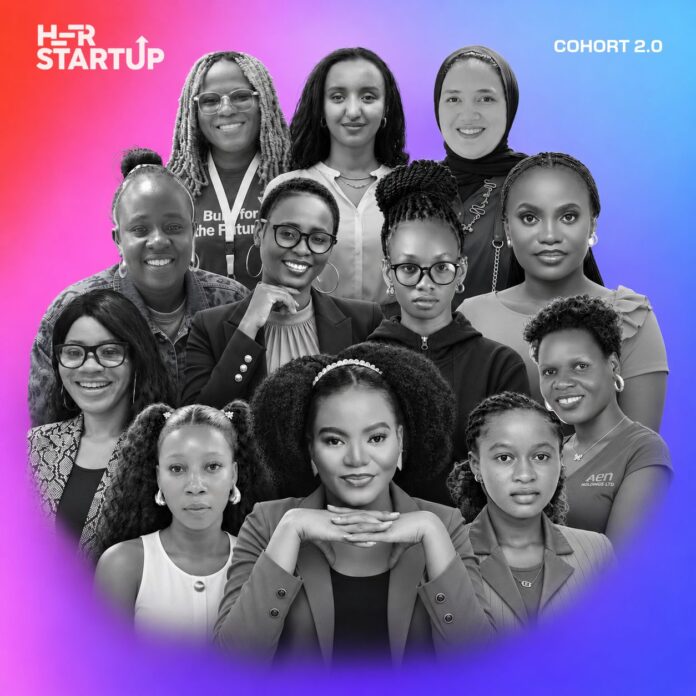
Six Nigerian women entrepreneurs have secured places in the second cohort of the Her Startup Accelerator, joining 12 founders selected from seven African countries following an application process that attracted 468 entries from across the continent.
The programme, which supports women-led, technology-enabled businesses, announced its latest selection on Wednesday, November 18, 2026. Nigeria accounts for half of the successful applicants, with the other six participants coming from Egypt, Ethiopia, Malawi, South Africa, Tanzania and Uganda.
Brandspur Brand News reports that the latest selection followed a substantial increase in interest in the accelerator, which received applications from 33 African countries, compared with more than 200 submissions from 18 countries during its inaugural edition.
The organisers increased the number of available places from 10 in the first cohort to 12 in the latest edition, reflecting the growing pool of women entrepreneurs seeking support to develop and expand their businesses.
The selection process involved an initial assessment of all 468 applications, followed by a shortlist of 20 founders who underwent further evaluation before the final 12 were chosen.
The Nigerian founders represent different areas of technology and business innovation, including agriculture, artificial intelligence, education, poultry farming and media technology.
Oghenemine Owhatuemuhor, co-founder of Kadosh Mechatronics Limited, was selected for developing KD FarmMate, a solar-powered agricultural monitoring system that combines farm sensors with a mobile application.
The technology allows growers to monitor important greenhouse conditions, including temperature, humidity, soil moisture, fertiliser concentration and pH levels.
Another Nigerian participant, Chinenye Eruchie, founded FriendnPal, an artificial intelligence-powered behavioural health platform designed to improve access to personalised mental health support.
Read Also: SKOT Impact Academy Attracts Applicants From 14 Countries As Third Cohort Begins
Its services include multilingual AI support, behavioural screening, predictive analytics and remote patient monitoring.
Glory Okere, chief executive of Glorious Farmgate, also secured a place through her company’s work on automated poultry farming systems. Its solar-powered technology is designed to help farmers improve productivity, reduce manual labour and manage poultry operations more efficiently.
In the education sector, Husseinah Abubakar, co-founder of Fuse Varsity, was selected for a business focused on digital skills development and workforce training.
The company operates cohort-based learning programmes and FUSELearn, a self-paced digital learning platform aimed at developing practical skills for the workplace.
Olawale Rukayat Abisola, founder of Odnaworld, brings an agrifood business that combines fresh produce delivery, dehydration and value-added food processing to address food losses and strengthen supply chains.
The sixth Nigerian participant, Adeleke Esther Opemipo, founded TESA Global Solutions, a media technology and business growth company providing marketing, business development, media production and talent development services to technology and corporate organisations.
Beyond Nigeria, the selected founders are developing businesses across several sectors, including renewable energy, recycling, transportation, agriculture and biotechnology.
Tanzania’s Grace Bosco Mwakinga leads SAB Biomanufactures, which converts underutilised brown seaweed into products for agriculture, livestock, aquaculture and food preservation.
Malawi’s Sarah Chiundiza co-founded Uptech Africa, a technology company working across agriculture, finance and transportation. Its products include Yanga, a business-to-business agricultural marketplace connecting farmers with buyers.
Uganda’s Gloria Esther Arinaitwe co-founded AEN Holdings, which collects and tests used lithium batteries before repurposing them into solar energy storage systems supported by an artificial intelligence-powered battery management system.
The Ethiopian participant, Blen Fekade, co-founded EON Plastic Recycling and Manufacturing, a business that processes discarded plastic bottles into recycled polyester fibre.
Egypt’s Nouran Farouk founded Dosy, a women’s mobility platform offering scooter transportation and income opportunities through ride-hailing, delivery services and training.
South Africa is represented by Nomuntu Ennie Ndhlovu, founder of UNTUM Recycling, which purchases recyclable waste from collectors and supplies industrial buyers. The company also uses an inventory management application to digitise collection, stock management, payments and sales.
For its second cohort, Her Startup has partnered with Founder Institute Morocco to strengthen the programme’s mentorship and entrepreneurial support.
The collaboration will provide participants with access to experienced business advisers, practical guidance and wider entrepreneurial networks as they work towards building sustainable and scalable ventures.
The accelerator’s latest intake highlights the range of businesses being developed by African women founders, particularly in sectors where technology is being applied to practical challenges involving food production, healthcare, energy, education and environmental sustainability.