




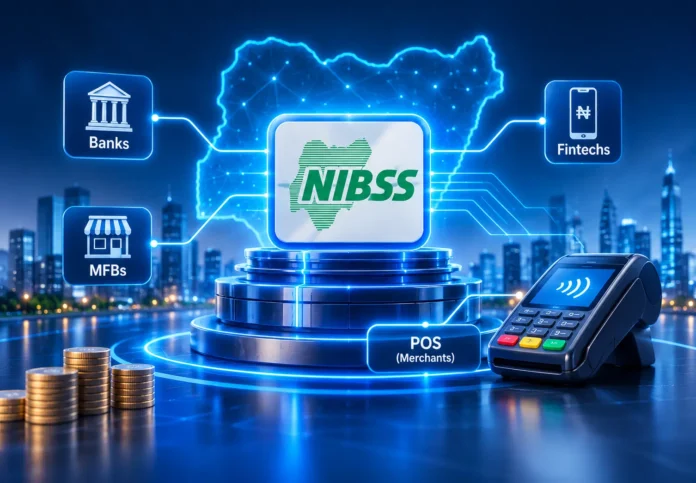
Nigeria has maintained its position as Africa’s leader in instant payment infrastructure, with the Nigeria Inter-Bank Settlement System (NIBSS) remaining the continent’s only operator with a mature instant payment platform, according to a new regional assessment released in November 2026.
The recognition places Nigeria ahead of 38 other instant payment systems identified across the continent, highlighting the country’s progress in building a digital financial infrastructure capable of supporting transactions between individuals, businesses and government institutions.
The 2026 State of Inclusive Instant Payment Systems (SIIPS) in Africa report, published by the AfricaNenda Foundation, the World Bank Group and the United Nations Economic Commission for Africa (UNECA), assessed the development and inclusiveness of instant payment platforms across African markets. The Brandspur Banking News Desk understands that Nigeria’s continued top classification reflects progress in areas that go beyond transaction speed, particularly interoperability, governance and consumer protection.
The assessment identified 39 instant payment systems serving 43 African countries. Of these, 11 were placed in the progressed category, 19 were classified as basic, while eight did not receive a ranking. Nigeria’s NIBSS-operated Instant Payment (NIP) platform was the only system to achieve mature status, the highest level under the report’s Inclusivity Spectrum.
The mature classification is significant because it requires more than the ability to transfer money electronically within seconds. Platforms must demonstrate broad payment functionality, affordable transaction costs and adequate safeguards for users. They must also provide mechanisms for resolving complaints and disputes while supporting payments involving government agencies, businesses and cross-border transactions.
For Nigerians, the assessment highlights the infrastructure supporting everyday financial activities, including transfers between bank accounts, business payments and other electronic transactions. The system’s importance has grown alongside the country’s increasing reliance on digital payments for commercial and personal transactions.
NIP’s progress has been gradual. The platform was initially classified as basic in 2021 before advancing to the progressed category and eventually attaining mature status in 2025. Its latest recognition means Nigeria has retained the position for a second consecutive year.
Transaction figures provide an indication of the scale of activity passing through the infrastructure. NIBSS data showed that the value of transactions processed through NIP reached ₦1.07 quadrillion in 2024, representing a 79.6 per cent increase from the ₦600 trillion recorded in 2023.
The number of transactions also expanded, rising by 15.5 per cent to 11.2 billion within the same period. The figures underline the growing importance of instant payment services to Nigeria’s banking industry, where individuals and businesses increasingly depend on electronic transfers to complete financial obligations.
However, the report also points to challenges that remain across Africa’s digital payment ecosystem. Despite the expansion of instant payment infrastructure, several countries still face shortcomings in merchant payment functionality, governance arrangements, interoperability and consumer protection.
Read Also: CBN Grants National Operating Licences To Opay, Moniepoint, Palmpay, Kuda, Others
Some platforms lack adequate systems for handling customer complaints, while others have limited options for resolving disputed transactions. These gaps remain important because access to instant payments does not automatically guarantee that users can obtain assistance when transactions go wrong.
Across the continent, 23 countries now have instant payment systems classified as progressed or mature, covering approximately 56 per cent of Africa’s adult population. The figure demonstrates wider adoption while also revealing the distance many markets must cover before digital payments become sufficiently accessible and reliable.
NIBSS has also introduced initiatives aimed at strengthening Nigeria’s payment infrastructure. In June 2025, the organisation launched the National Payment Stack, designed to improve instant settlements, bulk payments and dispute management.
By June 2026, the platform had processed 153,000 transactions during its pilot phase, indicating progress towards expanding the country’s payment capabilities.
In January 2026, NIBSS also disclosed plans to explore offline payment services. The initiative is intended to extend digital payment access to people using basic mobile phones and those living in locations where internet connectivity is unreliable.
Such developments could prove important for Nigerians who remain constrained by poor network coverage or limited access to smartphones, particularly in underserved communities.
While the latest continental assessment confirms Nigeria’s leadership in instant payments, sustaining that position will require continued investment in infrastructure, stronger consumer safeguards and broader access to digital financial services.
For NIBSS, the challenge is no longer simply demonstrating that Nigeria can process billions of electronic transactions. It is ensuring that the infrastructure remains dependable, affordable and accessible to the growing number of people and businesses relying on it.