



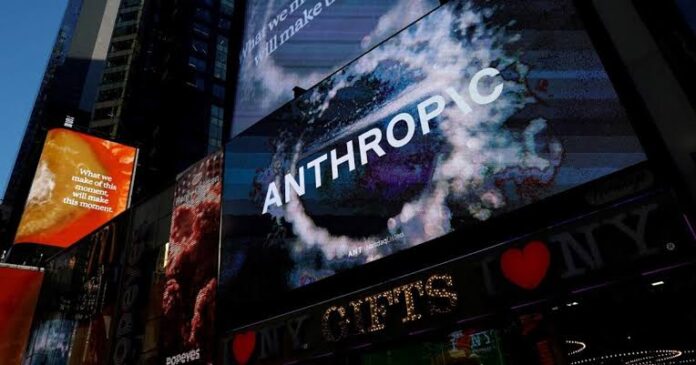
Anthropic’s record-breaking $81.3 billion initial public offering (IPO) has placed the artificial intelligence company among the world’s most valuable businesses, but brand experts say its next major challenge will be building a distinctive corporate identity beyond the popularity of its Claude chatbot.
The company, which made its Nasdaq debut on November 19, 2026, briefly reached a valuation exceeding $2 trillion during its first trading session, highlighting the enormous investor interest surrounding artificial intelligence. However, attention is now shifting towards how Anthropic can translate its financial success and technological reputation into a stronger, recognisable brand.
Greg Silverman, Global Director of Brand Economics at Interbrand, argues that the company must make brand development a central priority as it enters its next phase of growth. His position reflects a broader challenge facing technology companies: developing an identity that remains relevant even as competitors introduce increasingly sophisticated products.
According to Brandspur Brand News, Silverman’s assessment comes at a significant moment for Anthropic, whose market debut has attracted considerable attention but also exposed the importance of sustaining investor and public confidence beyond initial excitement.
The company’s IPO raised more than $81 billion from its initial share offering, making it one of the largest stock market listings in history. Its shares were priced at $83 each before trading commenced on Nasdaq under the ticker symbol ANT.
The company subsequently expanded the offering through the exercise of an additional share allocation, bringing gross proceeds from the public offering to approximately $93.5 billion. A separate private placement involving major technology companies generated another $26 billion.
Anthropic’s shares initially attracted strong buying interest, opening substantially above their offer price. The company’s implied valuation briefly crossed $2 trillion before market conditions and investor caution moderated the early gains.
The fluctuations underline the distinction between the excitement surrounding a major stock market debut and the longer-term work required to establish a sustainable business.
For Anthropic, that work increasingly involves defining what distinguishes its brand in an artificial intelligence industry where technological capabilities are developing rapidly.
The company is best known for Claude, its artificial intelligence assistant, which competes in a market featuring several established technology businesses and emerging AI developers.
While product performance remains important, Silverman’s argument suggests that Anthropic cannot depend entirely on Claude’s capabilities to maintain its competitive position.
Read Also: Anthropic Raises $81.3 Billion In Record-Breaking IPO, Hits $1.5 …
A recognisable brand can help communicate what a company represents, the principles guiding its operations and the reasons customers should continue choosing its products over alternatives.
This distinction becomes particularly important in artificial intelligence, where new models and features can quickly change competitive rankings. Companies that rely exclusively on technical superiority may find it difficult to maintain customer loyalty when competing products offer similar capabilities.
For Anthropic, establishing a clear brand identity also presents an opportunity to strengthen relationships with businesses, investors, developers and ordinary users who increasingly encounter AI-powered services in their daily activities.
Its public positioning around responsible artificial intelligence development provides another dimension to that challenge. The company operates as a public benefit corporation, with a stated commitment to developing advanced AI responsibly for the long-term benefit of humanity.
Maintaining consistency between that commitment, its products and its wider corporate identity will be important as the business expands its commercial operations.
The brand question also carries financial implications. A company’s reputation can influence customer confidence, business partnerships and its ability to differentiate itself in crowded markets. These factors become increasingly significant for publicly listed companies facing regular scrutiny from shareholders and market analysts.
Anthropic’s immediate post-listing performance has already demonstrated that a successful fundraising exercise does not eliminate questions about its long-term prospects. Investors will continue assessing its ability to convert technological demand into sustainable commercial growth.
The company’s next phase will therefore require more than developing increasingly powerful AI systems. It will also need to communicate a consistent identity that customers and stakeholders can understand and trust.
Silverman’s assessment places brand strategy at the centre of that conversation, suggesting that Anthropic’s ability to define its identity could become just as important to its long-term positioning as the technology behind Claude.