




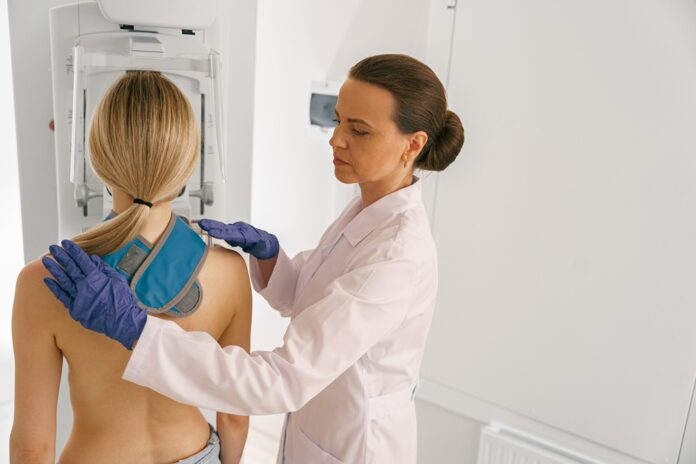
England has launched the world’s largest artificial intelligence-assisted breast cancer screening trial, with nearly 700,000 women expected to be invited to participate in a programme examining whether AI can improve early cancer detection and reduce pressure on healthcare workers.
The National Health Service (NHS) is conducting the large-scale trial to establish whether artificial intelligence can reliably assist specialists in examining mammograms, the breast X-ray images used to identify possible signs of cancer.
The study could change how breast cancer screening is delivered in the United Kingdom if the technology proves effective, particularly by reducing the number of specialist doctors required to review each patient’s images.
According to Brandspur Brand News, the trial comes at a time when healthcare systems are exploring how emerging technology can improve diagnostic services while addressing staffing pressures and delays in patient care.
Under the existing screening arrangement, two specialists independently examine images obtained during routine mammograms. Their assessments help identify abnormalities that may require further investigation.
The NHS trial will examine whether artificial intelligence tools can take over some of the image-reading responsibilities currently handled by one of the specialists.
If the approach delivers satisfactory results, AI could eventually replace one of the two human readers in the screening process, leaving the other specialist to review the images alongside the technology.
However, the trial is intended to establish whether the approach is effective. The proposed change has not yet become standard NHS practice.
The potential benefits extend beyond the use of advanced technology. Having AI assist with mammogram assessments could reduce the workload of specialist staff, allowing them to concentrate on other aspects of patient care.
It could also help address delays associated with breast screening by making the image-reading process more efficient. For women awaiting results or further investigations, shorter waiting periods could make the screening experience less stressful.
The programme will involve nearly 700,000 women, making it the largest trial of its kind focused on AI-assisted breast screening.
The scale of the exercise is expected to provide substantial evidence about how the technology performs when applied to routine screening across a large population.
In the UK, women aged between 50 and 71 are routinely invited for breast cancer screening every three years.
Figures covering the period between March 2024 and March 2025 showed that 2.15 million women aged over 45 attended breast screening appointments, highlighting the scale of the service that healthcare authorities must maintain.
Read also: JMG Promotes Breast Cancer Awareness Through Employee Health Education Session
Breast screening plays an important role in identifying possible cancers before symptoms become noticeable. Detecting abnormalities early can give patients an opportunity to undergo further tests and receive treatment where necessary.
Nevertheless, examining large volumes of mammograms requires specialist attention, making the availability of trained professionals an important part of maintaining an effective screening programme.
Artificial intelligence has increasingly attracted attention in healthcare because of its ability to process medical images and identify patterns that may require further examination.
In breast screening, the technology could help specialists assess images more efficiently, although its performance must be carefully evaluated before it can be relied upon in routine clinical practice.
The NHS trial will therefore be important in determining whether AI can support human expertise without compromising the accuracy and safety of breast cancer detection.
For women participating in the programme, the central concern will remain the reliability of their screening results and the timely identification of abnormalities.
The findings could also provide useful evidence for other countries considering similar approaches to diagnostic healthcare, particularly those facing shortages of specialist medical personnel.
For Nigeria, where access to specialist healthcare services and diagnostic facilities remains an important public health concern, developments in AI-assisted screening offer an area worth monitoring. However, the results of the UK trial will need to establish the technology’s effectiveness before its wider application can be assessed.
The research was reported by The BMJ on November 23, 2026.
