




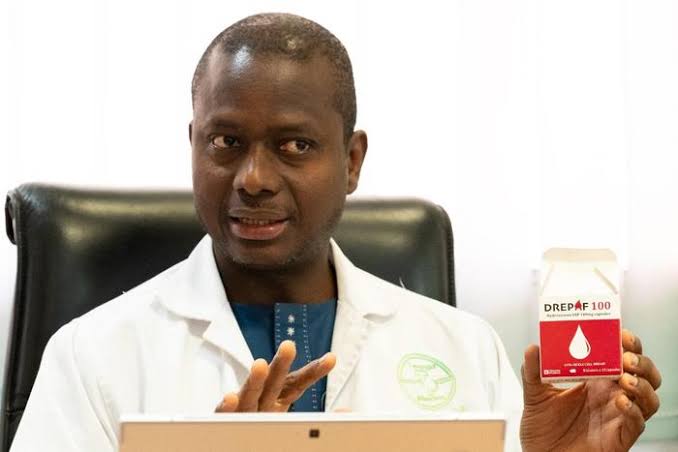
Senegal has become the first African country to manufacture a generic treatment for sickle cell disease locally, marking a significant development in efforts to improve access to essential medicines on the continent.
The medicine, known as DREPAF, is produced by Senegalese pharmaceutical company Teranga Pharma in partnership with Drep.Afrique. It is a generic form of hydroxyurea, an established medicine used to manage sickle cell disease and reduce some of its serious complications.
The development is particularly significant for Africa, where sickle cell disease places a heavy burden on patients and health systems. Brandspur Brand News reports that local production could help reduce some of the challenges associated with relying on imported medicines, including availability and affordability.
DREPAF received marketing authorisation in Senegal in April 2025, with commercial distribution beginning in early 2026. The medicine is supplied at cost without a commercial margin, with the daily price estimated at between 50 and 100 CFA francs depending on the patient’s age and dosage.
Hydroxyurea does not cure sickle cell disease. Rather, it is used to manage the condition by helping to increase foetal haemoglobin, which can reduce the sickling of red blood cells. The treatment can lower the frequency of painful crises and other complications, including hospitalisations and the need for blood transfusions.
The initiative has also targeted children living with the condition. Teranga Pharma announced a paediatric formulation of DREPAF in March 2026, with the formulation reportedly suitable for children from nine months of age.
Developing a formulation for young children presented technical difficulties because of the properties of hydroxyurea and its instability in certain liquid and effervescent preparations. The paediatric version is intended to make administration easier for younger patients.
Sickle cell disease is particularly widespread in Africa, which carries a substantial share of the global disease burden. Patients can experience recurrent pain, anaemia, infections and organ complications, sometimes from childhood.
For many African countries, access to hydroxyurea has been constrained by limited availability and dependence on imported medicines. Teranga Pharma’s local production of DREPAF is therefore being positioned as an attempt to address part of that gap.
The initiative could eventually have a wider impact if production and distribution extend beyond Senegal to other African countries. For now, its significance lies in establishing local manufacturing capacity for an existing sickle cell treatment and potentially making the medicine more accessible to patients.
However, DREPAF remains a treatment for managing sickle cell disease, not a cure. Patients should use hydroxyurea-based medicines under the guidance of qualified healthcare professionals.