Chain Reactions Hosts Presentation of Edelman Trust Barometer Survey Report

3

Chain Reactions Nigeria, a vibrant Public Relations and Integrated Communications consulting firm, is set to host the launch of the 2017 Edelman Trust Barometer Survey Report for the first time ever in Nigeria with the public presentation of the global survey report on Tuesday 16, May 2017, at the Abora Hall, Eko Hotel & Suites, Victoria Island, Lagos.

Chain Reactions Nigeria is the exclusive affiliate of Edelman in Nigeria, the world’s largest global communications marketing firm with presence in 65 countries across the globe.

In a Press Release issued in Lagos and signed by Israel Jaiye Opayemi, Managing Director/Chief Strategist of Chain Reactions Nigeria, the consulting firm announced that the formal presentation of the survey report will be done by Jordan Ritternberry, Managing Director of Edelman, South Africa at a gathering that is expected to bring together leaders and influencers from government, business, media and non-governmental organizations.

Part of the highpoints of the event will be a speech by one of Nigeria’s most respected women in the Board room and Chairman of First Bank of Nigeria, Mrs. Ibukun Awosika. This will be followed by what promises to be perhaps the most no-holds-barred debates on trust by eminent representatives of the Nigerian government, the business community, the media and non-governmental organizations. Eminent speakers lined up to speak at the event include, Chairman and CEO of Channels Television, John Momoh; President of the Nigeria Guild of Editors, Funke Egbemode; Head, Marketing and Communications for Stanbic Bank, Nkiru Olumide-Ojo, and Founder, Consumer Advocacy Forum of Nigeria (CAFON), Sola Salako amongst other eminent speakers. They will discuss the subject of trust across the four pillars of government, business, media and non-governmental organizations.

The 2017 Edelman Trust Barometer is the 17th edition of the annual trust and credibility survey. The survey was done by Edelman Intelligence and consisted of 25-minutes online interviews conducted between October 13th to November 16th 2016. The 2017 Edelman Trust Barometer online survey sampled more than 33,000 respondents across 28 countries. The global survey asks respondents how much they trust the four institutions of government, business, media and nongovernmental organizations to do what is right.

“Though the survey has not been done in Nigeria and some other countries yet, the results are instructive for a country like Nigeria. We are in a global village and trends travel across borders and time zones. There is a sense in which the patterns of trust and distrust happening globally are beginning to ensconce in Nigeria without us knowing. As the exclusive affiliate of Edelman in Nigeria, we are delighted to share the historic privilege of hosting this event for the first time ever in Nigeria especially at this point in time in our nation’s history”, Opayemi enthused.

Speaking about the launch of the survey report in Nigeria, Opayemi further explained that hosting the event for the first time in Nigeria in the 17-year history of the report is an important step which underscores the strategic importance of the Nigerian market to Edelman.

“Edelman has been doing this for 17 years now but this is the first time this is being brought to Nigeria on the back of our recently consummated partnership. We intend to use this as a foundational step to help Nigeria establish the Nigerian Trust Index which is the average of a country’s trust in the institutions of government, business, media and non-governmental organizations. We want to begin to share ideas with these four critical institutions of society on how to know when the trust gap widens and what to do”, he added.

“Together with our partners in Edelman, we also intend to begin to lay the foundation for future work with key governmental institutions, corporate, media as well as nongovernmental clients who really care about growing their asset of trust,” Opayemi stated. The survey is significant because it documents insights and knowledge that help governments, businesses, media and nongovernmental organizations to proactively build and raise their trust equity as a major factor that impacts organizational reputation.

Giving insights into to what the 2017 survey report indicates, Opayemi hinted that the report shows that people’s trust in all the four institutions of government, business, media and nongovernmental institutions “to do what is right” experienced a decline, a phenomenon not recorded since Edelman began tracking trust.

Trust in government also dropped to the level that it is distrusted by 59 per cent of respondents in all the countries surveyed. For government, Opayemi said honest efforts must now be made by government to earn the trust of the people in not only what they say but what they do. “There is a deeply disturbing news in the Edelman Trust Barometer 2017, a yawning trust gap is emerging between elite and mass population. One clear indication from the report is that, there is a rise of populism in most countries of the world today and the mass population has taken control away from the elite. This has been made evident in both Brexit and the outcome of the last US Presidential election. It will be interesting to see how this will shape the next elections in Nigeria. The rise of populism has implications for government, business, media and nongovernmental organizations in Nigeria too.”

He however hinted that there is a sweet spot in the report for businesses which Chain Reactions and Edelman will be helping interested Nigerian businesses to build their asset of trust and reputation around. It is the cheering news that businesses are now more trusted than governments as about 37 per cent of the general population say CEOs are credible, while 29 per cent say the same about government officials in the countries surveyed.

The institution that experienced the deepest plunge in trust is the media. The media is distrusted by 57% of the respondents in all countries surveyed. “Debate at the event will necessarily revolve around how to grow trust for the media in the age of post-truth and alternative facts. Trust in the media is too vital an issue to be left unaddressed by any society that wishes to progress,” Opayemi added.

Trust in NGOs is also said to have dropped for the first time to nearly the same level as trust in business.  Trust in government also dropped to the level that it is distrusted in 75 per cent of all the countries surveyed.

Opayemi however expressed the hope that there are great lessons to be drawn from the survey report for all the four institutions in focus saying, “we are confident that the report will instruct governments, businesses, the media and non-governmental organizations operating within this eco system to take their assets of trust seriously.”


(Brandcampaign)

Nigerians Express Support for the Made-In-Nigeria Dress Days as a Means to stimulate Economic Growth

0

Latest public opinion poll conducted by NOIPolls has revealed overwhelming support by Nigerians (83 percent) regarding the Monday and Wednesday native dress days proposed by the Presidency. This policy was addressed in a letter to the National Institute for Cultural Orientation (NICO) as an outcome of the Federal Executive Council Meeting in a bid to encourage patronage of Made-in-Nigeria goods. The survey findings also revealed a low level of awareness on the proposed dress days as 74 percent stated that they were not aware of this new policy. This suggests that more effort needs to be put in place by NICO to ensure public awareness and sensitization of these dress days when it’s fully implemented.

More findings from the survey indicated that 95 percent of Nigerians wear Made-in-Nigeria dresses and this is reflective of their love for culture and tradition and the fact that Nigeria is a nation blessed with heterogeneous, deep cultural heritages and enclaves which manifest in dress types and choices. With this figure, it is expected that Nigerians would support a policy or decision by the presidency on such national issues. Reasons for support of the policy included; it promotes our cultural heritage and national identity (33 percent), it will boost the economy (17 percent), it will increase the patronage of locally made clothes (16 percent) amongst reasons. Contrarily, the 17 percent who did not support the policy were of the opinion that it shouldn’t be imposed on Nigerians (33 percent), it’s unprofessional (20 percent) and that Government should focus on the economy rather than clothes (14 percent) amongst others.

Furthermore, the survey measured the likelihood of Nigerians wearing Made-in-Nigeria dresses on Monday’s and Wednesday’s and research findings revealed that 81 percent said they are likely to wear Made-in-Nigeria dresses on these days while 19 percent said that they are unlikely to adopt the policy.

Finally, about 9 in 10 Nigerian’s (89 percent) are positive that the outcome of the support to wear Made-in-Nigeria clothes on the proposed dress days will boost the Nigerian economy. The statement ‘‘Buy Naija, to grow the Naira’’ as an adopted mantra needs to be taken beyond talk to action and the policy of these dress days is one way to do so. The theory, principle, and practice of Africapitalism can only be successful through sustainable synergistic approaches such as formulating informed data-based policies, decisions and bilateral trade agreements targeted at improving the economy.

Brief Background:

President Muhammadu Buhari on a letter dated 4th April 2017 addressed to the Executive Secretary of National Institute for Cultural Orientation (NICO) declared Mondays and Wednesdays every week, as Made-in-Nigeria Dress Days across the country. This letter was a follow-up on the outcome of the Federal Executive Council Meeting (FEC) on the 1st February 2017 as part of measures to uplift the nation’s culture and promote Made-in-Nigeria textile products.

President Buhari further directed that a presentation on the Made-in-Nigeria Campaign be made to the National Economic Council to secure the buy-in of State Governments. As a follow-up to the letter, the Minister of Information & Culture, Lai Mohammed, asked the Management of NICO to provide a comprehensive proposal on how to effectively implement the policy in a manner that would encourage all Nigerians to conveniently observe the Made-in-Nigeria Dress Days. The Made-in-Nigeria campaign which kick-started last year at the 22nd summit of the National Economic Council is still an ongoing discuss and is part of the measures adopted by the government to conserve foreign exchange, stimulate economic growth and create jobs.

The purpose and intention of the Made in Nigeria dress days are to influence the orientation in consumption pattern by shifting the mindset and preference of Nigerians for anything imported and foreign-made to patronizing Made-in-Nigeria products. In view of this background, NOIPolls conducted a topical poll to gauge the perception and level of Nigerians regarding the Made in Nigeria dress day’s policy by the presidency.

Survey Findings:

Nigeria is blessed with diverse cultures and heritage and these affect the way Nigerians dress and socialize. The different ethnic and religious groups have peculiar cultural enclaves which shape their dress patterns. This is mostly noticeable on Fridays and Sundays as most Nigerians appear on different indigenous designs of apparels and attires. Although there is an argument if the materials are locally or foreign mass-produced but it is agreeable that the sewing is mostly by indigenous fashion designers. Till now,working class Nigerians mostly wear corporate attires from Mondays to Thursdays and other related endeavors, while they typically dress down on Fridays. Some organizations do not hold this in strict consideration, unlike most formal business communities.

In other to ascertain the level of patronage of Made-in-Nigeria clothes, respondents to the survey were asked if they wear Made-in-Nigeria dresses. The survey result revealed that majority of Nigerians (95 percent) wear Made-in-Nigeria clothes and this is reflective of their love for culture and tradition. Analysis by geopolitical zone further revealed that South-West (98 percent) and South-East (97 percent) accounted for the zones where Made-in-Nigeria clothes are mostly worn.

There was media recognition following the letter by the presidency on the Made-in-Nigeria dress days, so in order to measure the level of awareness of the policy, the respondents were further asked if they were aware of the policy. The survey results revealed that majority of Nigerians (74 percent) were not aware while 26 percent showed aware.

Furthermore, the South-East zone (33 percent) recorded the highest level of awareness while the North-Central (79 percent) and South-West (79 percent) zones recorded the highest number of people who showed a lack of awareness. This indicates a pressing need to increase the level of awareness regarding the policy through adequate media channels prior to its adoption and implementation as it will drive the Made-in-Nigeria campaign.

One of the negative effects of acculturation in Nigeria is the excessive dependence on foreign products which the new policy is intended to combat partly.  To ascertain the level of support for the Made-in-Nigeria days’ policy, respondents were further asked if they supported it. From the poll results, it is clear that majority (83 percent) were in support while (17 percent) were not in support. Analysis by geopolitical zone revealed that North-West (88 percent) and North-East (85 percent) had the highest support

The survey further sought the reasons from respondents for supporting the policy. Of the 83 (percent) who showed support for the policy, 33 percent stated that ‘‘it promotes our cultural heritage and national identity’’, 17 percent said that ‘‘it will boost our economy’’ and 16 percent said that ‘‘it will increase the patronage of locally made clothes’’ amongst other reasons.

Furthermore, the survey also measured the perception of the respondents who said they were not in support of the proposed policy. The result revealed that of the 17 percent who were not in support, 33 percent said ‘‘it shouldn’t be imposed on Nigerians’’, 20 percent said ‘‘it’s unprofessional’’ and 14 percent were of the view that ‘‘Government should focus on the economy, not clothes’’ amongst other reasons.

The survey also measured the likelihood of Nigerians wearing Made-in-Nigeria dresses on Mondays and Wednesdays and it revealed that 81 percent (27 percent + 54 percent) said they are ‘‘likely’’ and ‘‘very likely’’, to wear them on those days respectively. On the other hand, 19 percent (8 percent + 11 percent) said that they are ‘‘very unlikely’’ and ‘‘unlikely’’ to wear them on those days respectively. Analysis across geopolitical zones revealed that the North-East (88 percent: 24 percent + 64 percent) and North-West (86 percent: 22 percent + 64 percent) had the highest level of likelihood to wear them while the South-South (31 percent: 12 percent +19 percent) and South-East (26 percent: 14 percent + 12 percent) had the highest of unlikelihood of support.

Finally, in order to ascertain the claim by the presidency that the policy will stimulate economic growth, the respondents were asked if they think their support would boost our economy. On this, the survey revealed that 89 percent of the respondents were positive that the outcome of the support to wear Made-in-Nigeria clothes on those proposed dress days will boost our economy while 11 percent were of a contrary opinion. Analysis by gender interestingly, revealed that more males (91 percent) were more optimistic about the outcome of the support when compared with the 87 percent female respondents.

In conclusion, a majority of Nigerians are not aware of the proposed policy by the Presidency and this is suggestive of the need for NICO to put in more efforts in communicating the policy through different media channels prior or after its successful implementation. The statement ‘‘Buy Naija, to grow the Naira’’ as an adopted mantra needs to be taken beyond talk to action and the policy of these dress days is one way to do so. Nigerians should see more reasons to buy Made-in-Nigeria products and there should be sustainable policy implementation in relation to imported goods and our export potential.

Africapitalism is another critical strategy to be considered for growing our economy and it can only be successful through sustainable synergistic approaches such as formulating informed data-based policies, decisions and bilateral trade agreements targeted at improving the economy. This will support the growth, development, and sustainability of indigenous businesses especially the Nigerian textile industry. As the government through the National Economic Council is encouraging Nigerians to buy Made-in-Nigeria goods and services, they should ensure that the ease of doing business of which Nigeria is currently ranked 169th in the world is improved upon even as they would soon commence the implementation of the Economic Recovery and Growth Plan.


(NOI-POLLS)

ALL YOU NEED TO KNOW ABOUT LUXURY HOMES

When we talk about luxury homes, what strikes our mind? Lavishness, magnificent, grandeur and of course pricey. Owning a luxury home is not just a status symbol, it’s about enjoying the comforts of one’s life you could think of at your own space called home. Often the term “Luxury Homes” in India is used to lure people into buying projects that are of course not so luxurious.

Offering just more than the basic amenities does not come under the term luxury. Luxury homes have a whole lot of special features that highly distinguishes itself from other properties. So before you fall into the trap of the real estate agents, suggest you look into some of the major features that highly speak of luxury and luxurious homes.

SPACE
This is the very first thing that defines a home luxurious. For a housing property to be termed as luxurious it should be at least a 3BHK with attached washrooms and balconies. Ample of space is required to accommodate life’s luxurious amenities. So a huge hall, a lavish dining space, and an expansive kitchen form an integral part of the entire luxury property definition. Don’t forget to look for an attached servant’s room to the residential unit you are looking to add as a luxurious property to your status.

LOCATION IS THE KEY
Believe it or not, location does play a very important role in defining how luxurious your property is. Look for a location that has good connectivity, is marked as safe, is riot and crime free zone, has excellent infrastructure around the property in terms of wider roads, less traffic, more greenery, highly clean etc.

FLOOR-TO-CEILING HEIGHT
Luxurious homes are also about beautiful ceiling art and accessories. For the ceiling to hold lavish chandeliers and lights, the height of the floor to ceiling should be more to accommodate the luxuries. For a home to be termed as luxurious, it should meet the standard floor-to-ceiling height i.e. 12 feet or more. Agree or not, if this criterion is not meet then your property does not fall under the luxury tag.

ELEVATOR
Big and spacious elevators with good carrying capacity is an added feature of a luxurious property.

HIGH SECURITY AT YOUR PROPERTY
In today’s not so safe and unstable environment, one must consider making your home as much secured and safe as possible. See whether the property offers inbuilt and enhanced state-of-the-art modern security facilities pre-installed in the house. The house should also be guarded with human guards around the clock with cameras and other surveillance units installed at every corner of the property for enhanced security.

The above-mentioned points are some of the key features of a luxury home. So, the next time you go to look for a luxury home, keep these features in mind so that you are clearly not tricked by the agent to buy a mediocre property in the name of luxury amenities.

With the rise in the economy and exponential growth of wealth among the people, demand for luxurious houses and properties is on the rise. So to fare well in this competitive market, real estate developers are constantly innovating in the architecture and incorporating high-end technologies and innovations to build projects that are capable of attracting niche buyers. Thus the market for such luxurious houses is expected to grow further in the year 2017.


(Reic-ng)

Updated List of Stockbroking Firms Accredited by the DMO to Market and Distribute FGN Savings Bond

The main aim of the “Federal Government of Nigeria (FGN) Savings Bond” is to help enhance the savings culture among Nigerians while providing all citizens irrespective of income level, an opportunity to contribute to National Development; as well as the comparatively favourable returns available in the capital market.

FGN Savings Bond is safe and backed by the full faith and credit of the Federal Government of Nigeria, with quarterly coupon payments to bondholders.

To ensure a successful and smooth delivery of this offer, DMO has accredited stockbroking firms of the Nigerian Stock Exchange to market and distribute the Savings Bond.

Click here to have the Updated List of Stockbroking Firms Accredited by the DMO to Market and Distribute FGN Savings Bond

Expert Advises Investors to Invest Now in Ibeju Lekki

Engr. Noimot Olatunji, CEO Glenwood Property Development Company

Investors are being advised not to wait to invest in Ibeju Lekki’ but to ‘invest in Ibeju Lekki and wait for the huge return on investment, (ROI).

This advice was made by Engr. Noimot Olatunji, CEO Glenwood Property Development Company, at the launch of its latest project, Lyndale Mews, an estate in Onosa, Ibeju Lekki Local Government Area recently.

According to Engr. Olatunji Lyndale Mews consists of 32 well laid out terraces and apartments complete with a play area and central services.

In her speech, she said “investment in the Ibeju Lekki axis of Lagos State including the Lekki Free Trade Zone will create over 300,000 direct/indirect jobs in the next 3 years.” The CEO, continues “The direct consequence will be huge pressure on existing infrastructure and a surge in demand for housing at all levels; and the available and proposed housing stock in the area is unlikely to meet the anticipated demand,” she asserted.

Engr. Olatunji stated that Glenwood Property Development Company recognizes the potential in this fast growing area and is positioning itself to play a strategic role in the residential, commercial and hospitality sectors.

The company currently has housing units and land in several estates to offer prospective homeowners and investors and advised early investment to maximize return on investment (ROI).

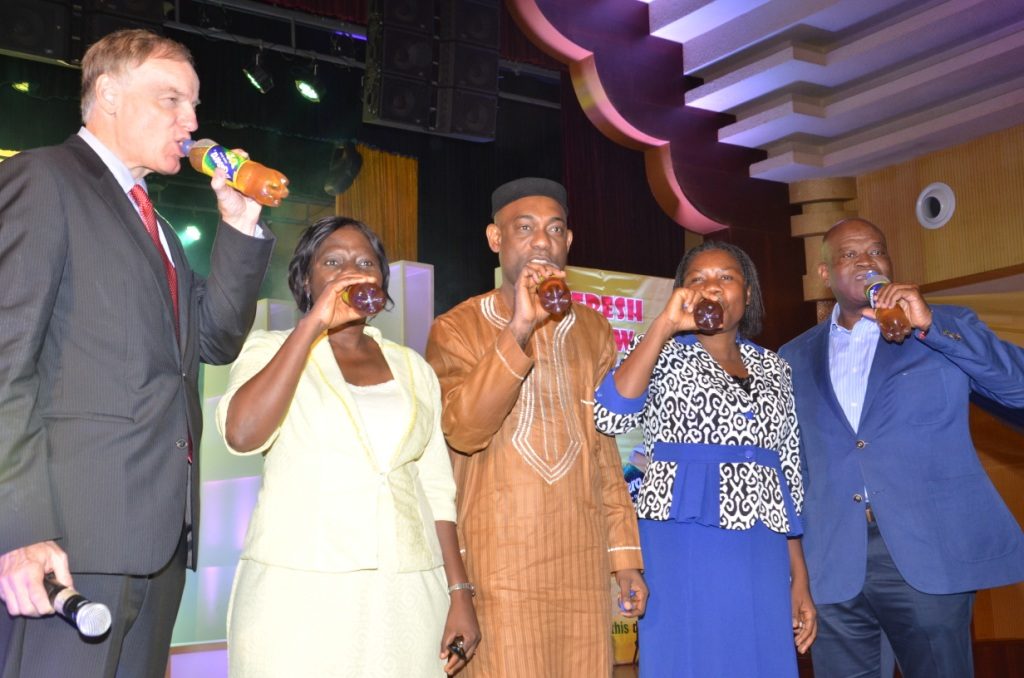
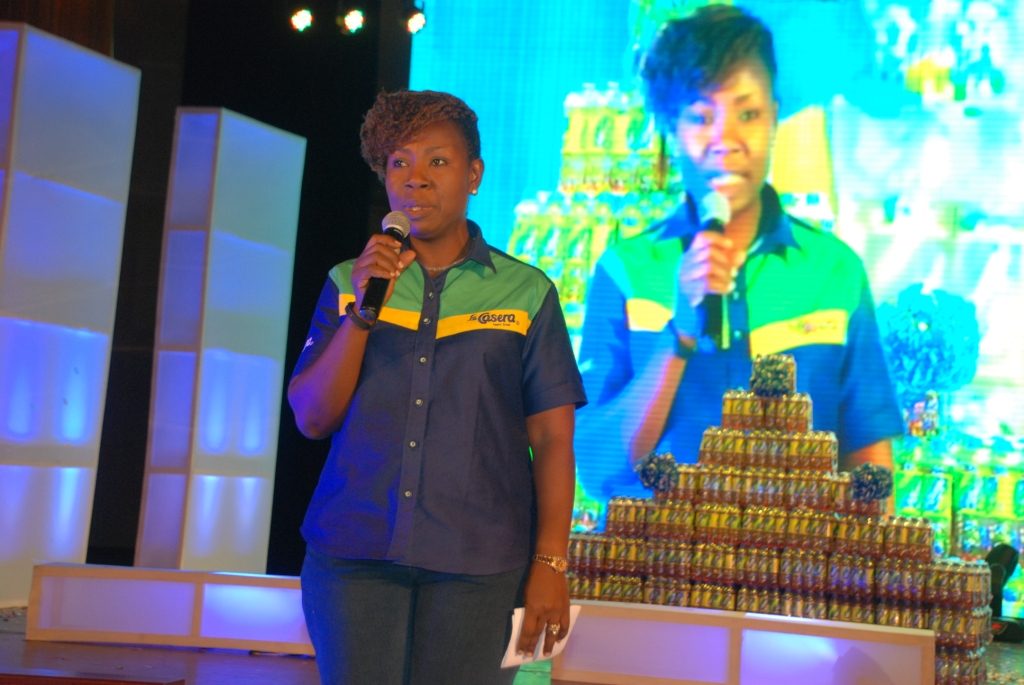
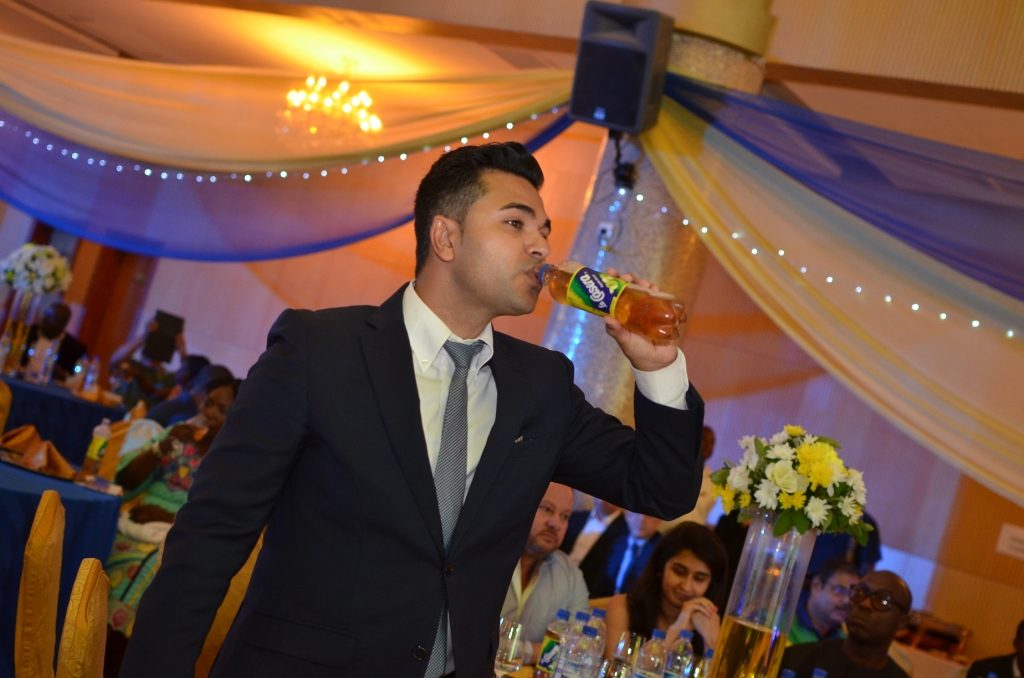
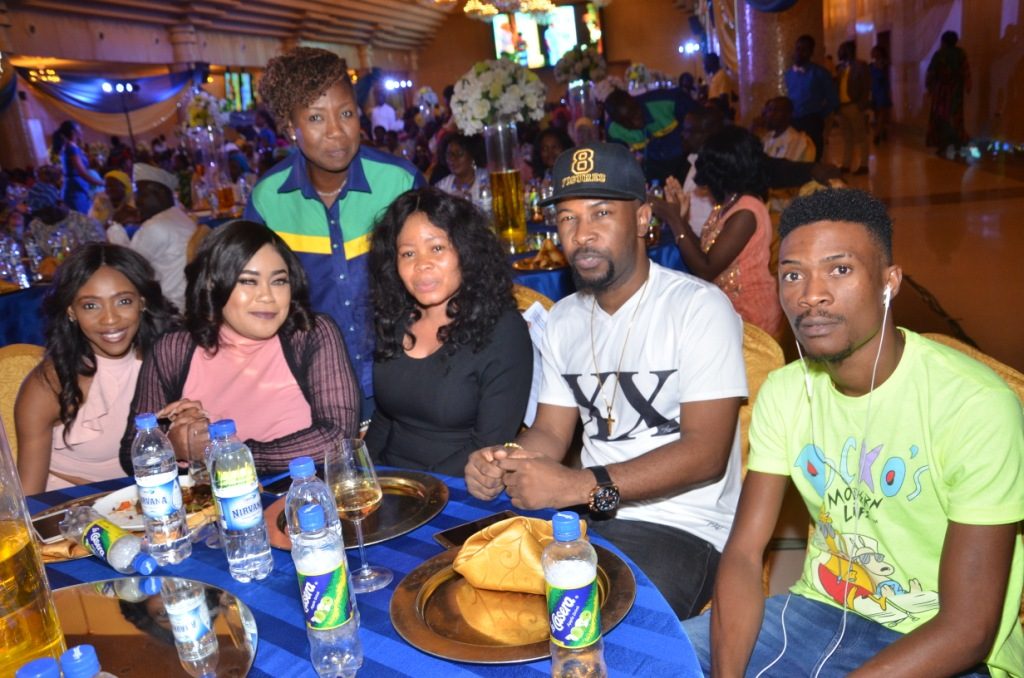
La Casera Apple Drink Celebrate Dealers, Other Stakeholders With Fresh New Look And More Apple Juice

The La Casera Company Plc, makers of Nigeria’s leading Apple Carbonated Soft Drink has launched a fresh new look for its flagship brand, La Casera Apple Drink and adding more natural apple juice extract to the premium apple drink, which makes it the only Apple CSD with real apple juice extract in the Nigerian market.

The unveiling event held at the prestigious Oriental Hotel in Lagos to celebrate its dealers, consumers and other stakeholders for their loyalty, received several commendations from NAFDAC, SON, MAN, dealers and other relevant stakeholders that were present at the event reinforcing La Casera leadership in the CSD market.

According to the Managing Director, The La Casera Company (TLCC), Mr. Roland Ebelt, the launch of the repackaged La Casera Apple drink is a display of the company’s innovative, forward-thinking prowess and commitment to consumers’ satisfaction.

“La Casera Apple Drink in 50cl bottle which still remains the standard and quality which La Casera is known for, now wears a new colourful and attractive look with real apple fruit indicating an increase in real apple juice content in each bottle giving consumers more taste of real apple at an affordable price just to meet the thirst need of the average Nigerian who is always on the go.” he explained.

While delivering the welcome address, The Marketing Manager, The La Casera Company Plc. (TLCC), Mr. Bello Yusuf explained that the Nigerian CSD market commands a unique hold in the beverage sector of the economy with an estimated 49% of soft drinks volume sales and with the fresh new look of La Casera Apple drink, the company is set to make greater inroad into the market, as it now comes with more apple juice, combined with a refreshing and real apple taste.

“Sixteen years down the line, the dynamics of the CSD market are not the same. Today, we have come to witness the rebirth of our flagship brand La Casera Apple Drink. So with the unveiling of the fresh new look of our flagship brand La Casera Apple drink, we are appreciating our teeming Consumers who have been supporting the brand for over 16 years. We thank these loyal consumers because without them we would not have achieved anything. The brand will continue doing its best to offer Nigerians the best apple drink in Sub Saharan African.” Bello said.

While commending the management of TLCC for a job well done after tasting the new La Casera, Kenneth Azikiwe, representative of the Director General of NAFDAC, said the product has gone through the rigorous processes and has been found to be of high quality and good for consumers.

“On behalf of my DG, I thank the management of La Casera for coming up with an improved product with more apple juice, which shows commitment to consumers; NAFDAC number is attached to the label and I want every Nigerian to drink  this product comfortably because NAFDAC has a stamp on it, it is NAFDAC approved”, he explained.

Mrs. Emordi Helen, representative of the Director General, SON, also said the product is safe and of quality standard. “SON has ensured that the product conforms to the highest standard required”, she stated.

In the same vein, a Director at MAN, Joseph Emoleke, commended the company for the innovative product. He called for more innovative products to make the industry thrive.

“La Casera is one of those companies that are so dear to us and we know you will continue to excel. On behalf of the President, DG, and the National Council of MAN, we felicitate with you. We know you will continue to improve your quality. We are solidly behind you”, Emoleke said.

In her vote of thanks, The Senior Brand Manager, La Casera Apple Drink, Mrs. Ruth Ode expressed appreciation to the management of The Company, the National and State regulatory agencies, dealers and the Press for their support for gracing the event.

“This would not have been possible without the dedication of the people involved in every aspect of creating, producing, selling, and consuming of La Casera Apple drink and even the media for being there for us.” She said.

The La Casera Company Plc. gained entrance into the Nigerian CSD market in 2001 with the introduction of a flagship brand, La Casera Apple drink in PET bottle and has since been setting the pace for excellence and quality.

Weekly Performance Report​​​​: Top 10 Broking firms handled N13.8 Billion transactions.

The Nigerian Stock Exchange released the list of top ten Brokers performance for the week.

The fresh data pushed into the capital market has shown that 66.32% of the total transactions for the week in terms of value were handled by 10 brokers, amounting to N13,849,293,358.53. Also, the top 10 Stockbrokers are responsible for 51.20% of the total volume between 02/05/2017 and 05/05/2017

This NSE, which revealed this in its Broker Performance Report, showed that CARDINALSTONE SECURITIES LIMITED traded 218,752,694 shares, which accounted for 9.48 per cent of the exchange’s total trading volume. It was followed by A.R.M SECURITIES LIMITED – BRD with 195,038,494 shares and STANBIC IBTC STOCKBROKERS LIMITED with 188,562,493 shares, representing 8.45 per cent and 8.17 per cent of total volume, respectively.

Click here to download the full report

Drop in internet subscription on GSM platforms – NCC

The latest data released by the NCC, the industry regulator, show that internet subscriptions stood at 90.0 million in March, representing a y/y contraction of -2.5%. The figure implies density of 48.6% in a population estimated at 185 million, placing Nigeria well above the African average of around 16% as estimated by McKinsey. We notice that internet subscriptions have dropped steadily for the past six months. We assume that the clampdown on unregistered SIM cards by the NCC is a primary reason for the steady decline.

Furthermore, apart from the revision of spending patterns by most consumers due to the current squeeze on household pockets, we suspect that the y/y contraction may also be due to other internet subscription operators such as SMILE, Spectranet, Swift amongst others gradually gaining market share. These operators seem to offer better data speed as well as more data options.

In March MTN secured the highest number of internet subscriptions via GSM with 34% of total market share. However, when compared with the corresponding period in 2016, the operator has lost 7.7 million internet subscribers.

Broadband penetration is currently at 21%. The FGN’s target of 30% over the next one year is still attainable but dependent on investments into the sector. We gather that the FGN recently inaugurated a new National Broadband Council to assist with attaining its 2018 target.

Monthly communications data (millions)

Drop in internet subscription on GSM platforms

Sources: Nigerian Communications Commission (NCC); FBNQuest Research

For Nigeria to transition into a smart economy, huge investments into telecommunications infrastructure is required. Last week the NCC disclosed that Nigeria currently has less than 50,000 base stations. To put this into context, the United Kingdom has about 60,000 telecom base stations despite having one-third of Nigeria’s population.

According to the industry regulator, at least 80,000 telecommunications base stations are required to effectively deploy 4G as well as 5G networks across the country.


(Fbnquest)

Introducing FGN Savings Bond Offer for May 2017 – offered at higher interest

The FGN Savings Bond for May 2017 has commenced. The details are as follows;

 ISSUANCE
       MATURITY
2 Year FGN Savings Bond
May 17, 2019 : Coupon  13.189%
3 Year FGN Savings Bond
May 17, 2020:  Coupon  14.189%
Opening Date
Monday, May 8, 2017
Closing Date
Friday, May 12, 2017
Settlement Date
Wednesday, May 17, 2017 (this is the date the bonds will be credited into your CSCS Account domiciled with your broker)
Units of Sale
N1,000 per unit subject to a minimum subscription of N5,000  and in multiples of N1,000 thereafter, subject to a maximum subscription of N50,000,000.
Interest Payment
Quarterly
Redemption
Bullet payment on the maturity date

Purpose

  • To deepen the national savings culture.
  • To provide opportunity to all citizens irrespective of income level to contribute to National Development.
  • To enable all citizens participate in and benefit from the favorable returns available in the capital market.
  • To diversify funding sources for the Government.
 Benefits
  • Interest income is paid quarterly directly into bond holder’s account.
  • The Bond is acceptable as collateral for loans by banks and can be sold for cash in the secondary market before maturity.
  • Good for savings towards retirement, marriage, school fees, house projects, etc.
  • Safety: backed by the full faith and credit of the Federal Government of Nigeria

Liquidity

The Bond will be listed on the Nigeria Stock Exchange for trading and provides liquidity for investors who want to exit before maturity


Subscription Mode


Investors are to subscribe through stockbroking firms trading on the floor of The Nigerian Stock Exchange (NSE) and accredited by the DMO to act as Distribution Agents. (Please visit www.dmo.gov.ng for the list of accredited Stockbroking Firms).

Click here to download the subscription file…

Investments In Lekki Free Trade Zone Hits N4.55 Trillion

1
Aside other projects such as Refinery and Fertilizer plants being constructed by the Africa richest man Aliko Dangote, estimated at $11 billion, Lagos State Commissioner for Commerce, Industry and Cooperatives, Prince Rotimi Ogunleye, yesterday revealed that fresh investments in the Lekki Free Trade Zone have hit over $4 Billion.
Speaking at the 2017 ministerial press briefing of his ministry, Ogunleye said about $15 billion investments, an equivalent of N4.55 trillion is currently in place in the free trade zone, saying 116 investors have so far registered with LFZ out of which 16 have commenced full operations.
Ogunleye said, “The Lekki Free Zone remains a landmark industrial project for the Lagos State Government. The strategic partnership between the Lagos State Government and the China-Africa Lekki Investment Limited (CALIL) in the Lekki Free Zone Development Company (LFZDC) is a testament to the undying resolve of the state government to ensure sustainable industrialization of the state that would translate to improved job and wealth creation as well as economic growth through the attraction of local and foreign direct investments.
“I am very happy to inform you that 116 investors have so far registered with LFZ out of which 16 have commenced full operations. While some factories are currently under construction, 100 investors have also signified their intention to register and situate their business within the zone.”
According to him, the present government in the state is keen about ensuring the free trade zone works because it holds the key to the country’s quest to diversify its economy.
He explained that the free trade zone project is a testament to the undying resolve of the state government to ensure sustainable industrialisation of the state that would translate to improved jobs and wealth creation as well as economic growth through the attraction of local and foreign direct investments.
Ogunleye added that while some factories are currently under construction, 100 investors have also signified their intention to register and situate their business within the zone.
“During the period under review, the Lagos State Government further released a sum of six hundred and ninety eight million, four hundred and seventy eight thousand, eight hundred and ninety fine naira to the joint ventures as part of the state’ equity contribution. This is part of the effort to ensure the speedy development of the free zone and honour the state’s obligation to counterpart funding of the project.”
The Commissioner listed other efforts by his ministry to ensure that commerce and economic activities in the state are vibrant, saying implementation of the harmonised inspection of industries and support for entrepreneurs is in the offing.