NAFDAC Bursts Counterfeit Moet, Chandon Wine, St. Remy Brandy, Others

The National Agency for Food and Drug Administration and Control (NAFDAC) has interrupted the nefarious activities of seven counterfeiters across the country.

Astounding was the counterfeiting of popular brands including Moet and Chandon Wine, St. Remy Brandy, 501 Brandy, Red Label (Johnny Walker) Whisky, Baron De Vals Red Wine, Eagle Schnapps Dry Gin, McDowell Whisky, Jalone Cognac Wine and Pure Heaven Sparkling Drinks.

Director, Investigation and Enforcement, Barr Kingsley Ejiofor who made this known in Lagos on Thursday said the consumption of these counterfeit drinks may lead to Liver Cirrhosis, Kidney failures and cancers.

Barr Ejiofor said the NAFDAC officers who stormed Ogbaru Relief market in Onitsha, Anambra State where the activities were being carried out also discovered a container load of fake holograms, labels and packaging materials of the counterfeited brands.These drinks were produced by manual mixing in plastic buckets and filled into bottles under very unhygienic conditions within the market premises.

These drinks were produced by manual mixing in plastic buckets and filled into bottles under very unhygienic conditions within the market premises.

Six suspects have been arrested and interrogated. They are: Ada Ikeobi (a nursing mother), Chikezie Ogaejiofor, Ikechukwu Onu, Ikechukwu Nwolisa, Chinaza Okolo and Anayo Obi. Investigations is ongoing.

Giving the background on how it was done, Barr Ejiofor said following intelligence reports a team of NAFDAC Investigation and Enforcement and Federal Task Force on Counterfeit and Unwholesome Processed Foods officers stormed Ogbaru Relief Market in Onitsha, Anambra State where they discovered several shops used for the production, distribution, sale and storage of fake and counterfeit alcoholic and non-alcoholic drinks of various popular brands valued at over Two Hundred Million Naira. “Tip off on the premises helped the agency to burst these notorious fakers,” he explained.

“Tip off on the premises helped the agency to burst these notorious fakers,” he explained.
Barr Ejiofor said Nigerians should continue to assist the agency by giving it useful information that can lead to putting a stop to such activities that endanger the health of all because, “sequel to a whistle blower’s report of a case of production of bitters with fake NAFDAC registration numbers, NAFDAC investigation officers made their way to a building at 11 Omotosho Crescent, Off Ewedana Street, Tollgate Ota Ogun state,” he stated.

The officers found a building- a brick wall fenced bungalow of five bedroom apartment. Two of the rooms are residential, while the other three rooms, the parlour and the kitchen are for the production of the following unregistered, deceptive (with fake NAFDAC Registration Number) and counterfeit products namely: Merry Jedi-(Plus) Bitter Cleanser, with fake NAFDAC Registration No. 08-5679. The owner of the product is

The owner of the product is Mr. Innocent Merry Iloabuchi. And Rock Well Herbal Bitter with fake NAFDAC Registration No. 01-3076. The owner of the product is Mr. Chukwudi Ogbuta. Furthermore, the products were being produced in a very dirty environment by unqualified personnel, under poor Good Manufacturing Practice (GMP). Empty plastic bottles, caps, cartons and sticker labels of another product – Stone Cream Liqueur were also found in the facility. The addresses on the labels of all the products are fake.

He said another was the importation of expired health drinks and examination gloves, which was a donated consignment of ninety cartons of expired gloves and five hundred and ninety-five crates of expired Smart Wellness Drink intercepted at Tincan Island Port.

Ejiofor said the company falsely declared the items as five thousand and eighty packs of medical equipment and books. All the items have been evacuated to NAFDAC Warehouse.

Barrister Ejiofor said the agency also uncovered a reprocessing of finished chemicals which was as a result of a tip-off by a patriotic Nigerian.

“A consignment of Sulphuric Acid (4 x 1000 litres) was intercepted in front of an uncompleted residential building at Agbara. It was discovered that the suspect diluted its original concentration of 99.9 percent to 50 percent and relabeled it as well. The suspect has no Chemical Permit and the facility is not licensed to carry out such sensitive and hazardous operation. It was also observed that there was no technical staff attached to the company. 3 x 1000Ltrs of the diluted Acid have been evacuated, while the remaining 1 x 1000Ltrs and the diluting facilities have been placed on “Hold”.

The agency equally seized containers and cartons of fake pharmaceuticals and medical devices at Apapa Port. Barr said the NAFDAC officers intercepted five containers (C-3748, C-3750, C-3751, C-3752, C-3749) based on Intelligence report. “And on due examination of the contents of the container declared as pharmaceutical product turned out to contain clones of known registered Nigerian brands of pharmaceutical products.The fake pharmaceutical products ranged from analgesics, anti-inflammatory, Opioid-like, anti-diarrhea, antipyretic and

The fake pharmaceutical products ranged from analgesics, anti-inflammatory, Opioid-like, anti-diarrhea, antipyretic and antitussive. In addition, 3 x 40ft containers (C-5789, C-4146, C-3934) suspected to contain unregistered and fake pharmaceuticals were also intercepted at the AP MOLLER Terminal. Furthermore, 1 x 40ft containers (ZCSU-8620163) of suspected fake pharmaceutical products falsely manifested as Electrical goods on the bill of lading was stopped by NAFDAC Officers at the TIC Terminal of Tincan Island Port, Lagos,” said Barr Ejiro.

The Agency also seized 1 X 40 FT container No: TGHU 8729300 containing unregistered Ciclex OPA test strips which expired last month. It was imported by Pacific Diagnostis Limited. Just as it seized six cartons (two packages) of unregistered Pethidine injection 100mg/2ml. This is a highly controlled injection. The consignment was intercepted by NAFDAC Officers on duty at NAFDAC-NAHCO SHED 4 at Muritala Moh’d International Airport.

Barr Ejiofor said NAFDAC is doing everything to ensure that only safe and solicited for the support of all and sundry to continue to educate their wards and family members to desist from patronising quacks and hawkers of medicines on the street.

“We further advise consumers of NAFDAC regulated products to be watchful of drug, food and other regulated products they purchase and obtain a receipt of payment for same. The general public should not hesitate to report any suspicious activities within their neighbourhood to the nearest NAFDAC office and Investigation and Enforcement Directorate, 10-15 Mobil road, Apapa, Lagos.


(Thenationonlineng)

Microsoft will now release major Windows 10 updates every March and September

The next one arrives this September…

Microsoft revealed last year that it was planning two major Windows 10 updates for 2017. After shipping its Creators Update recently, the next major release will arrive in September. Microsoft is now committing to what it calls a “predictable twice-per-year” feature release schedule for Windows 10. Future updates will arrive in March or September each year, and Microsoft says each feature release will be serviced and supported for 18 months.

Microsoft’s new commitment does imply that the company will continue with Windows 10 as its “last version of Windows” for the foreseeable future. While Microsoft has switched to running Windows as a service, company executives have never officially ruled out the possibility of a “Windows 11” or another version of Windows.

NEW WINDOWS 10 FEATURES EXPECTED TO BE UNVEILED NEXT MONTH

Microsoft isn’t detailing exactly what its next major Windows 10 update will include, but the company recently started allowing Windows Insiders to start testing what is codenamed Redstone 3. The next Windows 10 update will include power throttling for background apps, and we’re expecting to see the return of the people integration into the taskbar that was originally scheduled for the Creators Update.

Beyond that, Microsoft is also expected to reveal some design changes, codenamed Project Neon, with the next major Windows 10 update. Microsoft has started teasing some of its design changes to Windows 10, and additional screenshots have also leaked showing off a redesigned Start menu and a focus on transparency. We’re expecting to hear more about the update at Microsoft’s Build developers conference in Seattle next month.


(Theverge)

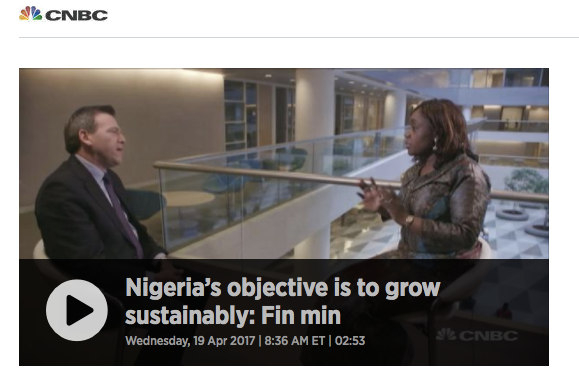
Five Things Minister of Finance, Kemi Adeosun said in her April 19, 2017 CNBC Interview

1. REVENUES: Nigeria’s challenge is not the burden of debt (our debt to GDP ratio is at a relatively low level of 13%) but instead low revenues. The Federal Government’s efforts to increase government revenue include: borrowing as cheaply as possible, strengthening our tax collection system and borrowing from external markets.

2. EXTERNAL BORROWING: The Federal Government is being cautious with its external borrowing, taking care to ensure it is doing it for the right reasons i.e. to fund infrastructure projects.

3. ECONOMIC RECESSION: Nigeria will get out of recession shortly, since the government is on the right track: implementing the right type of policies, improving government revenues and improving the efficiency of government spending.

4. ECONOMIC GROWTH: The seemingly slow pace of Nigeria’s emergence from the recession is on account of the total economic reset being implemented by the Buhari administration. The Federal Government’s goal is to encourage sustainable economic development through aggressive investment in power, rail, roads.

5. CAPITAL SPENDING: Capital spending will now account for 30% of Nigeria’s budgetary allocation, as against 10% in the past.

Watch the full Interview on CNBC, here

(Medium – Government of Nigeria)

Positioning Nigeria as a vehicles manufacturing country

The emergence of General Motors’ Senior Creative Designer, Jelani Aliyu, as the new Director General of the National Automotive Design and Development Council (NADDC), may in many ways be encouraging, as the country battles to boost local assemblage of vehicles and become a vehicle manufacturing country.

But considering that the sector has been stagnant or witnessed series of challenges that sunk the projections of the Automotive Industry Development Plan (NAIDP), introduced four years ago by the Federal Government, the arrival of Aliyu could only be best appreciated if the plight of the Nigerians masses and investors in the sector are addressed.

What Nigerians envisaged in 2013, when the government launched the NAIDP was to see an enabling environment for manufacturing of Nigerian made vehicles, which will be of international standards. There were also expectations that the vehicles will be made available to ordinary people at very competitive prices since local human and material resources would be used.

Aliyu, born in Kaduna in 1966, hails from Sokoto. He was “best technical drawing student” from Federal Government College, Sokoto. He declined admission offer to study Architecture at the Ahmadu Bello University, Zaria, Kaduna State, and opted for a related course in Birnin Kebbi Polytechnic, Kebbi State. Afterwards, he was hired by the Ministry of Works, Sokoto State because of his outstanding performance.

The Sokoto Scholarship Board sponsorship aided his education at the College for Creative Studies in Detroit, Michigan, U.S.A., and upon graduation in 1994, he launched his career as a design staff of General Motors. Aliyu, who designed the remarkable Chevrolet Volt, replaces Aminu Jalal.

The auto sector is crucial as former president Goodluck Jonathan’s government saw the need to design and implement policies, programmes, and strategies for an effective, competitive and diversified private sector led industrialisation process to boost non-oil revenue, considering the pressure on the nation’s revenue.

Indeed, if the forecasts of many analysts and the tenets of the automotive policies were feasible, the volume of local assemblage would have significantly increased to attract component builders. This will help the country drive backward integration, which in turn will generate employment, and push down prices of brand new automobiles, which are currently out of the reach of many Nigerians. But inherent challenges, particularly the current economic outlook, the disparity between naira and dollar as well as the inability of government to address key challenges made the projections elusive.

On the importation of fairly used vehicles, while investors see the trend account for the larger chunk of vehicles being imported into the country as a curse to growth of the sector, Nigerians, who buy used vehicles, expect a sustainable option that matches with the current economic realities.

It is therefore imperative for government to finalise plans on the automotive finance scheme that would grant a single digit loan to Nigerians willing to drive brand new vehicles. If this happens, experts expect an increase in the demand for new cars while the country can generate its own second hand vehicles.

Stakeholders like the Managing Director, Truckmasters Nigeria Limited; Tony Arenyeka, insisted that just like any other policy, fear of investors have to be assuaged by way of signing the current Automotive Bill awaiting legislative approval.

“There must be assurance that there won’t be a change, and the only way to do such is to move such policy from intention to law. The process of repealing a law is cumbersome; if government wants a policy that will last, we need to assure global operators that Nigeria is ready,” Arenyeka said.

Although automakers in the country, the Nigerian Automotive Manufacturers Association (NAMA), envisages the creation of over 4,000 direct jobs and much higher figure for indirect jobs in the sector, but the fact that the sector cannot yet boast of local content left the targets hovering. Therefore initiatives that will drive local content in the sector needs to be prioritised.

While the shortage of foreign exchange doubled the plight of the sector, organisations such as Nissan that started production in Nigeria in 2014, could only turn out 3,050 vehicles as of June 2015, despite installed capacity of 15,000 vehicles, infrastructure dearth must be death to ease cost of operation.

Most Nigerians also expect a sustainable programme that will help build local capacity, particularly in the areas of automobile maintenance and repair using latest technology.


(GuardianNg)

Higer Bus To Build Bus Plant In Nigeria

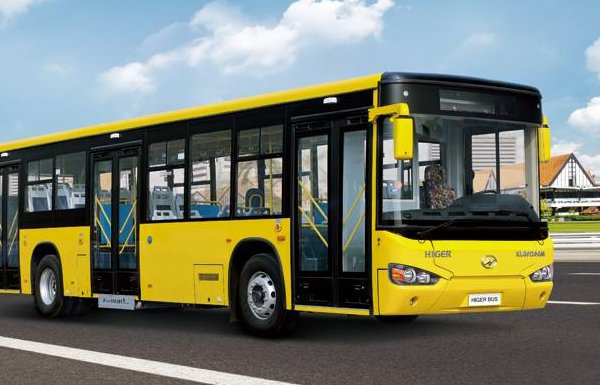
higer-bus

As the Nigerian Automotive Industry Development Plan (NAIDP) is gaining wider acceptance and accolades, Higer Bus Company Limited of China is concluding plans to build a world class bus manufacturing plant in Nigeria. Towards this end, Higer Bus is entering into a tripartite partnership with two other Nigerian companies, Globe Motors and Asia-Africa International FZE Company located in Lekki Free Trade Zone.

Senior officials from Higer Bus are currently in Lagos holding series of meetings with their Nigerian partners; working out detailed logistics required to commence bus building through Semi Knocked Down (SKD) assembly operations but with firm commitment to upgrade to manufacturing operations within a short timeline.

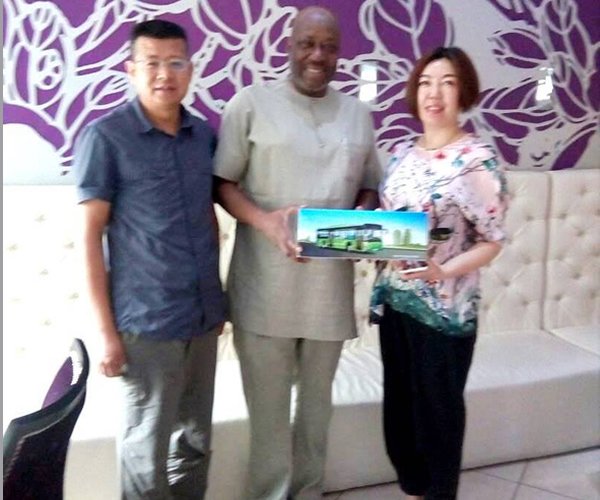
The partnership is being mid-wived by the National Automotive Design and Development Council (NADDC) represented at the meeting by the Acting Director General, Mr. Luqman Mamudu.

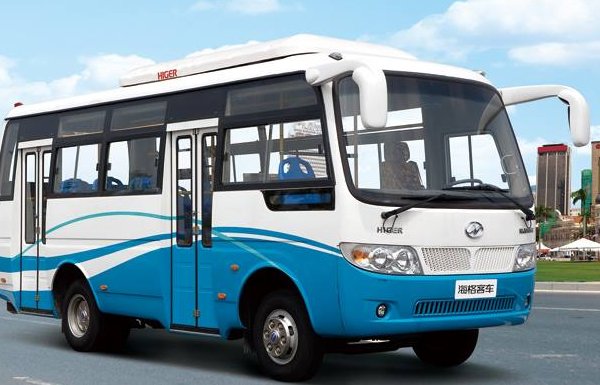
Mr. Mamudu was presented with a prototype image of Higer Bus by officials of the company at the meeting.

higer-bus

Higer Bus Company Limited, also known as Higer Bus, is a Chinese bus manufacturer based in Suzhou, Jiangsu Province. It was established at the end of 1998. HIGER is China’s leading exporter of buses and coaches whose products are available in more than 100 countries and territories in South Asia, Middle East, Africa, Russia, East Europe and the Americas and the company continues to experience significant annual growth in both market expansion and production capability.

Higer Bus and Coach is the third largest and the fastest growing bus manufacturer in the world. It is known for its innovation and dedication to research and development.

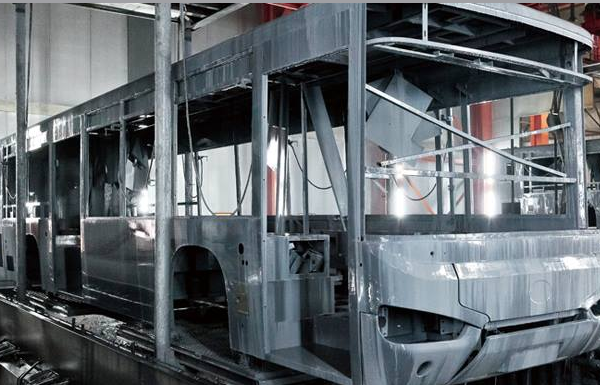
Higer’s manufacturing facility in the Jiangsu Province China has the capacity to produce 35,000 buses per year. The production base for medium, large and city buses covers 800,000 sqm and hosts advanced-equipped assembly lines.

Because quality is not negotiable, Higer has strictly implemented the quality standards of the national CCC certification, ISO/TS16949 and ISO14001. Higer has established strict regulations on the screening, assessment and verification of suppliers, with all the spare parts coming from reliable advanced enterprises, both domestic and international.

Higer has over 300 different bus and coach models from 5-18 meters in length, commercial/tourism coaches, city buses, energy buses, school buses, mini buses, coaster series, commuter buses and pick-up vans.

All Higer vehicles are reputed to be safe, fuel efficient, reliable and durable. The company presently employs more than 6000 people worldwide.

higer-bus

higer bus

THE PARTY GOES ON: HOW LAGOS NIGHTLIFE IS THRIVING ON CREDIT

Gbagada is a sub-urban city, a gentle mix of residential and commercial buildings standing in close proximity to each other.  In daylight, the bustling of “I pass my neighbour” generators mixed with the sounds of car engines and motorcycles fill the air, and at night, the noise is replaced with music emanating from highlife bars and makeshift joints, many of which sit on Church Street.

When Okechukwu opened a bar five years ago on Church Street – he was in luck. Set on a long stretching gutter overlooking a Redeemed Church, with tables set directly in front of the entrance, arranged from left to right – there was a crowd of customers on opening day that still continue to patronize the bar five years later. “When I opened this bar, it was like people were already waiting for me,” Okechukwu said as he made his way around the mostly empty bar, collecting money from a few customers while pretending to laugh at their jokes.

The eponymous bar manager is a dark skinned robust man in his 40s, with a thick Igbo accent and has had to adapt quickly to a customer base less eager to spend waning salaries on alcohol and isi ewu. But Okechukwu isn’t only skilled at pretending to laugh. He is also mightily skilled in handling his customers during trying times for Nigerians, in order to keep his business afloat. “It is not as good as last year, but it is still manageable, some people’s own are worse”, he said.

In light of the recession (Nigeria’s GDP fell by a record low -13.70 percent in just the first quarter of 2016) some small business owners have opted to run their businesses on credit in order to keep their customer base – but not all businesses.

Okechukwu has debtors, but not a lot. “I can’t sell on credit o that is one chance! Where do they want to see the money to pay me? People are saying no money, no money, you think it’s a joke? Isi ewu that I used to sell at least 50-80 plates a day now I sell just 20, if God decided to bless me. If I sold on credit this shop would have closed since,” he said.

“This bar used to be very full! Sometimes people even sit down on crates. But now everything is expensive. People complain that isi ewu have become more expensive, what will a man do? Na to drink for empty stomach. And even this drink I am drinking, Oke has increased the price. Things are hard,” one man said to me in his semi-comatose state. His name was Akin, and he had devoured 5 bottles of harp beer or even more.  Akin was a banker, but lost his job and comes here to drink once in a while to get away from the loud voices in his head. In 2016, it seemed like banks were vying to see who could fire the most workers as over 3,500 bank workers were sacked within the first quarter of the year, and many more were left without a job as the recession cut deeper.

At Okechukwu’s Bar, I heard the phrase, “in this Buhari economy” more than a thousand times from zealous customers often followed by laughter. Okechukwu, who extended credit to customers during his early years as a bar manager, was forced to abandon the practice, as loyal customers became fond of owing him at times for over a month. “If you want your business to survive, you can’t let your customers have fun on credit,” Ogechi, a waiter at Okechukwu’s bar said.

However, just down the road at Evening Class, both the ambience and the cash flow tell a different story.

Darlington, a 35-year-old is the manager of Evening Class, located on the other side of Church Street. He believes that the spirit of drinking has attributed to the success of clubs and joints like his, “If people don’t drink for one day, it will look like they are forgetting something. It’s a spirit.” Evening Class opened last year when the stage of recession was just being set.

According to Darlington, Evening Class used to be the life of the party, but that day, it made Okechukwu’s bar look like it had won the lottery.  The price of drinks and food had stayed the same, yet the number of nightlife tourists had dwindled.

“Before this year, we used to sell over 30 crates in one day, but now we barely sell 10… People that used to buy like 5 bottles of beer, now buy two or three…even if everything has increased, we have not increased our price in other to keep our customers,” Darlington said.

“People drink when they are happy, people drink even more when they are sad. That’s how life goes,” Dotun said. He was a frequenter at Okechukwu’s Bar before the inception of this year, but now, he rarely visits. Dotun a Bricklayer attributes this to low business patronage “Nobody is building houses again, everywhere is dry”.

But the bar was empty and his attempt to keep the bar running, made him incur a loss, as he adopted a “credit system” for payment. “Business has been bad! You are here, so you can see what I am saying! The turnout has been very discouraging. People will come here and drink but they won’t pay me. They will owe me for like two weeks saying no money no money. And I understand. There is no money.” He explained that he has lost a lot of money and retrenched seven workers. These seven workers that Darlington let go of were part of the 4.58 million Nigerians who became unemployed by the second quarter of this year.

The deserted walkway to evening class

Darlington is hardly the sole business owner in Nigeria having a bad year. The alcohol industry has also taken a hit. For example, Guinness recorded their first loss, 2 billion naira, in 30 years, and Nigerian Breweries recorded an 11 percent profit loss in the first quarter of the year. Both companies blame trading conditions in Nigeria, and low consumer sentiment for the decline in profit.

Okechukwu keeps his bar afloat by mandating customers to pay as they order drinks or Isi Ewu. But Darlington’s strategy is the far opposite. Despite the challenges, they both still manage to hold on to their optimism. When I asked them about what they thought next year was going to be like, they both gave me the same answer “it will be far better by God’s grace.”


(venturesafrica)

Every Time You Drink A Beer, Remember To Drink The Same Amount Of Water

You may think beer wouldn’t be harmful as long as you don’t drink too much. And you don’t even get drunk. So why not just chill? Sometimes having a beer really refreshes you and quenches your thirst, right?

Especially if you are the kind of person who doesn’t really like water, you may think beer might be quite a good alternative for you.

The problem is, beer doesn’t hydrate you. Instead, it dehydrates you. A person who weighs 60kg normally produces about 60ml of urine. But if he takes one glass of beer, an additional 120ml of urine is produced. The overproduction of urine leads to dehydration.

You may wonder, people in the ancient time drank beer like water, why didn’t they have any problems?

It is true that a long time ago beer was used as a cleaner alternative to bacteria-infected water. People only drank beer and survived. However, unlike ancient beer, with only about 0.5% alcohol, modern beer contains about 4-6% alcohol.

When alcohol of such concentration enters our bodies, an anti-diuretic hormone called ADH is released. It then increases the amount of urine we produce.

So every time you drink a beer, remember to pay extra attention to hydrate yourself. Remember beer would never hydrate you. To minimize the consequences, every time you drink a beer, drink the same amount of water.

(Lifehack)

5 Advantages Of Driving An Innoson Vehicle

Innoson Vehicle Manufacturing (IVM) Co. Ltd is the first wholly indigenous and leading vehicles manufacturing company in Nigeria. That these vehicles are locally manufactured in Nigeria has automatically become a plus to Nigerians because its ranges of vehicles are Nigerian specs and not Japanese specs, European specs or American specs.

American specs cars indicate that the vehicles are produced mainly to be used in America and therefore the American environment was put in considerations while producing the cars, so also the same consideration was given when producing Japanese and European cars.

Today, Nigeria is known as dumping ground for imported/foreign cars and most of these cars are not suitable to the Nigerian environment. Nigeria with a motorization rate of 81%, with the total number of cars on the road up to 14million, Nigerian motor users have not really had the opportunity of driving specially made vehicles specifically manufactured for Nigerian roads until the entrance of Innoson Vehicle Manufacturing Company Ltd.

Today, IVM is using the concept of regionalisation in the production of its vehicles by making sure that it considers the Nigerian environment, local tastes and consumer preferences in Nigeria as well as African region during the production of its vehicles.

With the vehicle manufacturing plant located here in Nigeria, IVM ensures it gets feedback from the users of IVM in order to know their views on their IVM experience and by these feedbacks they seek better ways to improve on the tastes and preferences of their customers to suit the Nigerian environment.

The following are advantages of driving Innoson Vehicles:

  1. Fuel Efficiency:All Innoson IVM are highly fuel efficient vehicles. Being that petrol is a costly commodity in our country, Innoson vehicles brand of engines were specifically designed by its research engineers to consume less petrol/diesel and with an average fuel saving of between 10%-15%. IVM continually receives good feedback from their vehicle users who confessed that their Innoson vehicles do consume less fuel than other brands of foreign vehicles.
  2.  Warranty: All Innoson vehicles come with a 3 years engine, axles and gear warranty. Upon purchase of any vehicle from Innoson Vehicle Manufacturing Co Ltd or any of its authorized dealers, IVM is committed to being by your side by providing prompt and quality after sales service to you no matter your location. As the first indigenous vehicle manufacturing company in Nigeria, it has a unique advantage in that vehicle spare parts are readily available. IVM meets the warranty needs of its users through

i. The Innoson IVM Mobile Workshop: The mobile workshop is a 24/7 vehicle service workshop designed to provide prompt and quality after sales repair service to our customers. IVM Mobile Workshop is handled by highly qualified technicians and mechanics and can travel to any location to provide prompt and quality vehicle servicing to our customers and clients.

ii. Innoson IVM Service Centers: The Service Centers are the authorized locations where the Innoson IVM Vehicles undergoes its services and other forms of maintenance schedules. The purchase of original parts of Innoson vehicles can also be gotten from these service centers.

  1. Low/No Overheating: In trying to win the war against vehicle overheating, IVM added some extra important features that will reduce the chances of their vehicles from overheating. These features includes;

iNew Improved Thermostat: The new improved IVM thermostat which sits between the engine and the radiator has a metal valve that has a temperature sensor built in. It can either be open or closed. When the thermostat is closed, it keeps the coolant in the engine. When the engine gets to a predetermined temperature, the thermostat opens allowing coolant to circulate. With this, the circulation of coolant prevents the engine from overheating.

ii. Double/ Triple Fan: Another unique feature that makes IVM vehicles to avoid overheating is its double/triple fans. In responding to the Nigerian hot environment, IVM built in additional fans to the AC condenser together with the one of the radiator. The AC condenser has two fans while the radiator has a big fan making it three set of fans. This unique feature is one of the reason while IVM vehicles esp. its buses and SUV hardly overheat.

  1. Auto-Financing: Sourcing an auto-finance in Nigeria today has become a cumbersome task. When you get, the interest rate and hidden charges deter some interested persons from purchasing a brand new vehicle through auto-finance. IVM has been able to partner with some financial institutions such as Sterling bank, Diamond bank, Fidelity bank etc, to help in new vehicle purchase. The repayment period is spread out over 36 months (3 years) allowing you the ease to pay the corresponding monthly amount for the particular vehicle you choose.

How to Access Innoson Sterling Bank Auto-Finance.

i. Choose your preferred vehicle

ii. Walk into any Sterling Bank nationwide to open an account for auto finance processing. Hotline: 08033562978, 08175812222 – Sterling Bank

iii. Contact us for the proforma invoice of your preferred vehicle after Sterling Bank account opening confirmation. Hotline: 08137075745, 08030889955 – Innoson Motors

iv. Pay the required 25% down payment and wait for your vehicle to be delivered to you wherever you are in Nigeria.

  1. Environmental Friendly Vehicles: The automotive industry is a growth industry. But along with the record growth, it is experiencing, the industry is also facing unprecedented challenges. As consumer expectations are transforming, vehicle manufacturers are confronted with the ever greater complexity of producing vehicles that are environmentally friendly.

IVM is using the concept of regionalisation in the production of its vehicles by making sure that it considers the Nigerian environment, local tastes and consumer preferences in Nigeria as well as African region during the production of its vehicles. Some measures it has taken include the following;

i. Reinforced Shock Absorber: With the deplorable state of roads in Nigeria, which has certainly become a national shame and an unnecessary embarrassment as there is hardly any part of the country that can boast of motorable roads, Innoson Vehicle Manufacturing designed into the Innoson brand of vehicles a reinforced shock absorber in its vehicles to absorb shock impulses. This improved technology will ensure that driving through our rough roads will lead to improved ride quality and vehicle handling.

iiEconomic Effectiveness: Innoson Vehicles has the capacity to achieve high power output, low fuel consumption, and low exhaust emissions. It is equally equipped with a world-class, lightweight chassis and lightweight body design. IVM vehicles are significantly lighter than others of the same class.

Innoson Vehicle major strength lies in its ability to produce to a specific request of the client at the same price with the standard versions to meet the specific need of the client. The fact that the vehicles are Made-in-Nigeria vehicles takes care of special inputs at the manufacturing stage to suit special needs.

Ebonyi State bans serving of Coca-Cola branded Soft drinks at State functions

The Ebonyi State Government has become the first State in Nigeria to restrict the consumption of Coca-Cola products in the state.

Concerned with the recent ruling by a Lagos State High Court against the National Agency for Food and Drug Administration and Control (NAFDAC) and the Nigerian Bottling Company (NBC) on the alleged health effects of consuming Fanta and Sprite, Ebonyi State Governor, David Umahi on Tuesday issued an order, banning the serving and consumption of Coke, Sprite and Fanta at government functions in the state.

The order came during a meeting the governor held with traditional rulers and town union executives in the state.

The governor ordered the removal of Coke, Sprite and Fanta on seeing them displayed on tables at the Governor’s Lodge, the venue of the meeting.

“I don’t want these brands of soft drinks to be served in any government function again,” he said.

A Lagos High Court recently ruled against NAFDAC and NBC in a suit filed by Emmanuel Fijabi Adebo and his firm Fijabi Adebo Holdings Limited, that Fanta Orange and Sprite may be hazardous to health if consumed with Vitamin C.

The court ruled that the drinks may contain high levels of benzoic acid and sunset yellow, which may be dangerous for human consumption.

However, NBC maintained that its soft drinks were safe as the level of the said additives in its drinks were within the Nigerian Industrial Standards (NIS) approved regulatory level.

Also, a recent investigation by the Consumer Protection Council (CPC) found that the level of benzoic acid in Fanta and Sprite were within Nigerian approved regulatory standard. Instead, the CPC investigation found that other soft drinks not manufactured by NBC (Lucozade, Mirinda) contained higher levels of benzoic acid above the regulatory standards.

The CPC in its report called for a regulatory standards review of all soft drinks produced in the country.

Since the CPC report was made public,  Suntory Food and Beverage Nigeria Limited, manufacturer of Lucozade has come out to defend the integrity of its brand, refuting CPC’s claim that its drink contained high levels of benzoic acid above the Nigerian Industrial Standard approved level. The soft drinks firm stated that Lucozade does not contain benzoic acid and is safe for human consumption.


(Beverageindustrynews)

Multinational brewers look to tap Africa’s $13bn beer market

Despite its worst slowdown in over two decades, the continent remains key to growth.

Premium SABMiller, whose brands include Hansa, was acquired by Anheuser-Busch InBev last year for £79bn as it looked to secure a foothold in Africa.

As Nigeria plunged deeper into economic crisis last year, billboards popped up across Lagos, its largest city, promoting Johnnie Walker whisky along with a reassuring message: “Storms Never Last”.

The sentiment resonates as multinational drinks companies battle for share in Africa’s biggest markets amid the worst economic slowdown on the continent in more than two decades. And Diageo, owner of Johnnie Walker and the world’s largest distiller, will hope that its tagline rings true in Africa’s roughly $13bn beer market. Analysts say that despite the downturn sparked by low commodities prices, brewers are eager to push further into the region as traditional markets slow. Africa is the world’s fastest-growing beer market, with research group Plato Logic forecasting volume growth of 4.5 per cent this year compared with 1.4 per cent per cent globally. (Read more)