The NOIPolls Consumer Confidence Index at 62.7-points for Quarter 1, 2017

0

The Portfolio of Indices report released by NOIPolls Limited for Q1, 2017 has revealed that the NOIPolls Consumer Confidence Index (CCI) experienced a 4.6-point increase to stand at 62.7-points. The Consumer Confidence Index is an indicator designed to measure the amount of optimism that consumers have on the state of the economy which is usually expressed by either spending or saving. This current figure indicates that consumers’ degree of confidence about the overall state of the economy in relation to their personal financial situation may have slightly improved. There is no doubt that the intervention of the Central Bank of Nigeria in the foreign exchange market has influenced the general positive attitude of consumers; given that  consumers rationally base their decisions on the general outlook of some economic variables such as, inflation rate, interest rate, exchange rate, unemployment rate, etc. 

Furthermore, the Present Situation Index (PSI), which is one of the two independent variables that make up the CCI, experienced an increase of 10.7-points to stand at 34.3-points, while the other, the Expectation Index (EI) remained the same at 84.-points. Also, all the indicators that constitute the PSI and the EI experienced an increase except the Expected Total Family Income Index which declined by 4.2-points to stand at 67.9-points. The Present Economic Situation Index experienced the highest increase of 14.1-points and this contributed to the overall increase of the CCI.  These are the key highlights from the Q1, 2017 Portfolio of Indices Press Release.

In February 2014, NOIPolls Limited introduced its portfolio of indices; the NOIPolls Personal Well-Being Index (PWBI), the NOIPolls Consumer Confidence Index (CCI) and the NOIPolls Eagle 30 Business Confidence Index (EBCI). The NOIPolls Personal Well-Being Index measures factors impacting on the lives of everyday Nigerians; thereby producing a complete view of the individual’s personal well-being. The NOIPolls Consumer Confidence Index provides consumer assessments of the economic situation and their intentions and expectations for the future. The NOIPolls Eagle 30 Business Confidence Index measures business leaders’ perceptions and expectations about the Nigerian business environment using the top 30 companies in the country.

Nigerian businesses, financial and government agencies largely depend on their perceptions and micro assessment of consumers’ expectation in making decisions. At best, they draw conclusion on the business environment based on information from their immediate surroundings while the minorities conduct surveys that are time and money consuming. However, the introduction of these indices provides indicators that will ensure stakeholders can detect and respond to changes in consumer behavior, the economy, and the business environment in Nigeria.

This report presents the Q1, 2017 results for the NOIPolls Consumer Confidence Index (CCI).

THE NOIPOLLS CONSUMER CONFIDENCE INDEX (CCI)

In Q1, 2017, the NOIPolls Consumer Confidence Index (CCI) experienced an increase of 4.6-points to stand at 62.7-points. This significant increase in the consumer confidence could infer that Nigerians are expected to increase their purchases of goods and services, thus, manufacturers may increase production and stocks whereas, large organisations may increase employment rates, government may also expect improved tax revenues based on the increase in consumer spending. Therefore, it is advised that businesses, economic analysts, investors and the Government take advantage of this increase in consumer confidence though with caution because the CCI may adjust dramatically on the day the Index is released. However, this will probably only happen if there is a lot of uncertainty about the economy.

The NOIPolls Consumer Confidence Index consists of 2 independent variables; the Present Situation Index (PSI) and Expectation Index (EI). The PSI measures general consumer thoughts in relation to the present economic situation and in Q1 2017, the PSI stood at 46.9-points. While the EI, which evaluates the overall consumer sentiments toward the short-term future economic situation, stood at 84.9-points in the same period.

The PSI and the EI are made up of a total of 7 variables and all these variables experienced an increase except the Expected Total Family Income Index which experienced a decline. These are highlighted below;

Current Economic Situation Index – 39.5

Consumers experienced a significant increase in the current economic situation. The Current Economic Index in Q1, 2017 rebounded to 39.5-points with an impressive 14.1-points increase from Q4, 2016.

Expectation of the Country’s Economic Situation Index – 93.5

The expectation of the country’s economic situation index slightly increased by 0.01-point to stand at 93.5-points. This suggests that Nigerians have a high degree of confidence that the current economic situation will improve.

Current Employment Condition Index – 50

Current figures revealed a significant increase in their current Employment Condition. This is evidenced by the 8.6-points increase from Q4, 2016. 

Expected Employment Condition Index – 98.4

Expected Employment Condition Index increased by 0.7-points to stand as the highest rated index in Q1, 2017. This infers that Nigerians are very positive of better employment opportunities in the future.

Current Prices of Goods and Services Index – 13.5

This index also increased by 0.6-points to stand at 13.5-points in Q1, 2017. This indicates that consumers perceived the prices of goods and services to be high.

Expectation of Prices of Goods and Services Index – 76

The Expectation of Prices of Goods and Services Index increased by 3.1-points to stand at 76-points. This shows that consumers are optimistic that there will be a reduction in prices of the goods and services in the future.

Expected Total Family Income Index – 67.9

The Expected Total Family Income Index declined by 4.2-points to stand at 67.9-points. This infers that consumers are somewhat neutral about their expected total family income in comparison with their spending pattern.

TREND ANALYSIS

Trend analysis revealed that the PSI increased by 10.7-points to stand at 34.3-points, while the EI remained the same (84-points) with Q4, 2016. The increase experienced by the PSI implies that the spending powers of consumers may have been boosted.

In conclusion, the NOIPolls Consumer Confidence Index increased by 4.6-points to stand at 62.7-points. Also, one of the two independent variables that make up the CCI, the Present Situation Index (PSI), experienced an increase of 10.7-points while the Expectation Index (EI) remained the same in Q1, 2017.

Finally, while the CBN forex intervention may have influenced the CCI positively, it is recommended that an in-depth plan should be made to sustain the intervention, while long term plans and policies are implemented to revitalize the economy.

Survey Methods

The Consumer Confidence Index Poll was conducted in Quarter 1, 2017. The CCI involved telephone interviews of a random nationwide sample. 3,000 randomly selected phone-owning Nigerians aged 18 years and above, representing the six geopolitical zones in the country, were interviewed. With a sample of this size, we can say with 95% confidence that the results obtained are statistically precise – within a range of plus or minus 3%. NOIPolls Limited, No1 for country specific polling services in West Africa. We conduct periodic opinion polls and studies on various socio-economic and political issues in Nigeria. More information is available at www.noi-polls.com, you can also download NOIPolls Mobile App from the Google and Apple Playstore.


(NOIPOLLS)

Warc names WPP as world’s best parent company – for third year in a row

0

WPP has taken first place in the 2017 Warc 100 ranking of the world’s top agency parent companies.

For the third successive year the Group was deemed to have delivered the best results for clients, as measured by the performance of its agencies and their campaigns in more than 80 effectiveness and marketing excellence competitions worldwide. Each of these competitions requires winners to have demonstrated the business impact of their work.

WPP agencies also occupied three of the top 10 places in the network of the year category: Ogilvy, J Walter Thompson and Grey.

The win means that WPP continues to hold the title of “holding company of the year” at three of the industry’s leading awards competitions: Cannes Lions, the Effies and Warc.

Warc is the publisher of respected industry journals including Admap, Market Leader and the Journal of Advertising Research, and provider of advertising best practice, evidence and insights from the world’s leading brands. The Warc 100 is an objective ranking of advertising and marketing campaigns that have worked, and uses methodology developed in consultation with King’s College London.

Sir Martin Sorrell, CEO of WPP, said: “At a time when questions are being raised about the effectiveness of certain marketing channels, it is more important than ever that we focus on the power of creativity and ideas to deliver tangible business results for our clients. The Warc 100 ranking shows we are doing exactly that. My thanks and congratulations to everyone in the Group who contributed to this success.”

Mike Waterson, Chairman and CEO of WARC, said: “To be named top holding company for the third consecutive year is an outstanding achievement. WARC 100 tracks campaigns that deliver real business value for clients. WPP’s third in a row top ranking reflects a consistent commitment to generating financial return for clients from superbly executed advertising and media investment, not as an exceptional event, but as a normal outcome.”

About WPP
WPP is the world’s largest communications services group with billings of US$74 billion and revenues of over US$19 billion. Through its operating companies, the Group provides a comprehensive range of advertising and marketing services including: advertising & media investment management; data investment management; public relations & public affairs; branding & identity; healthcare communications; direct, digital, promotion & relationship marketing; and specialist communications. The company employs over 205,000 people (including associates and investments) in over 3,000 offices across 112 countries. For more information, visit www.wpp.com.

WPP was named Holding Company of the Year at the 2016 Cannes Lions International Festival of Creativity for the sixth year running. WPP was also named, for the fifth consecutive year, the World’s Most Effective Holding Company in the 2016 Effie Effectiveness Index, which recognises the effectiveness of marketing communications. In 2016 WPP was recognised by Warc 100 as the World’s Top Holding Company (second year running).

Is Huawei the “poster company” for Worst-Place-to-Work in Nigeria?

The result of low or weak employee belief in an organization may not show immediately but in the long stretch, it rears its head in diminished productivity, weak perception by the external public and ultimately in market failure

In the restless global Smartphones market, where the likes of Apple, Samsung and HTC among many others have been battling for marketshare leadership, one brand has, in the past one year, been generating more than a passing interest. That brand is Huawei.

According to data released on February 16, 2017, by leading analyst firms Strategy Analytics and Counterpoints Research, Huawei Consumer Business Group (CBG) is now the world’s third largest smartphone manufacturer by market share, “commanding 10% of the total global market”, maintaining a decent third place behind great brands like Apple and Samsung.

In a year when total worldwide smartphone shipments totaled 1.47 billion units, Huawei shipped 139.3 million units in 2016, representing for the company, an increase 30.2% on 2015.

For a brand whose name was not in the top of the Smartphones food chain a couple of years ago, this is a major milestone. Worldwide, talk of Huawei potentially besting Apple and Samsung has been on. The brand has also been getting its marketing politically correct, winning all manner of awards for innovation across Europe, Asia and even the Americas.

Huawei is yet to register strong presence in Nigeria and only towards the end of 2016 did formal launch events for its Accent P9 phones. So far, not much has been heard of the brand. With Nigeria being one of the biggest Smartphones market in Africa, the potentials for Huawei to grow is quite high, especially in the value to mid-market segments.

This will happen, if it will overcome the challenges of association that has made the brand better known for heavy engineering in telecom and oil & gas.

But there is a major challenge before the Huawei brand in Nigeria and it is something that should be watched, not just for the future success of its Nigerian project but also for what it represents in Chino-Nigeria relations. And I speak from a personal experience as contained in the following narration.

Huawei is now makeing great phones. But it is also making the the list of Worst Places to Work in Nigeria

Huawei is now makeing great phones. But it is also making the the list of Worst Places to Work in Nigeria

Last year, I was invited for what I thought was a press briefing at Huawei’s office in Nigeria, located at the old Post Office on the Adeola Odeku-Olugu Agabeje intersection in Victoria Island, Lagos. The meeting was to start by 9.00am and I arrived at 8.45.


There was no ground staff to receive us on arrival and we had to wait for the agency to get us together and usher us in. Inside the office, we were taken to a meeting room and asked to wait. It took Huawei staff close to an hour to get themselves sorted out for what I was to soon learn was a training programme.

At a point, the person to handle the training arrived and asked if we were ready and we said we were. He took another 45 minutes probably preparing himself and his laptop.

I was irked.

Before he returned, a group of Chinese men had walked into the room, carrying backpacks and one flaunting a laptop.

The one with the laptop shoved his device at us, saying, “Excuse me, you have to leave this room.” I did not understand that and I asked him where he wanted us to go.

Obviously he did not know and didn’t care. But he dutifully announced again that they had a meeting in the same room.

I volunteered to tell him that those of us in that room were no Huawei staff and that we were also asked to remain in that room in wait for a meeting. I asked him if he had another place we could wait since we were not familiar with the environment but he reminded me, this time with stronger emphasis, that he was there for a meeting.

I refused to respond to him and when we refused to leave, he asked me again, “The person who asked you to wait here, is he a Chinese staff or a Nigerian staff? I did not understand that and asked him to repeat the question and he did.

I told him that I did not know and that it was not important if our host was Chinese or Nigerian. What was important, I said, is that this person is a Huawei staff.

After this, he walked out of the room and 10 minutes later, our “trainer” returned and made the worst “ice-breaking move” I yet have witnessed.

He asked us if we were comfortable and I told him we were not. He asked why? I told him that first of, he was late and that our reception on arrival was not good and that secondly, his Chinese colleagues were on the verge of throwing us out of the meeting.

“That is what you get when you work with a Chinese company in Nigeria.” This was the shocking response I got from the young man. I was so stunned I had to ask him to repeat what he had said and he did.

Trying to remind him that there should be no difference between a Chinese staff and a Nigerian staff in Huawei’s Nigerian operations was needless. He practically accepted that Nigerians working in Huawei are treated as second class citizens and that applied to all Nigerians doing business with the company.

I refused to accept that and a few minutes later, I walked out of the room, jumped into my car and drove back to the office.

One of the most terrible things to happen to a global company is to evolve a culture of lack of citizenship by employees. The company that wants to lead must institute, a matter of policy, full employee integration that will ensure staff become the strongest of viral ambassadors.

The result of low or weak employee belief in an organization may not show immediately but in the long stretch, it rears its head in diminished productivity, weak perception by the external publics and ultimately in market failure.

In a 2004 review of Worst Places to Work in the United States, Time mentioned poor employee satisfaction on the job as criteria for selection of the 10 companies in the list.


In the report, the magazine said of a particular company, “…less than half of employees approve of CEO. Many reviews cited low wages and poor benefits, conditions that often lead to employee dissatisfaction.”

I am not sure a satisfied employee would ever say what this Huawei staff said of his company to an outsider. What it means is that his daily routine in Huawei is that of enduring the undignifying and perhaps, dehumanizing attitude and treatment from his Chinese bosses. Such a person can never be productive.

I understand a number of Chinese firms operating in Nigeria treat their Nigerian staff this way and may have been getting away with it because of paucity of job spaces that force people to condone ill-treatment by senior personnel.

This may work fairly well for the short term. In the long run, dissatisfied personnel will become a major threat to profitability and eventually compromise the staying power of the business.

As reported by Yahoo! Finance, “These days, employees can easily share their work experiences online, and employee opinions about companies and managers are all readily available to prospective workers and customers alike. As a result, companies face new risks to their reputations. A company known for its poor work environment and treatment of employees may find the poor image can also curb its reputation with customers, hinder its ability to attract new workers, and even hurt its financial performance.”

Nigeria may not be the best environments at the moment in terms of protection of workers’ rights and amplification of employer abuse, but it may not be so forever. And when things begin to shape up properly, the company with poor employee citizenship will not grow into the future.

Even now, with such palpably unimpressive employee dissonance, I am convinced the journey into the retail space will be a tough one for Huawei.


(BrandishNigeria)

Tackling slow, sluggish e-commerce growth

Despite the growing appeal of e-commerce, the shopping behaviour of majority of Nigerians is still largely traditional as many still prefer to see, touch or experience the product before making the buying decision. Nigeria’s leading online and offline retail chain, Yudala, says some factors have stunted the growth of e-commerce in the country.

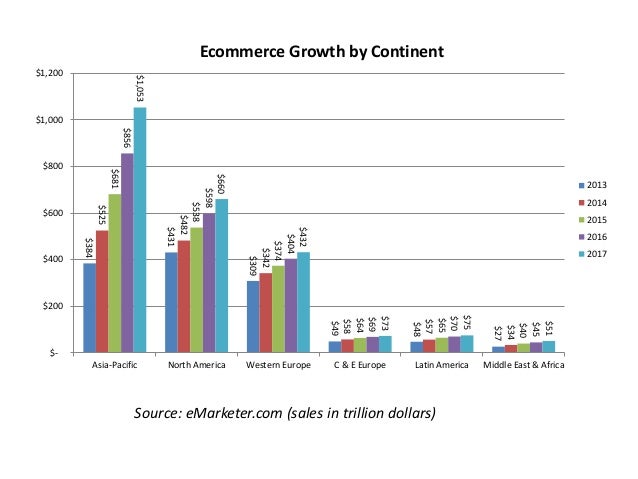
Image result for ecommerce growth per continent emarketer.com

Electronic commerce or e-commerce has become a thriving global industry. A recent report by the Oxford Business Group revealed that retail sales hit a whopping $22billion globally last year, with online shopping figures accounting for a major part of this outlay.

In advanced climes where access to the internet and, of course, literacy levels stand at appreciable levels, e-commerce has become a lifestyle for many. Interestingly, global retail sales, of which e-commerce makes up a major part, is projected to rise further to an estimated $27 trillion by 2020.

Nigeria has also been bitten by the e-commerce bug. This has been made possible by the proliferation of online stores all competing for the attention of shoppers, many of whom are eager to jump on the ease and convenience of the e-commerce train.

Nevertheless, e-commerce is still at the rudimentary stage in the country as the pace of adoption and acceptance is decidedly slow. Despite the huge strides recorded in the e-commerce landscape – especially with the massive awareness for globally celebrated shopping festivals, such as Black Friday and Cyber Monday – the average Nigerian is still an unrepentant traditional shopper.

Despite the massive hype and growing status of e-commerce in the country, you are better off convincing the average Nigerian to make the final buying decision when you can provide him or her with an opportunity to ‘experience’ the product before parting with hard-earned money. This often involves visiting a physical or brick-and-mortar store location to interact with sales attendants and getting a chance to see a demonstration of the item before the sale is closed.

This traditional shopping behavior goes a long way to justify the unique Yudala model of combining an online store with physical offline stores located nationwide. Cases abound of most walk-in customers actually admitting to having checked out a particular product online but still preferred to physically visit the store to see the product before purchase.

A few factors are responsible for this largely traditional approach to the e-commerce revolution in Nigeria’

Trust

Trust remains a major issue: Many Nigerians live in constant dread of online fraud and will do anything to avoid using their debit card to process payments electronically. According to data from the Nigerian Inter-Bank Settlement System (NIBSS), 2014 saw 1,461 reported cases of e-fraud, with actual losses grossing N6.216 billion. In 2015, about 946 attempted e-fraud cases were also recorded by banks, Other Financial Institutions (OFIs) and Mobile Payment Operators (MPOs), resulting in an estimated loss of N5 billion. Recently, the Minister of Communications, Adebayo Shittu, indicated that about N78 billion is lost yearly in Nigeria to all forms of cybercriminal activities. This reality has stunted the growth of e-commerce in Nigeria.

Internet access luxury

It is an open secret that e-commerce is driven by access to the internet. However, internet access for many in this part of the world is an expensive venture. Worse still, the number of internet users seems to be declining. Going by the most recent statistics released by the Nigerian Communications Commission (NCC), the number of internet subscribers in Nigeria’s telecommunications networks declined to 91, 274,446 in January. According to the figures released, internet users dropped to 91,274,446 in January as against 91,880.032 users recorded last December, showing a decline of 605,586. This is one of the major reasons the average shopper remains seemingly stuck in his largely traditional shopping ways.

Bitter experiences

from orders 

The e-commerce experience in Nigeria has been stalled by the action of some online retailers who end up disappointing the customer with the delivery of items different or inferior in quality from the one seen or ordered online. In such a case, the customer has to bear the inconvenience of having to either navigate the thorny process of seeking a refund or waiting an extra lengthy number of days to get the right item. This is why ensuring that “What you see is what you get” remains a unique selling point in the e-commerce market.

Rural connectivity

challenge 

A recent report revealed that the Nigerian e-commerce industry recorded a handsome $1.9billion last year and the figure is expected to reach an estimated $3.9billion in 2020. However, e-commerce remains a predominantly urban phenomenon. For many in the hinterlands and rural communities hobbled by the absence of the most basic infrastructure, e-commerce will remain an abstract concept for a long time. To reach these ones, citing a physical store not too far from their location remains the best bet.

Preference for seeing, touching 

Ever wondered why many shoppers with access to the internet still end up carrying out most of their e-commerce purchases in physical stores? For many Nigerians, seeing and being able to touch the item beats just being able to see it on the screen of a mobile phone or laptop. Majority still want to see, touch, feel and/or experience a product before they part with their money.

Old physical contact

still relevant 

Commerce in Nigeria originated from a traditional stand-point. Nothing feels better than haggling with a seller face-to-face and eventually securing a bargain. The glint in the eyes of the buyer and renewed spring in the steps are a sight to behold. For now, at least, e-commerce will struggle to completely wipe away this culturally-ingrained shopping behavior.


(Thenationonlineng)

Lagos arrests, jails motorists for buying in traffic

0

Officials of the Lagos State Environmental Sanitation Corps Agency (LASECORPS) have arrested six motorists at the Ikeja Along end of the Lagos-Abeokuta Expressway for allegedly buying goods in the traffic.

The offenders’ vehicles, a Honda Accent, Hiace, Toyota Hilux, Toyota Sienna, taxi cab and commercial bus, were also impounded by the agency.

The PUNCH learnt that four passengers and nine hawkers were also apprehended during the operation, which was carried out on Thursday.

They were accused of breaching the environmental law and brought before a magistrate, Mr. Olayiwola Ogundare of the Ogba Magistrate’s Court, who sentenced them to three months’ imprisonment each.

Ogundare, however, gave the accused an option of N10,000 fine each, adding that each of the motorists should pay additional N20,000 fine into the state coffers.

The Head of Public Affairs Unit for LASECORPS, Rahmat Alabi, said the arrest was in line with the Environmental Sanitation Law, 2015.

She said the Corps Marshal of the agency, CSP Bola Jimoh (retd.), stated that LASECORPS was determined to fight the menace of highway hawking.

“The corps marshal believes that the enforcement of the Environmental Sanitation Law, 2015 that makes both buyers and sellers liable, will send the expected signal and halt the prevalence of the illegal highway hawking and street trading in the metropolis. If there are no buyers, there will be no sellers,” she said.


(PunchNg)

Lagos State Launches Helplines For Suicide Attempts

0

The Lagos State Government has expressed concern on the growing incidences of suicide attempts and as such has promised to educate members of the public on suicide and common causes with a view to stemming the spate of suicides and suicidal attempts recorded in the State in the past few weeks.

The State Commissioner for Health, Dr Jide Idris, made this known at a press briefing on mental health to commemorate the year 2017 World Health Day with the theme “Depression: Let’s Talk”.

Idris stated that suicide could be committed by people of all ages and listed its common causes as inability to deal with life stresses such as financial problems, relationship breakup, chronic pain and illness, adding that individuals experiencing conflicts, disaster, violence, abuse or loss and a sense of isolation are strongly associated with suicidal behaviour.

The Commissioner noted that suicide rates are also high amongst vulnerable groups who experience discrimination such as refugees, migrants and prisoners, just as he said that depression tops the list of common causes of suicides.

According to him, depression is a common mental disorder, characterised by sadness, loss of interest or pleasure, feelings of guilt or low self-worth, disturbed sleep or appetite, feelings of tiredness and poor concentration.

“Globally, more than 300 million people of all ages suffer from depression which is the leading cause of disability worldwide, and is a major contributor to the overall global burden of disease,” he said.

While saying that more women are affected by depression than men, the Commissioner posited that depression can be long-lasting or recurrent, substantially impairing an individual’s ability to function at work or school or cope with daily life and can have devastating consequences for families, friends, communities and workplaces.

He stressed the need for coordination and collaboration amongst various sectors of the society including health, education, labour, justice, law, politics and the media, explaining that people suffering from depression need support to be courageous, come out to talk about it and shun the fear of stigmatisation and discrimination.

He disclosed that the State Government has set up helplines – 08058820777 and 09030000741 – through which residents can ask questions, make inquiries and seek help from professionals early enough to allow for appropriate intervention.
“I must stress that there are people available to help. So, “Let’s Talk” …if you are a student, “Let’s Talk”, if you are a parent, “Let’s Talk”, “If you feel alone in the world, Let’s Talk,” he stated.

Also present at the press briefing were the Permanent Secretary, Lagos State Ministry of Health, Dr Modele Osunkiyesi; Permanent Secretary, Primary Health Care Board, Dr Atinuke Onayiga; Permanent Secretary, Health Service Commission, Dr Jemilade Longe and Professor Abiodun Adewuya of the Lagos State University Teaching Hospital (LASUTH) amongst others.


(PoliticsNgr)

CBN Opens Special Forex Window For Smes

The Central Bank of Nigeria on Monday said it had opened a special foreign exchange window for the Small and Medium Enterprises.

The window would enable them to import eligible finished and semi-finished items not exceeding $20,000 for an enterprise per quarter.

The Acting Director, Corporate Communications of the CBN, Mr. Isaac Okorafor, who disclosed this in a statement, explained that the apex bank’s special intervention was necessitated by its findings that a large number of the SMEs were being crowded out of the forex space by large firms.

Under the special arrangement, he said enterprises with staff strength of between 10 and 199 and asset base of between N5m and N500m would be offered the opportunity to import eligible items within the approved threshold.

Meanwhile, the Central Bank of Nigeria is planning to sell shorter-dated dollar forwards to inject liquidity into the official market and try to support the naira.

The local currency weakened on both the official and black markets. The naira fell to 328.50 on the official market but later gained some ground to close at 306.15 after the CBN intervened, Reuters reported.

However, the local currency closed at 405/dollar on the black market.

In a statement on Monday, the Acting Director, Corporate Communications, Mr. Isaac Okorafor, said, “In the weeks ahead the (central bank) will sustain its intervention through the sale of foreign exchange to all segments of the market.

“The bank will sell short-tenured forwards of seven-day to 30-day maturity to meet demand of manufacturers and all other foreign exchange users.

“These significant injections of foreign exchange into the market should reassure all foreign exchange users of our determination to continue to meet all legitimate FX demand in the market while striving to achieve exchange rate stability in the market.”

On Monday, traders said the bank would auction $100m to be settled between one week and 30 days, as against 60-day contracts it had written previously.

The CBN had auctioned $418m at N310 on Friday to airlines, agricultural firms, petroleum and raw material importers in addition to $350m it sold last week to individuals with certain foreign expenses.

The CBN has been battling naira volatility brought on by low oil prices, which has plunged the economy into a recession.

The multiple exchange policy has masked the pressure the currency is under and made it difficult to attract inflows as investors struggle to price naira assets, Reuters reports quoting analysts.

Last week, the International Monetary Fund said the naira was overvalued by around 10 to 20 per cent, and called for changes to Nigeria’s exchange rate policy.

Love to Grill? Here is an Opportunity to Win N750,000 in the Jack Daniel’s #BrothersOfTheGrill Mastergriller Competition this Easter Period

Love to grill? Then here’s a great opportunity to join past winners and win N750, 000 with a chance to travel to experience the Jack Daniel’s World Champion Invitational Barbecue Event in Lynchburg Tennessee U.S.

The regional competitions kicked off in July last year with – Michelle Obiano(July 2016) and Chef Ben (November 2016) emerging the winners so far; carting away the prize money and different assortments of branded grilling tools and merchandise.

What do you have to do for a chance?

  • Be one of the first 100 persons to post your best Meat & Whiskey Combo pictures on the JackDanielsNigeria Facebook or post and tag your favourite Meat & Whiskey BBQ Combo with the #BrothersOfTheGrillNG on Instagram.
  • The 20 eligible and most interesting Meat & Whiskey entries selected from all valid entries will be invited to compete for the regional title in Lagos and Abuja.
  • Competition is only open to residents of Nigeria 21 years or over. Entry will close on 14th April 2016 for Lagos and 27th April for Abuja

N.B Entries are open for contestants based in Lagos or Abuja only. The competition will take place in Lagos on 16th April and Abuja on 30th April.

For more information on this awesome opportunity, check out their Facebook page.

Terms & Conditions Apply.

IG: @jackdaniels_NG   Twitter:@jackdaniels_NG

Only Grilling should be messy. Please drink responsibly.


(BellaNaija)


Wapic Insurance Introduces Unique Lifestyle Insurance Products into the Market

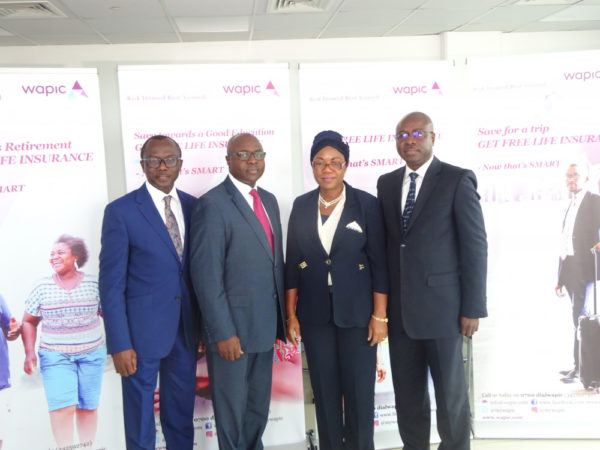
L-R: Rantimi Ogunleye, Managing Director/Chief Executive Officer, Wapic Life Assurance Ltd; Olufemi Obaleke, Executive Director, Wapic Insurance Plc; Yinka Adekoya, Managing Director/Chief Executive Officer, Wapic Insurance Plc and Bode Ojeniyi, Executive Director, Wapic Insurance Plc at the introduction of Wapic Insurance Smart Life Products in Lagos

Wapic Insurance has announced the introduction of a unique lifestyle insurance products into the market. The products which are classified under Wapic Smart Investmentlinked Products are designed to cater for the protection and goal oriented needs of individuals, families and businesses. The Wapic Smart Investment-linked products includes the Smart Life plan, Smart Life+ plan, Smart Scholar plan, Smart Senior plan and the Smart Wealth plan. These plans come with the dual appeal of flexibility and convenience, focused mainly on the family, education, retirement, short and medium term plans.

As is the case with most Nigerians having to save or keep funds in their savings account for the purpose of specific projects or towards long term goals such as building project, vehicle purchase etc. the Wapic Smart Life+ Plan is a unique product designed to help individuals attain their goals and targets with added advantages. It is an insurance solution that provides you the opportunity of systematically accumulating funds towards meeting short term obligations and emergencies. The Wapic Smart Life+ Plan uses an insurance vehicle that provides needed control to guide the customer towards achieving set goals as well as guarantees the policy holder a more competitive interest rate, withdrawals without being penalized and a free life insurance cover.

Every caring parent wants the best for their ward, however, life is full of uncertainties and even the best laid plans can go wrong. An unfortunate event could make them insecure especially when you are no longer there for them. A careful financial planning can help you fulfill the aspiration that you have for your children. The Wapic Smart Scholars Plan is an insurance solution that provides the opportunity to save funds towards financing your child’s education and offers embedded insurance protection against the risk of demise and permanent disability on the life of either or both parents. It guarantees payment of the school fees whether or not the parents are alive, subject to the limit of a chosen targeted sum.  The policy is written in the name of the child and provides a medical expense cover for the child as a result of accident while in school. It also provides a cash award for the child if he or she is best in class.

Planning for retirement just got better with the Wapic Smart Seniors Plan. It is an insurance solution that provides the opportunity to save funds towards retirement with an embedded insurance cover. The Wapic Smart Seniors Plan offers the policy holder highly competitive interest rates, free critical illness benefit, 200% of the sum assured as permanent disability benefit and in the event of demise offers the sum assured together with the account balance.

The Wapic Smart Wealth Plan is an insurance solution that offers an opportunity of investment and embedded insurance protection against the risks of demise and critical illness.  The insurance premium is deducted within the period of investment but insurance covers throughout lifetime even when you have taken the maturity proceed.

Speaking at the Launch of the Products, Yinka Adekoya, Managing Director of Wapic Insurance Plc stated that “it is difficult to make progress without a plan and goals. For us at Wapic, we know that a good insurance plan is key to achieving successful living and so we have developed a variety of insurance solutions to address critical customer needs. We are confident that these products which offer competitive rates, more added benefits and adequately addresses risk concerns would ensure that the policyholder remains a step ahead”

A leading West African multi-line insurance company providing solutions covering life, general and special risks, Wapic was established in 1958 and listed on the Nigerian Stock Exchange since 1978. Its mission is to transform into a diversified financial services institution, delivering value in a sustainable manner to her customers and stakeholders while playing a lead role in the transformation of the industry.

Through a diverse portfolio of products and a commitment to providing the best customer experience possible, Wapic, with an AM Best Financial Strength rating of “B-” and an Issuer Credit rating of ‘bb-”, has significantly enhanced its underwriting capacity, placing it among the top five insurance companies in Nigeria by solvency and capital.


(BellaNaija)

Ribena is Imbibing the Right Values in Children & Helping People Make Better Life Choices in the ‘Ribena Good Values School’ Programme

Children all over Nigeria will be helped to build good values in a fun and interactive way courtesy of Ribena, the nutritional fruit-drink from the stable of Suntory Beverage and Food Nigeria Ltd. Ribena has initiated another life impacting project called “Ribena Good Values School” programme aimed at entrenching good values and healthy living among young people in schools across Nigeria.

The Ribena “Good Values School” programme will be executed in partnership with Bridges to Goodness (B2G) Projects, a social enterprise organization founded by a team of social architects to build and celebrate the goodness and greatness of our younger generation.

The Ribena Good Values School Programme flagged off on Tuesday, April 4th, 2017 and the pilot phase will be activated with over 500 schools.

According to the Marketing Director, Suntory Beverage and Food Nigeria, Rosemary Akpo, “we are proud that we are supporting the efforts of the parents, guardians and government to produce young people that will grow with the kind of values that will positively affect lives and also make them relevant in the scheme of national development”. Akpo said that the programme is a national initiative that is strategically important particularly now that young people in Nigeria are faced with several issues which are challenging their development. She also said that this programme will help re-shape children’s behaviour towards becoming credible leaders of tomorrow and would help bring out the bestin them. A major part of the programme is the ‘Ribena Children for Good Values’ Contest and Award’. The award is designed to honour and inspire young people whose lives and activities demonstrate an enduring commitment to qualities associated with good character, regardless of their status or background.

Explaining the activities, the Brand Manager, Ribena, Essien Ekemini also stated that the programme will be intense and impactful so that young people can bring out the best in them. He informed that the program will involve over 500 schools in its pilot stage, and the pupils will be requested to participate at different levels leading to the grand finale.

The Ribena Bridges to Goodness School Project will help young people learn to make better life choices and lead value-driven lives that would mould them into better citizens in future, better leaders, and responsible and productive citizens.

Parents, guardians and schools are encouraged to watch this space. Participate when the Ribena train comes to their school and continue in this laudable effort to raise better leaders for a better Nigeria tomorrow.


(BellaNaija)