Should Market Research Still Be Using Significance Testing?

0

Over the last few years there have been many calls for market researchers to stop using significance testing based on assumptions of random probability testing to measure the potential impact of sampling error. For example, Annie Pettit writing in The Huffington Post asked “Stop Asking for Margin of Error in Polling Research”. But, despite the concerns about the correctness of using this technique, it seems to still be in common use.

In this post, I briefly explain what significance testing is (experts can jump this bit), why it doesn’t do what people seem to think it should do, and the way I think we should be using it in the future.

What Is Significance Testing?

The type of testing I am talking about in this post relates to sampling error. In quantitative research, a sample is taken from a population and one or more statistics are calculated. These statistics are then used to estimate the values for the total population.

For example, assume 1000 people are selected at random from a population of 20 million. Assume that 50% of the sample are female. The inference from this study is that it would be expected that 50% of the total population would be female. However, when a sample is taken there is always a probability that the sample will be wrong, just by chance – and this is called sampling error. Significance testing attempts to work out what impact sampling error might have. In the case of the example above, with an estimate of 50% and a sample size of 1000 people, there is a 95% chance that the impact of any sampling error is less than plus/minus 3% – so we expect between 47% and 53% of the population to be female – and we expect to be wrong 5% of the time.

What Are The Problems With Using Significance Testing?

There are two key problems associated with Significance Testing:

1.    Most of the samples used by researchers do not approximate to a random probability sample. This is either because they did not start out as a suitable sample (for example people on an online access panel), or because the response rate was too low.

2.    There can be a tendency for people to assume the error in the research is described (or limited to) the sampling error. One common name for this error is MOE (margin of error). However, there are many other sources of error, such as asking the wrong questions, getting the wrong answers, and doing the wrong processing (as we have seen with recent polling debacles, such as Trump vs Clinton in the USA and Brexit in the UK).

The Brexit polling in the UK shows the problems associated with significance testing. The polls that most closely approximated to random probability samples (the telephone polls) were more inaccurate than the online access panels (see YouGov). The reasons the polls did not perform better included: not sampling the right people (too few people over 70 were sampled and those that were sampled then had to be upweighted), not everybody questioned was willing to answer, the answers that some people gave about their likelihood to vote were inaccurate.

Research academics (and some market researchers) focus on something called Total Survey Error, which is a move in the right direction. But most software, most reports, and most articles in the media focus on sampling error, despite it being methodically inappropriate and sometimes not the biggest source of error. In elections such as the Trump/Clinton Presidential race, the very large number of polls mean that the net sampling error across all the studies would be minuscule – but the error in the net predictions were catastrophic. Or, to put it another way, the sampling error was small, but the Total Survey Error was unacceptably large.

So, Should Significance Testing Be Abolished?

My answer to this question is NO, but I think we need to change the context and role of significance testing.

Before I share my three-part recommendation, I want to spend a moment considering what the sampling error is actually reporting. Assume we run a study with an online access panel, and collect a quota-controlled sample of one thousand people. If we calculate the sampling error, it is not the sampling error of the entire target population. It is the sampling error of the people we might have interviewed with this specification. Let’s call this the potential study population (people who are on the panel, who were available when the survey was run, and who would have agreed to take part if asked).

The sampling error statistic does not tell us about how ‘wobbly’ our estimate of the target population is. The sampling error statistic tells us how ‘wobbly’ our estimate of the potential study population is. In essence, the sampling error statistic we calculate from non-probability samples is a measure of reliability – but tells us little about validity.

So, my three recommendations are:

  1. Researchers should avoid reporting sampling error to non-specialist audiences, and they should ban the term MOE (margin of error) being used in the context of sampling error.
  2. Researchers should promote the concept of Total Survey Error, especially with junior researchers and research users.
  3. Sampling error should be calculated to divide results into two categories: a) results that are potentially interesting (subject to further validation), b) results where the differences are too small to assume that they actually exist.


(Newmr)

Big Cola Nigeria enters Nigeria’s energy drink segment with Big Volt

Having shown its strengthen in the soft drink segment of the beverage category with Big Cola brand, the company has planned yet another disruption with the energy drink segment by introducing Big Volt.

The launch took place in a boat within Lagos waters, where dignitaries in movies, music and media were treated to an unforgettable moment. According to the brand owners, the move is to sensitize the market with a new energy drink ‘Big Volt, which is expected to ruffle the feathers of some established brands in the segment.

Image result for Big cola introduces ‘Big Volt’

Speaking at the launch, the brand manager, Theo Williams said the new drink is an exclusive drink that is produced for an ordinary Nigerian to renew it strength after a long day at work.

He emphasized that, producing this kind of drink is to make our consumer feel that they can rely on us for any drink of their choice. Hence, we make them also feel energy drink is affordable without competing with other expensive drinks in the market.

Williams however explained that the brand however now have a different size, shape and taste from other existing energy.

He said, producing this new brand is not about being the biggest in the market rather, it provide masses the opportunity to feel the good taste of quality.

Williams further expressed that “I don’t want to be the biggest but I want to give a bigger product that would thrive so that every Nigerian citizen can afford to buy, also people could appreciate the content.”

We have change the face of our soft drinks from every other in the market. Also, our product are as well affordable for an ordinary man on the street, he added.

Williams however advises it marketers to be sincere in the rate at which the new product will be sold to the consumer, while he added that he thinks 20 per cent discount is enough rather than sell at a higher price that would reduce the sales. Meanwhile, he appreciated their consistency, commitment and their support over the years.

Impact of population growth on the planet

0

It took hundreds of thousands of years for the global population to surpass one billion, but only a further 200 for it to top seven billion. Along with a seven-fold increase in Earth’s inhabitants comes a multitude of challenges for the environment, natural resources and ultimately society. What is certain is the need for greater awareness and understanding of these challenges to enable better governance and a smarter world.

This infographic tracks the impact of population growth on our planet…

Click here for the full report…

Displaying Picture2.png


(Raconteur)


Lagos At 50 – Ikorodu To Get New Stadium, Shopping Mall

0

Speaking to The Nation, the Ayangbure of Ikorodu, Oba Kabiru Shotobi, commended Ambode for taking the initiative to celebrate the anniversary in all the five divisions of the state. “We are happy. I am personally proud of the Governor. He has shown that he cares for all the people of Lagos. He is interested in the development of all the divisions.

This is why he has ensured that the ongoing 50th anniversary of the state is not only being celebrated in Alausa. With the Boat regatta and other activities taking place all over the state, Ambode has ensured an all encompassing celebration,” the Ayangbure said.

Speaking in the same vein, the Majority Leader of the Lagos State House of Assembly, Sanai Agunbiade, said the people of Ikorodu division are elated that the Governor did not exclude them from the celebration. He added that beyond the good news of boat regatta and other activities holding in Ikorodu, the Governor has also reassured the people of his readiness to develop the division.

“The Government of Lagos State has put machineries in place to commence the construction of Owutu/Ishawo/Arepo road as well as Igbe/Ginti road soon and a stakeholders forum regarding that will hold later this month. The governor has given approval for a Government Chalet to be built in a lagoon front site in Ikorodu division.

“Construction of a City mall has been approved to be built in Ikorodu division and the site is already approved by the governor. Ikorodu Local Government is positioned to get a new secretariat very soon. The government is committed to the eight lane road from Sabo- Ikorodu to Itokin, to align with the road construction on Epe itokin axis.

Construction of Divisional stadium for Ikorodu within the vast parcel of land at Lagos State Polytechnic is to commence very soon. Industrial park is now approved for Imota, in addition to the Regional Commodity market already approved for location and construction in the area. Kudos to Hon. N.S Solaja and Prince Rotimi Ogunleye,” he said.


(Thenationonlineng)

Lagos At 50 – Programme Of Events

0

The Lagos @ 50 Planning Committee on Monday unveiled range of activities for the final celebration of the State’s Golden Jubilee anniversary.

Addressing a world press conference at the Banquet Hall in Lagos House, Ikeja, Co-chair of the Lagos @ 50 Planning Committee, Mr Habeeb Fasinro said the final lap of the celebration would kick off on Saturday, April 8 and culminate on Saturday, May 27, 2017.

Fasinro, who was joined at the conference by other members of the Committee including Professor Ademola Abass, Hon. Adebimpe Akinsola, Mrs. Sarah Boulos, Mrs. Chika Balogun, said the events lined up for the celebration has been carefully selected to tell the story and journey from 1967 when the State was created till date.

He said the event would kick off on April 8, with a special Musical Play tagged “Wakaa” produced and directed by ace producer and director, Bolanle Austen-Peters at the Muson Centre, Onikan Lagos.

He said the celebration would continue on April 13 with a three-day Broadway Musical Concert tagged “FELA” that would feature the life and times and the Afrobeat creator, Fela Anikulapo Kuti and celebrate his pioneering music to be performed by a combined cast of the original Broadway production and the Royal National Theatre production under Bill T. Jones.

The Co-chair said a Boat Regatta parade would also hold on April 15 in Epe, Badagry and Lagos Island to showcase the State’s aquatic asset to residents and visitors alike, while a Jazz Meets Fashion event would take place on April 30 and would see Grammy award winning Jazz artistes share the stage with Nigerian musicians while the evolution of fashion in Lagos State over the past 50 years will also dominate the runway.

Fasinro said the celebration would continue on May 1 with a Special Workers’ Day celebration by both active and retired civil servants with a special parade in the morning at the Agege Stadium and a dinner in the evening, adding that on May 5, five of the highest box office films and five evergreen films would be screened to local audience in the five divisions of the State including Ikeja, Badagry, Ikorodu, Lagos Island and Epe.

He said a Lagos Carnival would also hold on May 13 in both the Island and Mainland zones of the State and extend to the different communities and ethnic groups in Lagos, while the Eyo Festival, last staged five years ago, would make a grand return on May 20 at the Tafawa Balewa Square.

He also said on May 24, all former Governors of the State will join Governor Akinwunmi Ambode in council for a Special State Executive Council Session, while the Judiciary and House of Assembly would hold same on May 18 and May 22 respectively.

He said among other events, the grand finale slated for May 27, which coincides with Children’s Day Celebration would feature a historic gala night that would have a rich blend of good music and the best of Lagos cuisine, photo exhibition and the unveiling of a special coffee table book that captures the essence of Lagos through the lens of 50 accomplished photographers.

He said though the 50-day celebration ends on May 27, the celebration of the State’s Golden Jubilee would continue beyond throughout the year with series of festivals and events to celebrate the State’s rich cultural heritage.

Fasinro also enjoined residents to key into the various events, adding that the anniversary is “a celebration of Lagosians, by Lagosians, for Lagosians”.

Earlier, Commissioner for Information and Strategy, Mr. Steve Ayorinde, said May 27, 2016 when the events flagged off, there had been series of events that had held on the 27th of every month to mark Lagos @ 50.

Shell publishes Sustainability Report 2016

0

Royal Dutch Shell has published its Sustainability Report for 2016 which describes how it is working responsibly to help meet the world’s growing demand for more and cleaner energy.

The Sustainability Report 2016 outlines the company’s global approach to sustainability and covers Shell’s environmental, social and safety performance for the year.

The report details Shell’s contributions to emerging energy transitions and its work to address climate change. This includes a growing role for natural gas, carbon capture and storage, and energy-efficiency measures across the company’s operations. Also in 2016, Shell created a New Energies business to continue to explore investment opportunities in areas including biofuels, hydrogen and renewable energy.

In his introduction, Shell’s Chief Executive Officer Ben van Beurden said: “In 2016, the world took significant steps towards building a low-carbon energy future. The United Nations (UN) Paris Agreement and the UN’s sustainable development goals came into force, setting new targets for tackling climate change, promoting sustainable economic growth and providing access to modern energy.

“It was also a significant year for Shell. Against a backdrop of low oil prices, we acquired BG, which added to our operations and opportunities in natural gas, the cleanest-burning hydrocarbon, and in deep water.

“As part of a refreshed business strategy, we set long-term environmental and social ambitions: to reduce our carbon intensity and to deliver shared value for society. This includes creating jobs and investing in communities. But it also means providing more and cleaner energy solutions. Our business strategy includes creating a world-class investment case for shareholders and strengthening our leadership in the oil and gas industry, while positioning the company for growth as the world transitions to a low-carbon energy system.

“Our company must continue its efforts to ensure safety wherever we work. We must encourage staff and contractors to be alert to their own safety, to care about the safety of their colleagues, and to look out for any potential safety risks in all our operations, however small.”

The Sustainability Report is reviewed by an external committee, consisting of six experts from a range of professional backgrounds. They bring a collective understanding of the sustainability challenges faced by Shell. This is the 20th edition of the Shell Sustainability Report.

To read the full report, go to www.shell.com/sustainabilityreport.

Vodafone drops roaming charges in 40 countries

Pretty much all of Europe is covered

There’s good news for Vodafone customers, as from today you’ll be able to use your bundled minutes, texts and data in 40 countries without any additional charges.

The roam-free countries are almost all located in Europe, with the popular holiday destinations of Spain (including the party islands), Portugal and France all included, while ‘French Territories’ ensure the list of countries isn’t solely Europe based.

Vodafone isn’t the first network to offer a roam-free initiative, as Three’s ‘Feel at Home’ has been running for a few years and now covers 42 countries including some the big red doesn’t, such as the US, Australia, Hong Kong and New Zealand.

To be eligible for Vodafone’s roam-free service you’ll need to be a new or upgrading pay monthly customer.

If you’re currently in the middle of a Vodafone contract you may need to upgrade your plan to take advantage of the roaming service.

Roam further

Vodafone has also rolled out its roam-further service, giving you access to your allowances for £5 per day in another 60 countries including the US, Canada, China, Russia and Australia.

This move comes ahead of the European Commission’s plan to abolish all EU roaming charges from June 2017, so you can expect all networks to offer similar services within the next couple of months.

The full list of the 40 countries covered by Vodafone’s new roam-free offer: Albania, Austria, Belgium, Bosnia and Herzegovina, Bulgaria, Canary Islands, Croatia, Channel Islands (inc Guernsey, Jersey), Cyprus, Czech Republic, Denmark, Estonia, Faroe Islands, Finland, France (inc Corsica), French Territories (inc. French Guiana, Guadeloupe, Martinique, Mayotte, Reunion, Saint Martin), Germany, Gibraltar, Greece, Hungary, Iceland, Ireland, Isle of Man, Italy (inc Vatican City), Latvia, Liechtenstein, Lithuania, Luxembourg, Malta, Monaco, Netherlands, Norway, Poland, Portugal (inc Madeira), Romania, Slovakia, Slovenia, Spain (inc Canary and Balearic Islands), Sweden, San Marino, Switzerland, Turkey.


(Techradar)

As Soda Loses Its Sparkle, Coca-Cola Is Transforming Into a ‘Total Beverage Company’

It’s reducing sugar in 500 drinks and building out other beverages…

Coca-Cola isn’t just a beverage company. It’s arguably the beverage company, a global behemoth that sells 500 brands in 200 countries, and one of the most iconic corporations to call Atlanta home.

The 131-year-old company has endured and thrived on a similar trajectory as its resilient city, said Ted Ryan, Coca-Cola’s historian and director of heritage communications.

“[Civil War Gen. William] Sherman burned Atlanta to the ground, and then it became ‘the Phoenix City,’ rising from the ashes,” he explained. “It wasn’t long after that that Coke was invented there, in 1886.”

Although nowhere near as dramatic as Atlanta’s Reconstruction-era rebuilding, today, Coca-Cola is undergoing a transformation of its own. With consumers increasingly bypassing sugary soda in favor of healthier drinks, the megabrand’s incoming CEO James Quincey has mapped a new business strategy, and the company has streamlined its marketing message by adopting a global template for advertising its flagship Coca-Cola products.

Here’s how Coca-Cola is evolving its marketing to remain a beverage powerhouse and continue to appeal to consumers around the globe:

The way forward

The future of Coca-Cola rests on it becoming a “total beverage company,” according to Quincey, who will take the reins as CEO of the company in May. In February, he introduced “Coke’s Way Forward,” a plan to ensure its future success.

The plan comes at an opportune time, as U.S. soda sales dropped for the 11th consecutive year in 2015, falling to a 30-year low, according to Beverage Digest.

While competitor PepsiCo has diversified its portfolio to include food brands like Doritos, Lay’s and Quaker, Coca-Cola has remained focused on the types of soda its execs call “traditional sparkling,” which makes up 70 percent of the company’s value.

That segment of the business is growing at a rate of 2 to 3 percent, but other segments—like water, juice and tea—are growing faster. (Coca-Cola owns brands like Dasani, Smartwater, Minute Maid, Honest Tea and Fairlife milk.)

The “Way Forward” plan includes globally expanding offerings like organic tea, coconut water, dairy, coffee, juices and water.

For instance, it’s scaling up production of Smartwater, which launched in the U.K. last year, to include other countries around the globe.

“We’re organizing the company to be the leader in every one of those categories,” said Katie Bayne, svp of global sparkling brands at Coca-Cola.

In 2017, the company will reduce sugar in more than 500 of its drinks, and it’s investing more marketing dollars to build awareness of its low- and no-sugar beverages.

And since soda giants would rather consumers buy their products in small quantities instead of not buying them at all, it’s also expanding the availability of its smaller package sizes. Mini bottles and cans have so far been a hit for Coca-Cola, accounting for 15 percent of its sales in North America, with sales increasing at double-digit rates since they were first launched in 2007.

“Every market around the globe is growing their small sizes, because consumers want them,” Bayne said. “It’s a great way for people to come back to Coke or try it for the first time.”

Coca-Cola is also launching beverages with bells and whistles, like Coca-Cola Plus, a soda with added fiber, which is being tested in Japan, and vitamin C-infused soda in China. Both are based on research that shows Japanese consumers want drinks that aid in digestion and Chinese consumers have a growing interest in the health benefits of vitamin C.

A global template

In early 2016, Coca-Cola, which spent $4 billion on advertising last year, according to Bloomberg, streamlined the marketing of its trademark Coca-Cola brands. Its “One Brand” strategy unites advertising for Coca-Cola, Coke Zero, Diet Coke/Coca-Cola Light and Coca-Cola Life, under the “Taste the Feeling” campaign.

“Having different branding for Coke Zero and Coke Light was really ineffective,” Bayne said. “We were doing ourselves a disservice, and it made it difficult for us to support these smaller brands, globally. From a consumer perspective, it’s been very successful—we can see it in sales. We’re seeing a huge acceleration in our diets and lights business.”

The “Taste the Feeling” spots launched at the beginning of 2016, with new versions debuting for the Olympics and the holiday season. Each ad contains all or a combination of the brand’s intrinsic values: refreshment, great taste and uplift, and extrinsic values: connection, optimism and authenticity.

“We did a ton of research around the world to understand the strength of those six things and why they had to be featured in any piece of creative,” Bayne said.

The ads are designed to carry, globally: they’re very stripped down with simple stories and no dialogue, while using one unifying theme song.

The most recent ad, “Elevator,” which launched this month, shows a woman bellhop and a rap star getting stuck in a hotel elevator. They make the best of it by dancing and drinking Coca-Cola and Coke Zero. There are versions for North America/Europe, Latin America, Africa and Asia, and the only thing that changes is the cast: For instance, the African version stars Nigerian rapper Banky W., and the Asian version stars Lu Han, who has been called the “Chinese Justin Bieber.”

“The stories, which we test, test, test, have to be strong enough to carry [around the world], and you can’t replace the Coke at the center of the story,” Bayne said. “In the elevator ad, there are no words, so it can travel easily. The core idea is, the simple pleasure of drinking a Coke makes every moment a little more special.”

The formula also allows Coca-Cola to shoot multiple versions of the same ad on the same set, typically over consecutive days, which saves on costs. And rather than having one agency of record, 10 agencies, including Wieden + Kennedy, Mercado-McCann, Santo, Sra. Rushmore and Ogilvy, are authorized to work on the “Taste the Feeling” spots.

“The agencies and business units work well together, so we’re able to shoot all over the world and make sure the quality stays the same and the message keeps delivering what we know can build brand love and purchase intent,” Bayne said.


(Adweek)


Aston Martin launches resplendent Vanquish S Red Arrows edition

Chocks away! The British luxury car manufacturer continues its aeroplane-inspired special projects with a red hot RAF collaboration

Aston Martin, the British luxury car manufacturer, has teamed up with the British Royal Airforce for a Red Arrows limited edition.

Aston Martin is no stranger to aviation special editions of its cars – last year saw not one but two emerge from Gaydon, Warwickshire: the Vantage S Blades Edition, a collaboration with Blade British aerobatic team, and the V12 Vantage S Spitfire 80 special edition to mark the 80th anniversary of Britain’s iconic warplane.

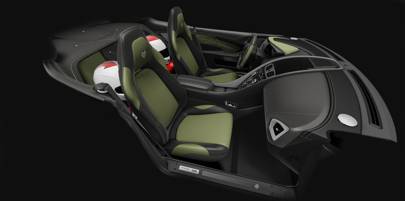
Just ten examples will be made (with only nine going on sale), all of them finished in “Eclat Red”, the same applied to the team’s Hawk trainer aircraft, however, the roof section will be left to reveal its carbon-fibre construction and decorated with the design seen on the canopy of the jet. Further echoing the antics of the aerobatic team, Aston has applied a white “smoke trail” finish onto the side of the car, complemented by other white and blue carbon details.

Inside, there are further RAF and Red Arrows nods – seat fabric, similar to that seen on a Martin-Baker ejection seat, green webbing seatbelts, the Royal Air Force Aerobatic Team logo embroidered onto the transmission tunnel and even the door cards have been modified to show a graphic of the “Vixen Break” nine-aircraft formation. Aston has also taken the One-77 steering wheel and pimped it to feature an RAF-inspired switchgear.

As no mechanical changes have been made to the Vanquish S’s 592bhp V12 engine, the car will still do 0-62mph in 3.5sec and go on to hit a top speed of 201mph.

If you do bag one of the Red Arrows special editions, there are some extras to consider, such as racing suits, helmets, a luggage set, embroidered bomber jackets and a 1:18 die-cast model of your car and the Hawk aircraft.

While Reds one through nine are available to purchase through Aston Martin Cambridge, a final tenth Vanquish S Red Arrows will be gifted to the RAF Benevolent Fund to be raffled in aid of former servicemen and women. The raffle will be £20 a ticket and you can enter the draw here.


(wired.co.uk)

Huawei’s CEO: I Don’t See The Point Of Smartwatches

The Huawei Watch 2 was recently unveiled at MWC 2017, and by many accounts, the wearable is a step backward. The original Huawei watch was largely seen as the best Android Wear smartwatch once it was released in 2015, a title that carried itself through 2016.

However, one reason for the recent let down of the Huawei Watch’s successor may be tied to the fact that Huawei’s CEO doesn’t see a future for wearables. At the Huawei Global Analyst Summit 2017, Huawei’s rotating CEO, Eric Xu stated the following:

“I’m not a man who wears watches, and I’ve never been optimistic about this market. In fact, I’ve never figured out why we need to wear smartwatches when everything we need is on our phones.”

This is an interesting, and refreshing, take on the smartwatch market which has notably been on the decline recently. More manufacturers are focusing on fitness products, or baking features such as standalone GPS and heart rate monitors into their wearables.

None of this is to say that Huawei will be definitely looking to exit the wearable market which is already dominated by the likes of Apple, Samsung, and Fitbit. However, Xu raises a good point as wearing a smartwatch is definitely a bit redundant as all you’ll need to do to fetch that notification is reach into your pocket.

As a general fan of wearables, I can see the counter-argument, but it’s not one that really holds much water. Wearables are just an extension of our smartphones, and do make it easy to check notifications at a glance to decide whether we should do something with them, or just keep moving along.

It will be interesting to see how this plays out for Huawei going forward, especially if the Huawei Watch 2 flops. Let us know what you think and whether you would rather see a fully geared out smartwatch, stick with a regular fitness tracker, or go back to a “traditional” watch.