Gender intelligent design: what brands, product designers and customer services need to know

0
Today marks over 100 years of International Women’s day – the annual celebration of women for all their diversities and impact upon the world. Recent studies suggest women influence anywhere between 64-85% of buying decisions, but despite this there are many areas of where women are inadequately served and feel products, advertising and brand experiences are not designed to speak to them.

In this article, we explore what it means for brands to be ‘gender intelligent’ and why they should care.
Image result for womens day

Women are from Venus and men are from Mars, or so say the tired tropes. Yet, at a time where gender roles are in flux, brands should be designing to gender differences.

Femininity: its definition, role and perceived value within society is rapidly changing. In the wake of such change, the route to equality is being redefined. No longer is equality simply about obtaining the same status as a man (and likely having to fit into a world designed by and for men to do so), women can now aspire to a world designed to suit both genders. One where feminine needs and traits are valued as much as traditionally masculine ones.

Equal is the goal. The pathway does not need to be the same. Brands should take note: as the world evolves to design itself around the needs of both genders, it will take the worlds of advertising, product design and customer experience with it.

The design of our present world is biased towards men. In market research, we continue to hear women lament that they feel ignored by financial services products which don’t meet their needs, or that sales staff continue to patronise them in car dealerships.

Does this problem run deeper? In traditionally male-dominated categories, are women genuinely less interested or simply not catered to? Are brands missing out on revenue opportunities by not catering to women’s needs?

This bias isn’t just inconvenient, it can be downright deadly. Did you know that the design of seatbelts in cars is less safe for women than men because car makers primarily test with male crash test dummies?

However, this gap also creates an opportunity: Unilever’s recent work with Kantar Millward Brown showed that advertising featuring more progressive female characters led to a 12% increase in impact. Whilst CEO of the ANA, Bob Liodice, is quoted as saying:

Tweet thisThe right advertising environment for women can improve ad effectiveness by as much as 30 percent.”

Brands ignore this at their peril. A recent Pew research study of 30-44-year-old women showed that the more money women earn, the more spending they control. Tweet thisWomen influence anywhere from 64%-85% of buying decisions and once male-dominated categories are fast becoming female-dominated ones. Women are accountable for an estimated $US20 trillion in spending globally.

Despite the powerful economic influence of women today, there are areas where women are disproportionately influential but inadequately served: where they feel products are not designed for them, communication does not speak to them and customer service does not understand them. No wonder a recent study discovered that some Tweet this40% of women do not identify with the images of them portrayed in ads, and 30% think they show a male view of women.

This is compounded by the convergence of ‘traditional’ gender roles: the percentage of men who identify as the primary household grocery shopper and the primary child carer has doubled in the past 20 years.

As old concepts of masculine and feminine change, new opportunities arise. Yet many brands are scared to act fearful of public backlash or alienating their current audience. Still more fail to recognise the commercial opportunity, seeing only prospects for goodwill or moral gains.

Many are doing well, however. In June 2016, Unilever initiated a business-wide re-evaluation of how they depict women in their advertising and committed to presenting a more progressive vision of female identity in their communications. When such a big advertisers act, the industry listens.

Despite $3 billion in annual sales, Knorr’s advertising, like many other popular Unilever brands, featured some outdated female stereotypes. Unilever’s #Unstereotype initiative decided to shake that up. Knorr’s #LoveAtFirstTaste interactive film, sees UK singles on blind dates, being matched by their love of certain flavours. Why? Because Knorr found 3 in 4 people across 12 countries are attracted to people who like similar flavours.

So, what can we do about it?

The key lies in recognising, interrogating and leveraging the difference between the type of relationship men and women want with brands across all touchpoints.

1. Understand your biases

To better market to men and women, brands need to understand the unconscious biases which might be skewing their perspective.

A few years back, Sprint, a U.S. telecommunications firm, realised that although women makeup over half of their in-store traffic and influence 80% of purchases, their consumer interfaces continued to revolve around technology and devices, served with a heavy dose of industry-specific terminology. With the help of global innovation design firm Continuum, Sprint overhauled everything from their retail design to their customer service interactions to better address the needs of female customers. Communications were modified to include a more lifestyle-focused narrative and were adjusted to be more consumer-focused, avoiding jargon and instead focusing more on consumer benefits and relevance. The in-store environment was redesigned to acknowledge females and mirror back a respectful image to her. These changes were inspired by the slightly different needs of one gender but ended up making things better for everyone.

Sprint advert

Only then will they be able to develop effective campaigns and design intuitive products and services which either speak well to everyone’s needs or that target one gender or the other intentionally from the outset, without the blindness of unconscious bias.

2. Design to the edges

There is a principle from a human-centred design called ‘designing to the edges’. Instead of products being designed for the average person or lowest common denominator, they are designed for the extremes, meaning they are flexible, versatile and suited to as many people as possible.

Women and men (in general), desire different things from brands and products. For example, men tend to be more object-oriented, whilst women prefer to connect with ‘people’, a trait that can be observed from infancy. Men tend to lend more weight to logic, control and explicit messaging and design, whilst women prefer solutions which offer meaning, connection and the implicit1.

Embedding an understanding of gender differences within your design process can help iron out these biases before they become ingrained. ‘Designing to the edges’ is not about gender neutrality. It is about taking inspiration from one gender in order to make things better for everyone.

The Hey! VINA app was created when founder, Olivia June Poole first moved to San Francisco and started using OKCupid to make friends. She and co-developer Jen Aprahamian created the friend-finding app which is like Tinder and Omegie but for same-sex friendships and matches women based on similar interests. With a greater need for connection, it’s no surprise that the app was developed by women for women. While Hey! VINA is new and still rolling out city to city, it seems likely that a Hey! VINA men’s version won’t be far behind – because no one should have to go for a beer alone.

3. Don’t assume it means ‘femvertising’

One of the biggest misnomers found in our market research was that appealing to women meant overt ‘femvertising’. Although campaigns such as Always’#likeagirl were successful, such overt purpose orientated messaging is not right for every brand and lazy ‘pink it and shrink it’ approaches to product design should be avoided.

On a gender spectrum where masculine and feminine perspectives sit on opposite ends, gender washing only serves to pull from one edge toward the middle, resulting in campaigns that are off-putting to both men and women.

Instead, think about appealing to genders authentically. Businesses that are able to confidently navigate the gender conversation in marketing, in part, to be able to do so because they have moved ‘beyond’ the issue. It is acknowledged, addressed and then becomes part of a larger conversation about people, including, gender, psychographics and needs. But we’re not there just yet.

Brands like Apple, IKEA and Uniqlo communicate to the genders effectively (‘to the edges’) by acknowledging differences, whilst avoiding stereotypes, ‘femvertising’ or being genderless.

Take inspiration from one gender to make things better for everyone

There are countless opportunities for brands who lead with “gender intelligent” design, which meets the genuine needs and sentiments of both men and women.

Today, businesses increasingly realise that they have the opportunity and, perhaps, the responsibility to have a positive impact on society. By re-examining how they serve the two biggest segments of consumers — men and women — brands can better understand areas for improvement and make a genuine change for the better, whilst positively impacting their bottom line.

(Amy Fridlund– Insights Curator, Brand and Communications APAC)

Three banks take over Etisalat Nigeria


Image result for Three banks take over Etisalat ‎Nigeria

A consortium of some foreign and Nigerian banks on Wednesday took over Etisalat Nigeria after the telecommunications company failed to pay a loan totalling $1.72bn (about N541.8bn) it obtained in 2015.

The Nigerian banks are Guaranty Trust Bank, Access Bank and Zenith Bank.

‎A former executive director at GTB, who was privy to details concerning the loan facility, told The PUNCH that the action became necessary since the Nigerian Communications Commission could not broker a peaceful resolution between Etisalat Nigeria and the banks.

‎According to him, the loan involved a foreign-backed guaranty bond and was given to Etisalat to finance a major network rehabilitation and expansion of its operational base in Nigeria.

He said that after failing to service its debt since 2016, “the banks reported the company to the Central Bank of Nigeria and the NCC.‎”

‎The Ex-GTB executive director said Etisalat management was given the option of filing for bankruptcy but the telecoms firm refused to take the advice. This option, he said, would have required the banks just a management to oversee the telecoms firm’s operations.

He said, “While all these were happening, the management‎ at Guaranty Trust Bank and the other banks concerned had thought that the Nigerian Communications Commission would have used its powers as a regulator to bail the telco out, or advise them accordinly, but it became obvious that the NCC wasn’t so interested. It was merely buying time for Etisalat.”

‎‎Meanwhile, workers at Etisalat blamed the inability of the company to fulfil its obligation to the banks on the current economic recession in Nigeria.

Speaking on the condition of anonymity, one of the workers said,‎”While the management continued to blame the challenge on the economic recession, the banks replied that the Asset Management Company of Nigeria regulations demanding immediate cut down on the rate of their non-performing loans give them no other option.”

She added, “We saw this coming and that is why most of our colleagues, in the last six months, kept resigning.”

Although the NCC is not happy with the takeover, a top source at the regulatory body said, “The commission was left with no option than to approve the takeover. The NCC on Tuesday, March 7, approved the takeover with effect from March 8.”


(Punchng)


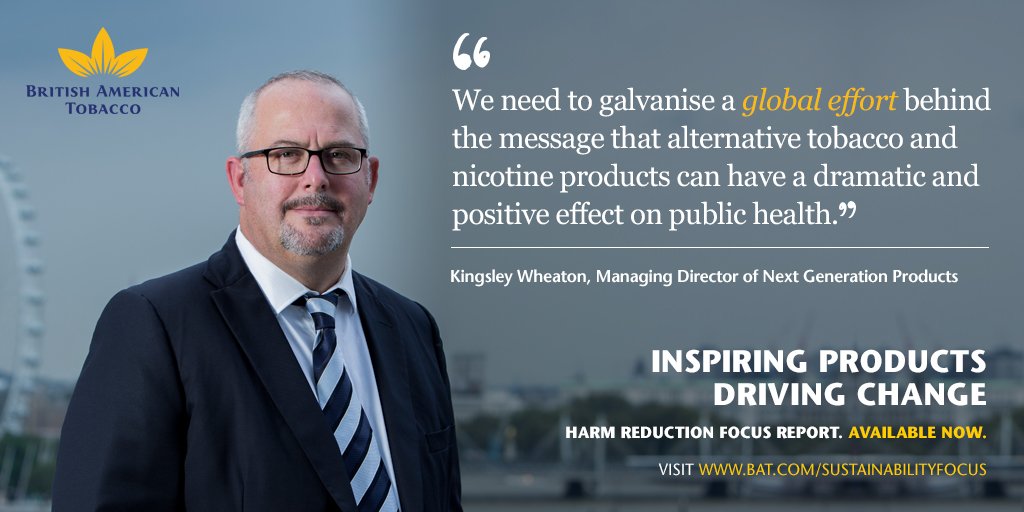
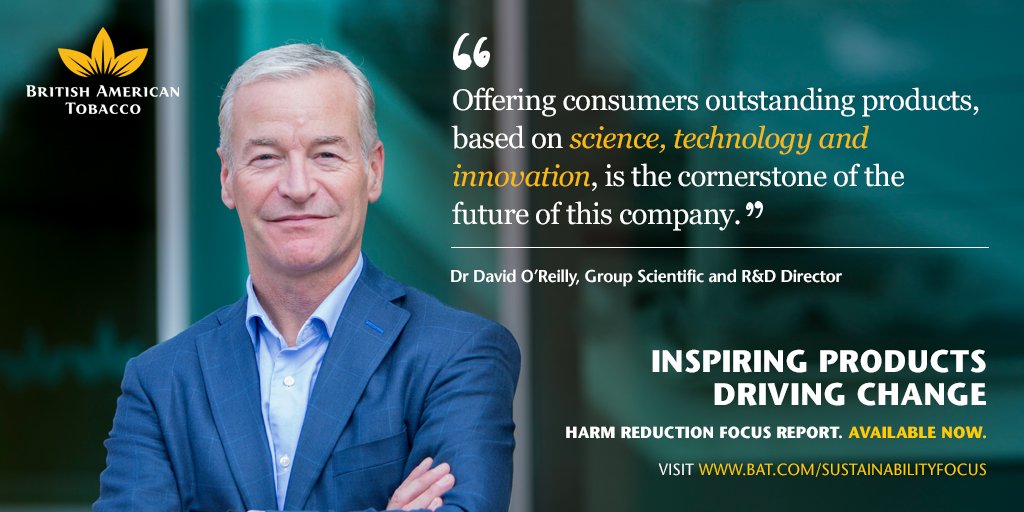
BAT releases Harm Reduction Report for 2016

A few days back on the 27th of February, British American Tobacco (BAT), released their harm reduction report for 2016, discussing their strategy to developing a “range of less risky alternatives for adult consumers.”

British American Tobacco’s commitment to developing inspiring products that can drive change and reduce the health impact of tobacco on the world is the focus of its latest report, available now.

Image result for BAT releases Harm Reduction Report for 2016

This new report demonstrates British American Tobacco’s continued commitment to, and progress in providing consumers, with a choice of new, innovative products, based on sound science and game-changing technology, and how it is championing harm reduction and its potential to have a dramatic and positive effect on public health.

Nicandro Durante, Chief Executive of British American Tobacco, comments: “At BAT, we’re proud of over a century of delivering shareholder value. Rightly, however, the world now demands more of us.

Image result for BAT releases Harm Reduction Report for 2016

“In 2012, we rearticulated our Group strategy and ambition, firmly placing consumers at the centre, and made a public commitment to satisfying consumers in tobacco and beyond. We were clear then, as we are now, that our business is based on championing informed consumer choice through offering a range of outstanding products across the risk continuum.

“I see this as having the potential to offer a triple win: a win for society in reducing the public health impact of smoking; a win for consumers in offering a choice of exciting, less risky products; and a win for our business and our shareholders in generating sustainable value.

“I’m confident that we have the capabilities to succeed in our ambition and ultimately to deliver our commitments to consumers, society and our shareholders.”

The report covers the significant progress the business has made in a number of key areas, including: product development and innovation, product stewardship, scientific evaluation and risk reduction, and collaborative development of product standards.

Report highlights include:

  • Our growing portfolio of new generation tobacco and nicotine products, including our Vype Vapour Products available in 10 markets worldwide and our new Tobacco Heating Product, glo, which was launched in Japan in December 2016.
  • An independent viewpoint from Jeff Stier, Senior Fellow at the National Center for Public Policy Research in Washington D.C.
  • Understanding the different products and risks, what the latest independent evidence tells us and the results of our own scientific studies.
  • Expert viewpoints from BAT’s senior leadership: Kingsley Wheaton, Managing Director of Next Generation Products, and Dr David O’Reilly, Group Scientific and R&D Director.
  • Our commitment to, and plans for, the future – we have a rolling five-year view on our innovations pipeline and further expansions into new markets to reach even more consumers.

To download the report, go to www.bat.com/sustainabilityfocus

(Justmeans)

Flatmates And Jemeji – Two Sensational Shows Premiere On DStv

Catch mind-blowing comedy & drama on Africa Magic Showcase as two new shows Flatmates and Jemeji premiere today, 6th March, 2017.

Flatmates is a sitcom that follows the antics and day to day lives of four young men living together in a flat.

The show features some of Nigeria’s leading comedians including Basketmouth, Buchi, Okey Bakassi, Wofai Dada, Yaw, and the former Mr. Nigeria Emmanuel Ikubese, amongst others.

Flatmates airs weekdays at 6.30pm on Africa Magic Showcase DStv channel 151 with rebroadcast at 9.30pm.

Watch Trailer below for Flatmates below

Jemeji, a telenovela, tells the story of a young medical doctor who returns home after studying abroad and is excited to be posted to a village to work.

What however seems like a dream come true soon becomes a nightmare without end as family and childhood secrets begin to unravel. Jemeji airs every Monday to Friday at 9:00pm on DStv 151

Make sure you stay connected to DStv Compact Plus at only N9,420 per month and enjoy non-stop, comedy and drama with Flatmates and Jemeji on Africa Magic Showcase channel 151 on DStv.

DStv… Feel Every MomentAfrica Magic Flatmates blogpost today 6th March on 360Nobs

(360nobs)

MultiChoice launches rewards programmes for DStv, GOtv subscribers

The programmes, which start on March 7 and run till March 21, will see all DStv, GOtv Plus and GOtv Value customers get the opportunity to have unlimited access to exciting channels offering a range of the latest quality content

Pay-TV company, MultiChoice, has introduced two new incentive programmes, DStv THANKS and GOtv WOW, to reward subscribers for their loyalty.
The programmes, which start on March 7 and run till March 21, will see all DStv, GOtv Plus and GOtv Value customers get the opportunity to have unlimited access to exciting channels offering a range of the latest quality content.

Image result for DStv, GOtv

Also all customers on Premium, Compact, Compact Plus, Family and Access plus GOtv Plus and GOtv Value, who stay continuously connected for three months and more, will have uninterrupted access to the channels.
Exciting rewards that await loyal customers include monthly airtime bonuses and two brand new entertainment channels for GOtv as well as four additional entertainment channels, featuring the hottest telenovelas, movies and great local and international content on the DStv platform, at no extra cost.

The entertainment channels offered as rewards will offer a fantastic line up of ‘not-to-be missed’ new shows on Zee Bollymovies (DStv Channel 114) and GOtv Channel 12, Viasat Life on DStv Channel 177 and GOtv Channel 57, Nina TV on DStv Channel 143 and Trigger on DStv Channel 188.
Martin Mabutho, the General Manager, MultiChoice Nigeria, said: “We are delighted to launch DStv THANKS and GOtv WOW to say thank you to our valued customers. Our business is committed to putting customers at the heart of the business and one of the ways is to show our appreciation for their loyalty and unwavering support by offering them more value. We remain committed to exploring various ways to improve our value-added benefits and create platforms where we can show gratitude for our customers for being part of our family.”
Zee Bollymovies is a Bollywood movie channel offering a mix of classic and contemporary movies dubbed in English.

The channel will launch with movies such as Mohra, Kushi, Shaitan and Fitoor.
Viasat Life offers inspiring stories of ordinary people, who have made it big.
The channel will feature shows with Hollywood greats like Snoop Dog and Martha Stewards in Martha & Snoop’s Potluck Dinner Party, Dwayne ‘The Rock’ Johnson in Wake-Up Call and a variety of lifestyle shows like, House of Curves, The Three Day Nanny and My Floating Home.

Nina TV is a telenovela channel featuring African and Brazilian novelas of romance, passion, drama, suspense, action and vengeance.
Viewers can enjoy movies such Lalola, Brave Woman, Side By Side and Mali.
The Trigger channel is a male-skewed entertainment channel.
In addition to Zee Bollymovies and Viasat Life, GOtv customers will be rewarded with monthly airtime bonuses, provided they remain continuously connected to GOtv Plus and GOtv Value for a minimum of three months.

(theeagleonline)

Fan Milk donates goods to Lagos Orphanage

Fan Milk Nigeria Plc, a leading maker of frozen yoghurt and other dairy-based drinks has donated its products, as well as food items, toiletries and branded exercise books to the Modupe Cole Memorial Child Care and Treatment Home School in Lagos as part of its Corporate Social Responsibility and to celebrate this year’s Valentine’s Day.

The company restated its commitment to contributing positively to the society by giving back. The Human Resources Director, Fan Milk International, Maimouna Diarra, who joined the children of the orphanage to mark the Valentine Day celebration, said that the company would continue to support good and worthy causes in the society, particularly those that directly impact members of the community.

According to Diarra, Fan Milk will continue to make its impact felt in Nigeria in areas such as safety and education.

This is our own way of helping to reach the underprivileged and alleviate the hardships and suffering in the land. It is important to spread love and cheer to not just friends and family, but to the community, especially the underprivileged who are usually forgotten and feel left out during such celebrations,” Diarra said.

Viju Industries introduces new range of drinks

Milk-based drinks maker Viju Industries Nigeria Limited has unveiled its new and improved drinks, packaged in 150ml, 300ml and 330ml PET bottles respectively.

According to the company’s management, the new improved milk drinks come in different range – 300ml is offered in chocolate, wheat and yoghurt flavours, while the fruits and flavour milk range are packaged in 150ml and 330ml PET bottles. The company adds that the new drink and package sizes will enable both children and adults have value for their money.

Both the chocolate, wheat and yoghurts and milk drinks come in more affordable price that every home can afford,” said Viju Industries Marketing Manager, Suleiman Aliu.

With its vitamin B12, B6 and B3, children are guaranteed with good health, quick growth, stronger teeth and sharper mind to assimilate lessons taught in schools. It also helps in the revitalization of weak cells in adult. Milk is life, so with the improved Viju milk drinks, vitamin A, B, C and D are sure ingredients added in the milk drinks that will help every consumer live a healthy life,” he added.

()

Nestle Nigeria suffers earnings slump as unfavourable FX translation takes its toll

Nestle Nigeria Plc, on Wednesday reported its full-year results for the period ending December 2016, which showed net profit decline by 67% to N7.9bn, down from N23.7bn in 2015.

The chocolate drinks and coffee maker blamed the drop in profit on a combination of the impact of Naira devaluation which caused the company’s net finance cost to skyrocket to N16.7bn, from N4.4bn in the previous year and the effect of the expiration of its pioneer “tax” status.

On the effect of naira devaluation on profits, Nestle has outstanding foreign currency (dollar) denominated loans which created an exchange rate loss when the naira was devalued on 20th June 2016.

The company notes that its net income was also affected by the expiration of the pioneer status, which placed the firm on a higher income tax provision. Nestle paid N13.6bn on income tax in 2016 as against N5.6bn in the previous year.

In addition, the company saw a 21% rise in cost of sales in the period under review to N107bn, up from N84bn. The jump is attributed to higher raw materials cost caused by inflation from the currency devaluation.

Despite the macroeconomic challenges, the company said it grew revenue 20% to N182bn, from N151.2bn in 2015 signifying that the company’s brands continue to enjoy strong patronage.

Looking forward, Nestle said its board and management remained optimistic about the long term potential of the business despite the current difficult macroeconomic environment. It added that it would continue to increase investment in the key brands and route-to-market activities while proactively managing input cost pressures.

(Beverageindustrynews)

VISA Tailors Products For Nigeria, Reinstates Commitment To Nigeria’s Financial Inclusion Drive

Global payments technology company, Visa on Tuesday was present at the social media week, Lagos. The Group Country Director/CEO, Visa West Africa, Mr. Ade Ashaye delivered his keynote address at the event themed; Thriving in a Digital World.’’  He said, “We need to enable consumers carry out various tech transactions seamlessly, it is about them and their eccentricities using our platform to solve their problems.”

Speaking further, Mr Ashaye, posited on how plastic cards, cheque books, have become almost obsolete in our present technological world today and how technology has changed what payments were supposed to be. In his words, “It is not about how a retailer wants to sell to you, it’s about how you want to access the retailer.”

All over the world, digital and mobile money technology has become the centre of financial transactions. With numerous innovations and collaboration centres Visa is changing how consumers relate to the retailers and vice versa. The brand has given customers many options that allow seamless financial transaction.

For instance, with Visa Checkout, online shopping is now more enjoyable. By simply entering a username and a password, customers can speed through their online shopping experiences with a single account that can be used across all their devices.

Unlike most other apps, where you need to go through the tedious process of re-entering card number and address, with Visa Check-out, you don’t need to re-enter your card number or address at the end or beginning of your shopping experience. And you can store and use any major credit or debit card.

While with Visa direct, customers can send and receive payments—such as person-to-person, cross-border remittances and business disbursements—directly with their Visa cards or to another card.

During the event, the company also disclosed that it has several products that are specially tailored to cater to the needs of Nigerians, just as it restated its commitment to the country’s socio-economic development.

(techcabal)

GE Partners Tony Elumelu Foundation on Lagos Garage

The partnership results from the mutual interest of both organizations to foster economic growth and empowerment in Nigeria by building a skilled workforce and driving entrepreneurship development in the country.
  • GE, TEF committed to skills development and growth of Nigerian entrepreneurs
  • GE to offer an advanced manufacturing training program at Lagos Garage for up to 25 Tony Elumelu Entrepreneurs every year

Image result for GE Partners Tony Elumelu Foundation on Lagos Garage

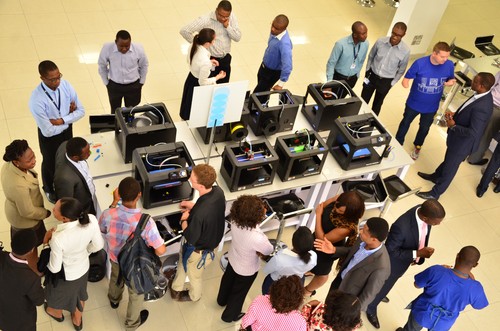
Leading multinational, General Electric (GE) (www.GE.com) and leading entrepreneurship The Tony Elumelu Foundation (TEF) (www.TonyElumeluFoundation.org) have announced a partnership that would allow up to 25 Tony Elumelu EF Entrepreneurs to participate in a dedicated 4-week advanced manufacturing training program every year at GE’s Lagos Garage – a hub for advanced manufacturing-based innovation, strategy development, idea generation and collaboration.

“By playing a role in the development of the advanced manufacturing ecosystem in Nigeria, GE hopes to create jobs”

The partnership results from the mutual interest of both organizations to foster economic growth and empowerment in Nigeria by building a skilled workforce and driving entrepreneurship development in the country.

Expressing her thoughts on the collaboration, GE Director of Communications & Public Affairs Patricia Obozuwa said: “We are happy to collaborate with a reputable organization such as the Tony Elumelu Foundation on this skill building initiative. There is a lot of alignment between TEF and GE’s commitment to the development of Nigerian entrepreneurs and we look forward to seeing some great success stories from TEF participants on the training program”, she added.

Image result for GE Lagos Garage

Speaking on TEF’s commitment to empower Nigeria’s entrepreneurs, “We welcome the collaboration with GE, world’s top 10 most innovative companies, to spur the growth of the Tony Elumelu Entrepreneurs, Nigeria’s new innovators. This program will help them to further develop their products and business models as a follow up to the Foundations’s Entrepreneurship Programme”, said Parminder Vir OBE, CEO Tony Elumelu Foundation.

The training program will, among other things, expose participants to a wide spectrum of topics that are essential for manufacturing and design in the 21st Century; sharpen teamwork, communication, and creativity skills of participants; promote excellence in the practice of design and manufacturing within and across professions; expose selected entrepreneurs to real-world design and manufacturing problems, bring concepts to reality and cultivate the entrepreneurs’ ability to express, evoke and shape experience through design and manufacturing.

GE created the Garages program in March 2012 to reinvigorate interest in invention, innovation, and manufacturing in America. This program went global with two workshops in Lagos in 2014 and in December 2016, GE launched a permanent space, co-located with their Lagos offices dedicated to the training of young Nigerians in advanced manufacturing and business development. By playing a role in the development of the advanced manufacturing ecosystem in Nigeria, GE hopes to create jobs, build local knowledge and capability, and encourage technology-based innovation in the manufacturing sector.

The entrepreneurs in this class will exclusively come from the TEF Entrepreneurship Programme, its 10-year, $100 million commitment to identify, train, mentor and fund 10,000 entrepreneurs, capable of changing the face of business across Africa.

About GE:
GE (NYSE: GE) (GE.com) is the world’s Digital Industrial Company, transforming industry with software-defined machines and solutions that are connected, responsive and predictive. GE is organised around a global exchange of knowledge, the “GE Store,” through which each business shares and accesses the same technology, markets, structure and intellect. Each invention further fuels innovation and application across our industrial sectors. With people, services, technology and scale, GE delivers better outcomes for customers by speaking the language of industry.

About The Tony Elumelu Foundation (TEF):
Established in 2010, The Tony Elumelu Foundation (TEF) (TonyElumeluFoundation.org) is the leading philanthropy in Africa championing entrepreneurship and entrepreneurs across the continent. The Foundation’s long-term investment in empowering African entrepreneurs is emblematic of Tony Elumelu’s philosophy of Africapitalism, which positions Africa’s private sector, and most importantly entrepreneurs, as the catalyst for the social and economic development of the continent. The Foundation’s flagship initiative, the TEF Entrepreneurship Programme, is a 10-year, $100 million commitment to identify, train mentor and fund 10,000 entrepreneurs, capable of changing the face of business across Africa. 

(ge.africa-newsroom)