Nigeria Has A New National Tax Policy

The Federal Executive Council, the highest Executive decision making organ in Nigeria, yesterday approved a new National Tax Policy for the country. The Policy will now be endorsed by the National Economic Council to recognize the Federal System of Government given the application of the Policy to all tiers of government.

The National Tax Policy (NTP) establishes fundamental principles to guide an orderly development of the Nigeria tax system and reinforces the need for tax laws and administrative practices to promote economic development.

When fully implemented, the Policy should address key challenges confronting the Nigeria tax system including:

  1. low tax to GDP ratio
  2. fragmented database of taxpayers and weak structure for exchange of information
  3. multiplicity of taxes and revenue agencies
  4. poor accountability for tax revenue
  5. use of aggressive and unorthodox methods for tax collection
  6. failure by tax authorities to honour refund obligations to taxpayers
  7. the non-regular review of tax legislation, which has led to obsolete laws, that do not reflect
  8. current economic realities

Some of the key recommendations include to address the challenges include:

  1. ensuring that there is only one revenue agency per level of government
  2. establishment of a tax court as an independent body to adjudicate in tax matters
  3. lower tax rate and VAT compliance threshold for SMEs
  4. establishment of an Office of Tax Simplification for continuous improvement to tax legislation and administration and develop Key Performance Indices for Nigeria to attain a top 50 position on the global index of ease of paying taxes by 2020 and consistently improve on the ranking
  5. administrative framework for amnesty and whistle blowing as part of the strategies for curbing evasion and widening the tax net
  6. INEC to mandate political parties to articulate, prepare, provide and make public their tax agenda before and during election campaigns

The approved Policy also contains and appendix of changes required to existing laws, repeals and new enactments.

Downloads

Download the FEC Approved NATIONAL TAX POLICY (2016)

Download APPENDIX – List of National Tax Policy (NTP) Laws & Regulations Recommended for Review & Amendment and the Justifications

(Proshareng)

10,000 Nigerian Homes To Get Electricity From Solar Microgrids

0
70% of people living in sub-Saharan Africa have no access to a conventional electrical grid. Even if they did, the service is often interrupted by a variety of factors. Now, Community Energy Social Enterprises Limited, a Nigerian company, and Renewvia Energy Corporation, an American firm, have signed a Memorandum of Understanding to provide solar power to 25 communities across Nigeria using local microgrids. The communities are located in the Nigerian states of  Bayelsa, Ondo, Ogun, and Osun. The microgrids are expected to be operational by the end of this year and have a total capacity of 10 megawatts.

solar power for LED lights

Clay Taber, managing director of Renewvia, says the microgrids will include PV panels, string inverters, aluminium racking, and energy storage backup power. He adds that Renewvia and CESEL will sell electricity to microgrid customers through Kilowatts, a “pay as you go” microfinance company. “The competitiveness of the system helps to ensure payment, as the project would provide consistent and reliable power at a less expensive price than current rural power generation by diesel,” he says.  Most customers send about $6 a month for electricity from a solar microgrid.

The project is supported by Power Africa, a US energy project initiated in 2013 to assist African countries in accessing energy. CESEL is a private Nigerian company that has led the community engagement for 6 operational microgrid projects in Nigeria that have received funding through the Nigeria Bank of Industry and United Nations Development Program.


Renewvia is a private US renewable energy developer and solar power plant operator established in 2009. Renewvia specializes in providing minigrid and solar energy solutions for residential, commercial, and utility-scale applications.

Solar energy in Africa is not used to power air conditioning, electric cars, or hot tubs. It is used to provide LED lighting at night so people continue to do business after the sun sets, so the streets are lit to deter crime, and so school children can do their schoolwork at night without breathing toxic fumes from kerosene lanterns. One solar light can transform the life of a family that has never known the wonders of electrical energy. Solar power can also be used to charge cell phones, which helps people connect with each other and helps the development of cohesive communities.

(cleantechnica)

What do your clients say about you?

0
Technology and the ability to share information has democratised the perception of brands. Customer opinion is more influential than ever in determining brand perception. What consumers believe a brand represents, their views on products and services and how they compare with competing brands are now front and centre.

Companies that embrace new technology undoubtedly have the advantage in today’s tech-savvy landscape. Tech trends often reveal new markets or expose niches for products and services. Companies who are actively using tech to gain consumer insights and adapt their offering will always have the lead over competitors.

Here’s how businesses can harness the power of technology to shape public perception of their brand – and why the tech they offer needs to solve problems too.

Social is the only currency

Increasing use of social media influences consumer opinions – it plays a crucial role in how consumers discover and share brand information. This reality means companies need to invest in solid social media strategies with an insight-feedback loop, to stay in the know about how consumers feel about their brand.

What do your clients say about you?

Customers can now research and empower themselves about brands before they even interact with them. They’re able to form assumptions about brands before they invest – and share experiences that influence potential purchasers.

Content shared online can answer questions customers might have about your product, service or brand and inform their perception upfront. Video content is especially powerful in this regard. Ensure relevant brand information and testimonials are available online, so you influence brand perception from the outset – particularly where first time purchasers are concerned. They’ll be much more attuned to their buying experience, will do more research and be looking for reassurance they’re making the right choice.

The value in user experience

In addition to gaining insight via social media and putting perception-enhancing information in the right places, make sure you’re conducting frequent surveys or feedback sessions to find out how customers feel about your brand in real life. This information can then be used to inform product or service tailoring going forward.

Functionality and user experience are what make consumers loyal – simple, seamless experiences foster bonds that convert into brand loyalty. This is why people opt for Apple rather than Android, or vice versa. Brands can become ‘trust marks’ – which shorten the decision-buying process.

More than ever, it’s vital consumers have the best possible brand interaction. If the user experience is complicated or clunky it’ll put them off the product or service permanently. And if they’re having these experiences with your offering, you need to know.

Seamless changes and integration are key to adaptation and boosting profits. Banking is the perfect example of an industry that’s constantly adapting to suit consumer needs, based on feedback around tech and the user experience.

Responding to tech changes

To constantly improve customer perception, Nashua has moved from selling products to integrated business solutions. By seeking out consumer insights, we’ve re-engineered our products to add maximum value and optimise processes. It’s vital we’re always exploring innovative ways to save money and enhance businesses – based on valuable feedback from new and existing customers.

Businesses need to be responsive in the age of ever-changing tech. To stay ahead, they must take advantage of technology to shape positive consumer opinions – resulting in increased loyalty, sales and profitability.

(bizcommunity)

FG to compensate poultry farmers hit by bird flu

The Federal Government has assured poultry farmers of its readiness to compensate those affected by the 2015/2016 Avian Influenza (Bird Flu) outbreak across.

Chief Audu Ogbeh, the Minister of Agriculture and Rural Development, gave the assurance when he featured at a News Agency of Nigeria (NAN) Forum in Abuja.

He said that although the computed amount was quite huge, the Federal Government was working out modalities on how to settle the farmers soon.

        Image result for FG to compensate poultry farmers hit by bird flu

“We have not compensated any farmer in the last one year because we have no money. The last compensation they were paid was a donation from the World Bank. I lost a lot of chickens too.

“We are trying to find money to pay them. So, it was a disaster; we can actually prevent Avian Flu in poultry through biosecurity measures in farms.

“Many farmers are very careless. Sometimes, the human being is a bigger transporter of diseases into the poultry farm than chicken.

“Make sure people don’t walk into your farm anyhow, a farmer from another farm don’t enter your farms, the feed sacks you use are not reused.

“There was an outbreak in Kano about two months ago but it has been contained; so, somehow, we are limiting the outbreak of the disease.

“We have to find money to pay those who lost chickens but the sums are huge.

“If we have to pay for all the chickens, we may be talking of something in the neighbourhood of six or seven billion (naira) in many states, especially around Kano and Kaduna.

“People were moving chickens all over the place without checking and some of the hatcheries are very dirty; so, other diseases have to come in.’’

The minister said that one of the biggest achievements of President Muhammadu Buhari’s administration in agriculture was giving farmers an opportunity to own businesses and make huge earnings from them.

Ogbeh said that the government was planning to establish massive coconut, cocoa and shea butter plantations in some parts of the country to revive trade in the crops, while boosting local consumption and exports.
He urged the citizens to embrace farming as a way of inventing their future. (NAN)

(nan.ng)

Nigeria to restructure agriculture bank

Nigeria is to restructure Bank of Agriculture (BOA) to facilitate farmers’ access to loans and encourage youths’ participation in farming.

The Minister of Agriculture and Rural Development, Chief Audu Ogbeh, told the News Agency of Nigeria (NAN) in Abuja that the move was to encourage farming and boost food production.

According to Ogbeh, the bank’s restructuring will bring down the interest rate on loans for farmers and young people who want to go into agro-businesses.

“Once we restructure the Bank of Agriculture, the interest rate will not exceed seven per cent.

“I am pushing for five. The average rate worldwide is three per cent; it is only in Nigeria we are doing 18 to 25 per cent.

“And bankers keep telling you unacceptable stories of how interest rate can’t be lowered.’’

He said that simple and friendly interest rate would give young people initial start- up capital.

“The beauty now is that there is more money in agriculture than ever.’’

The young people, he said, were asking for a change in the way the nation was operating where “ no bank will lend money to a young person’’.

He deplored a situation where stringent conditions were imposed for any one to obtain loan.

He said: “You want to borrow money, your father or uncle must have a house in Maitama or Ikoyi or Enugu GRA or V.I. (Victoria Island), and then you bring the interest rate to 25 per cent or you must insure your life and insure your house.

“Those things don’t allow young people with ideas to go into it; none of us can claim we all came from an affluent background.

“So, how can you ask the young people to bring all these because they want a loan for agriculture? And the risk is high.’’
He explained that young people should be encouraged to do agriculture business, including poultry and also go into technology associated with farming.

The young people need mechanisation, access to land and cheaper credit, and the government was working to ease the processes.

Ogbeh said the government would soon introduced a scheme called “Invent your Future’’.

The sheme, he said, would create opportunity for all categories of public or civil servants and private individuals to embrace farming.

The scheme would provide opportunities for civil service, military men, a young persons and other professionals who would like to go into farming.

“If you have a piece of land, then, plant some trees and we will show you how to do it,’’ he said.

The minister said that the government would soon establish massive coconut plantations in Akwa Ibom, Cross River, Rivers and Lagos states for the extraction of coconut oil for industrial purposes. (NAN)

(nan.ng)

Brands Must Change To Stay Consistent

“Change is the only constant in life.” So observed the Greek philosopher Heraclitus in the 6th century BC. It is believed he drew the inspiration for this from observing a river and concluded that “life is like a river” and that nature is in “a state of constant flux.”

He could have just as easily been describing the rapidly changing social-economic conditions in the US and around the world.

Things are in a constant state of flux, from virtually every standpoint. Be it demographic shifts, technological advancements, global connectivity, emerging markets, changing mores, the list goes on. And the changes come with more rapidity.

Image result for Brands Must Change To Stay Consistent

For today’s brand marketer, the question is not “do we change?” It is “how quickly can we change?” in order to adept to opportunities or challenges that present themselves with increasing speed.

But here’s the paradoxical dilemma. Brands rely on consistency … whether it’s identity, message, quality, presentation, delivery, and so forth. But yet the marketplace, like Heraclitus’ river, is constantly changing. So how do you maintain brand integrity while, at the same time, go with the flow, so to speak?

While you mull that one over, just consider the following two areas that are experiencing rapid, radical change and impacting the vast majority of consumer brands on the market today over the next 10 years.

Technology

  • Electric vehicles will surpass internal combustion
  • Wireless, hyper connectivity will be the norm
  • Biodegradable packaging will be commonplace
  • DNA mapping to manage disease risk will happen at birth
  • Virtual and augmented reality will become common tools

Image result for Electric vehicles nigeria                      Image result for Biodegradable packaging

Demographics

  • The middle class continues to shrink
  • Women in business leadership continues to grow
  • America grows more politically liberal
  • Asia replaces Latin America as the largest source of new immigrants
  • Life expectancy will continue to increase

Related image        Image result for Women in business nigeria

And with each bullet listed here, there are hundreds, if not thousands of steps along the way.

Leading the charge in rapid change for marketers is no doubt social media and all things digital. And therein may be part of the key to maintaining brand relevance in a rapidly changing world.

As is often quoted from Peter Drucker, “The business enterprise has two–and only two–basic functions: marketing and innovation.” In our hyper-evolving marketplace with driverless beer trucks, drone deliveries and wearable health monitoring and transmission, no wisdom resonated more.

Brands surely must innovate to survive, but they must also communicate by the means and methods of a changing world, as well. Communication must be conducted by brands as a two-way experience: listening as well as speaking.

Social media provides brands with the engagement platform to stay constantly abreast and relationally connected to a shifting target audience. Research and big data and analysis will also play a larger and larger role as brands keep tabs on customer behaviors, motivations, intents, habits, and the like. In that way, marketing informs R&D of a changing landscape and facilitates the brand’s ability to remain nimble and adaptable in an unceasing cycle of development, assessment and redevelopment.

Unless brands are urgent and intentional about a priority and a process to stay not only current, but ahead of change in their industry, they won’t be around for long. Previously on Branding Strategy Insider, Mark Di Somma shared five questions brands should be asking themselves to re-imagine their long-term future:

  1. Is there an exciting idea that you can expand into that will give your brand a bigger license to operate? Why will your interpretation of that new idea be distinctive from what others are doing there now or where others may wish to go with a similar idea?
  2. What does your new idea open up that you have never seen before? How will the business cope with that, and how quickly? How will consumers adjust to that, and how quickly?
  3. What are you trying to preserve? And is that what consumers want for themselves and from you?
  4. What’s your time frame for change – and how did you arrive at that? Is it based on what you feel comfortable with or what the market will demand?
  5. If you are making rapid change because your current idea is quickly losing relevance, why were you caught off-guard? Did you not see the warning signs, was everyone in the senior management team playing ostrich or have things moved so fast that you were simply overtaken? And given that, how will you ensure the brand you will be won’t be subject to the same vulnerabilities?

Even old Heraclitus would agree, it’s time to embrace the paradox. Change to stay consistent.

(brandingstrategyinsider)

Don Jazzy’s Flobyt is a good idea but its model is its problem

Michael Collins Ajereh or Don Jazzy, one of Nigeria’s top pop musician has been linked to Flobyt, a startup that provides free WiFi.
According to information on its website, Flobit provides free WiFi services through “partner of locations including; eateries, parks, taxis, buses, restaurants, cafés”

Image result for Flobyt FREE WIFI

They also pitched the startup as a fit for ‘at home’ wifi experience, when you’re out and about. Checking emails, uploading photos to Facebook, funny instagram videos – whatever you’re into, surf it for free on your smartphone or tablet”.

As per its monetisation model, Flobyt will be funded by advertising as its key revenue model. While this is practicable, there are hiccups with the model. While a paid model has not really succeeded at least with the death of Oxygen WiFi, there are more risks with a totally free model.

Partnering with merchants and stores is a good idea, there are tendencies that such arrangements are skewed to favour partners. This for instance means that the startup will be charged for service fees to cover power costs and other maintenance fees. It is a no-brainer that Flobyt will cover all Internet costs as well.

Image result for don jazzy

Many stores in Lagos (and perhaps by extension Nigerian in general) see free WiFi service to their customers as an ‘over-the-top’ and sometimes as a privilege. While some might reduce costs borne by the startup, others especially shopping mall merchants who pay huge rents in Dollars (USD) might pass on commensurate charges that is due to the startup.

A model that might work in Nigeria might be proper partnership where Flobyt is seen as a technical partner to merchants/stores to provide WiFi service. Costs of Internet and equipment is borne by the startup, while a merchant bears power costs. Revenue from advertising, paid sponsorships and other initiatives are then shared according to traffic from a each merchant’s store.

Don Jazzy and his co-owners must have done their feasibility study and a lot of analysis must have created its current model. There are possibilities that its approach will work out, however, costs might be a big problem for this type of business.

As a startup, you do not want to stay too long before you start declaring profits. Investors and other stakeholders will want out soon.
Still, Don Jazzy’s new venture is commendable and we can only wish him best of luck.

(pageone.ng)

Fero Mobile Launches Iris, Royal A1, Others In Nigeria

Fero Mobile, the newest entrant into the Nigerian mobile phone market has made a bold statement of intent with the launch of two new smart devices in Lagos. The devices are the Iris smart phone and the Royal A1 smart phone.
The ‘EYE-conic’ IRIS smart phone comes with an inbuilt Iris scanner that enables owners unlock the phone by simply scanning their eyes without using their hands. The biometric authentication feature provides top-of-the-line security to the device. FERO mobile has pioneered in the feat to bring technology for the masses.
Image result for FERO mobile
 
Speaking at the launch, Mr. Kunal Bhardwaj, Business Head, Nigeria and Emerging Markets at Fero Mobile, said “Launching in Nigeria is something that has been in the works in the last few years. A lot of research have gone into understanding the market and designing products that meet the needs of the people. Nigerians are a tech-savvy people who appreciate the opportunities technology offers. At Fero, we are providing the devices that will help Nigeria explore their world.
 
“Our devices are packed with cool features that will help users express their personality and style and these come at very affordable price points. We essentially pack more into our devices than competitors at every price point.” He added. 
Image result for FERO royale a1
 
The IRIS is a 4G LTE enabled device equipped with a high resolution 5.0 inch, 1280 x 720 HD IPS+ display, which provides the user with an impressive visual performance and powered by superior imaging technology providing improved clarity, lighter and beautiful vivid colours. The phone comes with 2500 mAh Battery, Quad core processor and an incredible 8MP back camera.
 
The ROYALE A1 is sleek smart phone that is unlocked with voice command. Its classy design will definitely make it a hit with Nigerians. It comes with a 5,000 mAh MEGA Battery plus superfast charging capability that will keep users entertained for long hours.
 
Royale A1 also comes with 8 Megapixel back camera, 5 Mega pixel front camera with Flash, Xensation glass with enhanced display protection, Quad-core processor, 1 GB RAM and 8 GB internal Memory
 
FERO mobile also launches new range of phones in both, feature phone and smartphone categories.
(Brand Communicator)

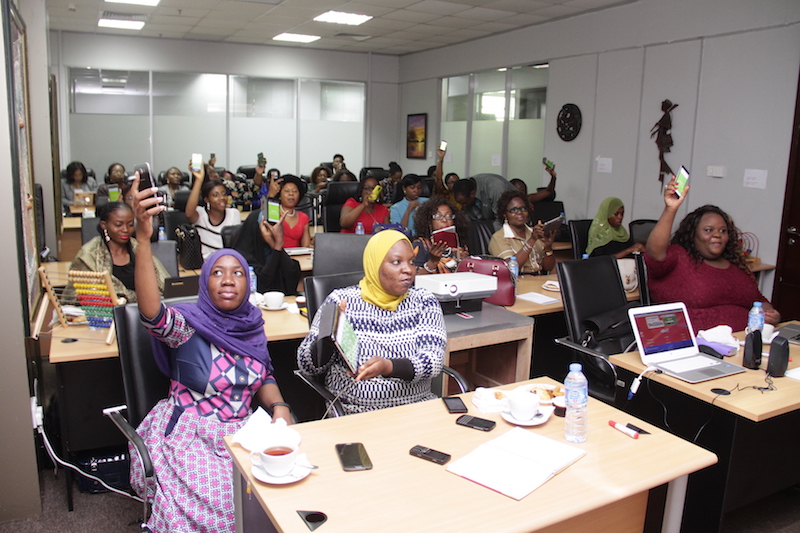
Research Rockstar LLC Announces Training Partnership for Market Research Professionals in Africa

1
Growing Demand for Market Research Skills; Access to be Supported Locally through Pierrine Consulting.

Research Rockstar LLC, the largest online training firm serving the market research and insights professions, today announced a distribution partnership with Pierrine Consulting to bring market research professional training to multiple African countries.

Professionals across the continent of Africa will now have access to the same training experience and high levels of skill development as all other Research Rockstar students.

  • Oluwaseyi Adeoye – Managing Director, Pierrine Consulting

“Today’s partnership marks an exciting chapter in Research Rockstar’s growth,” said Kathryn Korostoff, President of Research Rockstar LLC. “Together with our new partner, we will continue to expand and service new markets, helping market researchers everywhere to become research rockstars.”

According to Managing Partner of Pierrine Consulting, Mr. Oluwaseyi Adeoye, “The plan is to reach out to the whole continent progressively over the next few months with offices set in key Sub Saharan commercials hubs of Lagos, Nairobi, and Accra. No business community in Africa will be left out, as advanced and creative digital advertising will be deployed to ensure everyone interested or involved in planning, managing or using market research has access to world-class professional training.”

About Pierrine Consulting

Pierrine Consulting is a specialist firm with a strong focus on helping clients achieve desired business results and future growth. The business is driven by a team of entrepreneurial, highly experienced and results-oriented consultants with expertise across diverse business verticals. The client engagement model is immersive and built around designing bespoke solutions for each of our esteemed clientele.

Please visit www.pierrineltd.com for more information.

About Research Rockstar LLC

Research Rockstar LLC is the world’s only independent market research training company. We are dedicated to making market research skills and best practices available to anybody interested in planning, managing or using market research. Our students are from very small organizations up to Fortune 100 companies and include researchers from both market research agencies and corporate research departments. Please visit www.researchrockstar.com  for more information.