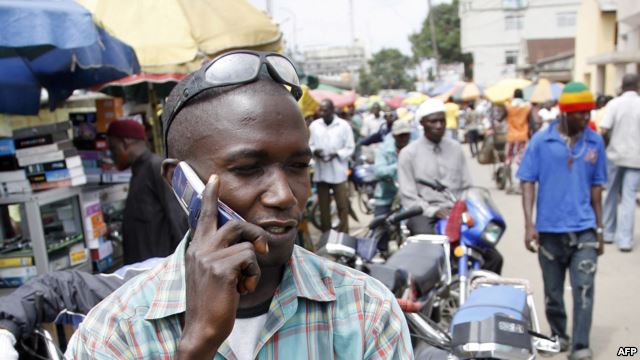
Nigerians spent N3.66trn on calls, data in two years – NCC

THE Nigerian Communications Commission, NCC, has said Nigerians spent N3.66 trillion on telecommunications services in 2015 and 2016 respectively. Executive Vice Chairman of the Commission, Prof. Umar Dambatta, dropped the hint at the flag-off of the NCC Year of Consumer at the Commission’s headquarters in Abuja. According to him, Nigerian subscribers spent    $5.6 billion in 2015 and $6.6 billion in 2016, amounting to $12.2 billion (N3.6trn)    on telecommunications services at    an average exchange rate of N300.

Image result for smartphone nigeria

NCC The analysis of the amount showed that the N3.66 trillion spent by Nigerians telecoms subscribers is more than half of the 2017 annual budget of N7.298 trillion. He said: “In 2015, Nigerian telecom consumers spent a whooping $5.6 billion on telecommunications services. And in 2016, they topped it up by another $1 billion to make it $6.6 billion.That is why today’s event is remarkable. More remarkable is that the year 2017 is dedicated to the Nigerian Telecom Consumers. ”A management decision that compels us to seek to amplify our activities towards ensuring that the consumer enjoys a customer    experience that is enhanced    and consistent in time and quality.

Image result for phone call nigeria

“Just as their patronage is important, the consumer will be our focus. NCC intends to inform and educate the consumer with the sole intent of protecting and empowering them to make the right decisions. As a regulator, NCC has the mandate to ensure all its key stakeholders are protected and their interests balanced in an atmosphere of openness and transparency and within the framework of the NCA 2003 and other subsidiary legislations.” Continuing, Dambatta noted that the Commission was rolling out new initiatives to achieve high quality of service by the service providers.

To address the two key areas of focus: improving the quality of service    and protecting and educating the consumers on the rights    this year, the EVC said the Commission has lined up measures to boost customer awareness creation in all the 774 Local Government Councils    by ensuring prompt enforcement of the Do Not Disturb (DND) facility already provided by NCC.

In his goodwill message, the Senate President, Bukola SAraki, said that the Senate was at the forefront of Consumer protection, and is at the verge of passing the Consumer Protection bill in to law. Saraki, who was represented by the Deputy Chairman, Senate Committee on Communication, Solomon Adeola, said the bill when passed into law, was expected to provide consumers with protective prices and further insulate them from any exploitative tendencies currently experienced in the sector.

(vanguardngr)

Cash ‘N’ Carry unveils new center in Lagos, reiterates commitment to quality products

The management of Cash ‘N’ Carry has reiterated commitment to satisfy its numerous customers with quality products and services.Speaking at the grand opening of the firm’s new outlet in Adeola Odeuku, Lagos, the Managing Director of the company, Komal Sharma, pledged the firm’s resolve to maintain the good deeds which has enabled them remain in the market space for 50 years now.

On the new centre, she explained that it would enable customers to make choices from electronics at affordable prices and enable them get them with ease.

She added: “we guarantee all our customers of the best products and services because we have the best products in our centres with good warranty on all goods purchased in our stores.

“Cash ‘N’ carry has been known for best delivery to customers in goods and services, which is still our promise to maintain the good deeds, which has enable us stay in the market space for 50 years now.

“This is the 9th Centre outlet of Cash ‘N’ Carry in Nigeria, and we look forward to having more of it soonest.”She commended the efforts of brands and sub-contractors supporting Cash ‘N” Carry to put up a world class outlet.

To reward customers that will patronise the outlet, Sharma promised,“On every purchase at Adeola Odeku from 10th to 13th March there will be 10 percent discount on all”.

(GuardianNg)

Power Oil partners Ogun on health

In a bid to promote public health and improved lifestyle in the country, Raffles Oil LFTZ Enterprise, manufacturers of Power Oil, has collaborated with the Ogun State Ministry of Health to offer free medical checkups for residents of the state.

During the inauguration of the initiative tagged Power Oil Health Camp at Ori-Omi ground, Oke Sokori, Abeokuta, officials of the state government and the company advised the people on the need for regular medical checkups, describing such as the key to staying healthy.

Image result for power oil nigeria

Speaking during the ceremony, Public Relations Manager, Power Oil, Ms. Omotayo Azeez, said, “Power Oil Health outreach programme has been consistently going on for more than three years and we are happy about the achievements recorded so far and with the support we have received from the Ogun State Ministry of Health,  we are confident of a deeper outreach result in the state.

“To achieve extensive reach and wider coverage across the country, we have equally partnered other state ministries, on which formal announcements will be made in due course.”

According to the Permanent Secretary, Ogun State Ministry of Health, Dr. Nafiu Aigoro, who declared the activities open, the government and people of Ogun are excited about the partnership.

He said, “We recognise the Power Oil Health Camp Project as a laudable programme and that is the main reason we have thrown our support behind it. We will work together to create more awareness about  healthy living.”

(Punchng)

FG cuts fertiliser price by half

0

President Muhammadu Buhari has approved the payment of the outstanding N22bn that is meant for dealers of agricultural inputs, popularly known as agro-dealers, in order to ensure the seamless distribution of fertilisers at an approved rate of N5,500 for 50kg.

Earlier this year, the Minister of Agriculture and Rural Development, Chief Audu Ogbeh, announced that the Federal Government was working out measures that would lead to the crash in the price of fertiliser by 50 per cent.

Farmers across the country have often complained of the high cost of fertiliser, stating that a 50kg bag is currently being sold for N10,000 to N12,000, adding that accessing the commodity was also another serious challenge.

As part of measures to bring down the price of the commodity and enhance its distribution, the National Chairman, Agro-dealers Association of Nigeria, Mr. Kabiru Fara, told journalists in Abuja on Wednesday that Buhari had to approve the payment of the balance of N22bn out of the N66bn that was owed the agro-dealers by the previous government.

He said, “The presidential initiative on fertiliser distribution is too important. We are happy with it because it will help the farmers get inputs at affordable prices and we are the ones who serve as a link between the farmer and the supplier.

“However, our bankers and suppliers are not happy in dealing with us for now, because we have their money hanging, as well as some of our money that are still not paid. This liability was not incurred by the present administration, but we are happy that they have agreed to pay. We understand that Mr. President has approved expressly that the liability be paid.

“The total amount is about N62bn, a first payment of N20bn was made, another payment of N20bn followed, which was about a year ago, and the balance now is N22bn, which the President has approved that it be paid to agro-dealers expressly. We are grateful for that.”

He stated that agro-dealers would use part of the money to make purchases as well as distribute the commodity, and urged the Federal Government to ensure the speedy release of the funds.

Fara added, “We will use this payment to buy what fertiliser producers produce and distribute it across the market at N5,500. So, releasing our money will make the presidential initiative on fertiliser distribution easy. But without that payment, which we don’t know why, it will be difficult for some of our members to buy and distribute.

“You may have pockets of agro-dealers who have money to buy, but the product will not come as fast as needed in order to ensure availability and the prices may not be as affordable as expected.”

Fara also urged the government to ensure that fertilisers were sold at the approved rate of N5,500 across the country by addressing issues of logistics.

He said, “Our recommendation is that the presidential initiative team should look at the issues of logistics and factor how fertilisers are to be delivered to centres where they are needed at N5,000 per bag. For they say agro-dealers’ money should be N500, but when you check the distances to transport the commodity, N500 won’t be enough in many instances.

“So, we want the government to look at ways of getting the product to any location in Nigeria at a fixed price, whether at N5,000 or a little above that so that it can be sold at the approved price of N5,500 per bag.”

(Punchng)

Fanta-Sprite ruling: Consumer groups consider class-action suit against NBC

Some consumer advocacy groups in the country have threatened to institute a class-action suit against the Nigerian Bottling Company if it is established that an infraction has been committed against consumers of its beverage products, Fanta and Sprite.

A class-action lawsuit is one in which a group of people with the same or similar injuries caused by the same product or action sue the defendant as a group.

The President and Founder, Consumer Advocacy Foundation of Nigeria, Ms. Sola Salako, disclosed this to one of our correspondents in Lagos on Wednesday.

She, however, said that the first step would be to consult the National Agency for Food and Drug Administration and Control and find out how it arrived at the level of benzoic and ascorbic acids to be used in producing soft drinks for consumption in Nigeria and why the global standard was different from that applicable in the country.

Salako said, “First, we have to ascertain from NAFDAC how they arrived at a different standard limit of benzoic acid for soft drinks meant for consumption in Nigeria. What is the condition of the laboratories that the tests were carried out to determine this standard? In the last 10 years, how many studies have been carried out to determine the changes in the lifestyle of consumers?

“The standard limit of benzoic acid in the United Kingdom is 150mg per kilogramme, while the standard level for Nigeria is 250mg/kg. That is too high!”

She also suggested that it was possible that when the 250mg/kg standard was set, people were not consuming as much soft drinks as they were currently consuming, adding that there might be a need to review the standard.

Salako faulted the reaction of the NBC that because NAFDAC had approved the standard, it was not bothered.

“They should be concerned about the health of their consumers. I would have expected them to say that in the light of the current concerns, they would consider reducing the level of the acids, because there have been a lot of health concerns with the consumption of soft drinks and sugar these days,” she stated.

The President, Consumer Awareness Organisation, Dr. Felicia Monye, said that although a class action had been part of the law, the attitude of consumers to such a suit was not encouraging to consumer advocacy groups.

She said, “Consumers and citizens generally do not opt for that for reasons best known to them. You will see that if 50 people agree to come together, after one or two meetings, the number will just reduce.

“This lukewarm attitude of consumers is responsible for the problem of consumer protection in Nigeria. They may believe that they have a right, but when it comes to the enforcement of that right, they will not show interest,” she said.
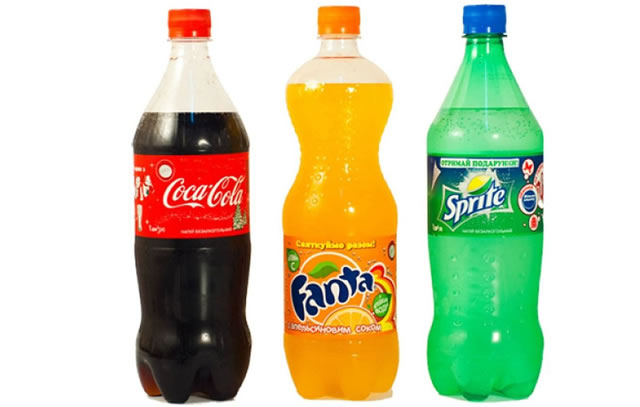
Meanwhile, NAFDAC and the NBC have appealed the judgment of the Lagos High Court, which directed the bottler to put a warning on Fanta and Sprite bottles that taking the products with Vitamin C was poisonous.

The Director-General, NAFDAC, Mrs. Yetunde Oni; and counsel for NBC, Mr. Olatunde Busari (SAN), stated this on Wednesday.

The NAFDAC boss said this just as the Nigerian Medical Association urged the agency and the Federal Ministry of Health to ensure the enforcement of the judgment.

The NMA held that NAFDAC failed Nigerians by declaring as fit for human consumption, drinks discovered through tests in the United Kingdom as being poisonous when mixed with Vitamin C.

The court had awarded a cost of N2m against NAFDAC. The judgment was on a suit filed by a Lagos-based businessman, Dr. Emmanuel Fijabi Adebo, and his company, Fijabi Adebo Holdings Limited, against NBC Plc and NAFDAC.

Adebo, had in the suit, asked the court to declare that NBC was negligent to its consumers by bottling Fanta and Sprite with excessive levels of benzoic acid and sunset additives.

He also urged the court to order NAFDAC to carry out routine laboratory tests on all the soft drinks and related products that NBC was bottling to ascertain their safety for consumption.

But the director-general of NAFDAC said that the agency’s lawyer had filed an appeal against the judgment and a motion to stay its execution.

“NAFDAC is a national regulatory authority and will react both scientifically and legally to the matter. Our lawyer has filed an appeal and a motion to stay execution of action of the judgment also filed,” Oni stated.

Busari also stated that the NBC had appealed the judgment, with the beverage company adding in a statement that both drinks were produced in compliance with national and international food quality and safety standards in the country.

The statement read in part, “In the judgement delivered on February 15, 2017, the Lagos High Court dismissed all claims against the NBC and held that the company had not breached its duty of care to consumers and that there was no proven case of negligence against it.

“In the same judgement, the court directed NAFDAC to mandate the NBC to include a warning on its bottles of Fanta and Sprite that its contents cannot be taken with Vitamin C as it could be poisonous. This order was premised on the fact that the products contain the preservative, benzoic acid. The NBC has since appealed this order.”

According to the company, the levels of benzoic and ascorbic acid in the drinks are approved by the regulatory agencies in the country.

It stated, “In the subject case, which dates back to 2007, the UK authorities confiscated a consignment of our products shipped to that country by the plaintiff, because their benzoic acid levels were not within the UK national level although well within the levels approved by both the national regulators for Nigeria and the international levels set by CODEX, the joint intergovernmental body responsible for harmonising food standards globally.

“The UK limits benzoic acid in soft drinks to a maximum of 150mg/kg. Both Fanta and Sprite have benzoic levels of 200mg/kg, which is lower than the Nigerian regulatory limit of 250mg/kg when combined with ascorbic acid, and 300mg/kg without ascorbic acid, and also lower than the 600mg/kg international limit set by CODEX.

“Both benzoic acid and ascorbic acid, also known as Vitamin C, are ingredients approved by international food safety regulators and used in many food and beverage products around the world.

“These two ingredients are also used in combination in some of these products within levels, which may differ from one country to another as approved by the respective national food and drug regulators, and in line with the range prescribed by CODEX.”

It added, “The permissible ingredient levels set by countries for their food and beverage products are influenced by a number of factors such as climate, an example being the UK, a temperate region, requiring lower preservative levels unlike tropical countries.

“Given the fact that the benzoic and ascorbic acid levels in Fanta as well as the benzoic acid level in Sprite produced and sold by the NBC in Nigeria are in compliance with the levels approved by all relevant national regulators and the international level set by CODEX, there is no truth in the report that these products would become poisonous if consumed alongside Vitamin C.”

Expert reacts

A nutrition officer with Federal Medical Centre, Idiaba, Abeokuta, Ogun State, Mr. Oladimeji  Okunlola, advised the NBC to embark on a campaign to sensitise Nigerians to the dangers of some of the preservatives used in its products.

Okunlola also said that aside benzoic acid, Nigerians should be concerned about the sodium level in soft drinks and other consumables.

He said, “Benzoic acid is a preservative used in foods and drinks. There are other preservatives like alpha tens, a sweetener. It is a class of protein that is harmful to people living with kidney failure. There are drinks, which have alpha ten specific warnings on their labels and I think the NBC should do the same.

“Vitamin C is a common drug and when you take it with soft drinks, a gas is released and it can affect the kidney and the liver. I think NBC should come out with a better defence. The story that the benzoic acid in the drink is still within acceptable limits does not fly. Who determines the acceptable levels? Is it the Nigeria Medical Association or NAFDAC?”

(Punchng)

Social Security in Nigeria: Is there light at the end of the tunnel?

0

Social security arrangements are collective remedies against adversity and deficiencies; ranging from pensions to disability compensations, death benefits as well as free/quasi healthcare and education.

One of the Fundamental Objectives and Directive Principles which underpin the policy of the Nigerian government towards its people is “security and welfare of the people”. This is declared as the primary purpose of Government in Chapter II of the Constitution of the Federal Republic of Nigeria, 1999. Given the nationwide import of this duty, driving social security initiatives has been one of the constitutional responsibilities of the Federal Government.

Social security is a shared care arrangement designed to meet contingencies and other conditions of insecurity due to either deprivations or contingencies. It is widely practised globally. Social security arrangements are collective remedies against adversity and deficiencies; ranging from pensions to disability compensations, death benefits as well as free/quasi healthcare and education.Nigeria has over the years tried various social security schemes/systems. However, these have not been implemented satisfactorily. For instance, this apparent gap has led to instances of alleged embezzlement/misappropriation of pension funds, long queues of pensioners to access pension funds and ultimately, stranded pensioners, amongst others in the area of pension fund management in Nigeria.

Below are some of the prominent social security schemes set up by the Federal Government over the years:

  • Workmen compensation scheme – 1987 – 2011: The scheme was set up by the Workmen Compensation Act (WCA). This objective was to ensure that workmen were compensated for injuries suffered in the course of their employment. While this appeared laudable, it applied only to unskilled and low level employees. Also, employers were not obliged to pay compensation in certain instances.
  • Nigeria Social Insurance Trust Fund (NSITF) – 1961, 1993 – 2003: NSITF was established in 1961 as National Provident Fund (this metamorphosed into NSITF in 1993) with the aim of protecting employees in the Nigerian private sector who were mostly in non-pensionable employment. The scheme was targeted at protecting private sector employees, whose employers were then mostly the multinationals, from financial difficulties in the event of either old age, cessation of employment, invalidity or death. This is more so as most employers did not have such provisions in the employment contracts with their employees.

Under the scheme, a portion of employees’ emolument is deducted and remitted to the NSITF. Unfortunately, the employees that contributed under the scheme did not receive the supposed benefits as the funds were largely inaccessible.

  • Pension scheme – 1954 – 2004: This scheme was governed by the Pension Act and other relevant legislation, guidelines and policies issued by the government. Under this scheme, a portion of the emoluments of public servants were deducted and paid into pension funds. Similar, or perhaps worse than the case under NSITF, pensioners have been known to struggle to access the funds. In view of the seeming shortfalls of the above schemes, the Federal Government of Nigeria (FGN), over the past 10 years, has moved to revamp the social security systems by introducing new legislation and setting up requisite institutions. The renewed vigour infused has led to significant improvements and provide a glimmer of hope for workers in Nigeria.

The following are recent legislation enacted by the Federal Government to reinforce the social security framework in Nigeria:

  • Pension Reform Act (PRA) 2004; 2014: The PRA was enacted in 2004 to improve on the erstwhile NSITF and public sector pension regimes. Under the PRA, the custody of pension funds is transferred from NSITF to private sector companies – Pension Fund Custodians (PFCs). The PRA also provides some checks and balances by vesting administration of the pension funds with other bodies – Pension Fund Administration (PFAs).

Other laudable improvisations under the PRA include introduction of mandatory life insurance for employees and strict guidelines on investment of funds, thereby protecting the pension assets and ensuring they are not trifled with. This consequently enhances success/longevity of the scheme as employees/contributors are able to access their contributions after a long period of time.
In July 2014, the PRA was further re-enacted; retaining some of the existing structures under PRA 2004 and improving thereon.

The highlights of the improvement include:

  • Increased contribution from employers and employees this was increased to 18% (employee 8% and employer 10%)
  • Increased powers for Pension Commission (PenCom) – the Commission is empowered to commence criminal action against erring companies
  • Creation of a Pension Protection Fund – government is expected to set aside a minimum/guaranteed pensions for contributors
  • Employee Compensation Act (ECA) 2010: The ECA, signed into law in 2010 and effective 2011, repealed WCA of 2004. Unlike its predecessor, ECA contains comprehensive provisions ensuring employees are compensated for accidents at work place or outside work place. It covers, medical treatment in case of accident involving no disability, rehabilitation and payment of compensation for disabilities and death. The mandate also covers treatment and payment of compensation to employees who suffer from occupational diseases contracted in the course of employment.

Additionally, ECA improved on WCA by extending its cover to all employers and employees in the private and public sectors of Nigeria. All employers and employees are expected to benefit from the scheme.

The ECA enjoins all employers to contribute 1% of their payroll costs to the NSITF, with a view to enhance proper implementation of the funds. In this regard, employers are required to report any workplace accident, injury, occupational disease or death to the nearest NSITF office. This is required to enable NSITF take over medical treatment for the injured or sick employee; and subsequently process compensation for such employee or his/her dependants, in case of death.

There is the general consensus that the above initiatives are significant steps in the right direction. This should be complemented by sustained public enlightenment and public awareness especially those in the informal sector. In the same vein, there is need to extend the scope of coverage of social security to citizens in that sector. Furthermore, cases of malfeasance in pension fund management should attract the full rigour of the law in terms of prosecution and punishment. Above all, the relevant regulatory agencies (e.g. NSITF, PenCom etc.) should continue to demonstrate strong degree of commitment to ensure sustained efficiency in the system bearing in mind that once confidence is lacking, people will find ways to avoid contributing, even though their need for social protection may be very high.

(Deloitte Nigeria)

Lagos IGR rises by N32.99bn — higher than 33 states put together

0

The internally generated revenue (IGR) of Lagos state rose by approximately N33 billion from 2015 to 2016, beating 33 states put together.

According to a report by the Nigeria Extractive Industries Transparency Initiative (NEITI), the state recorded an IGR of N301.19 billion, a rise of N32.99 billion in one year.

The total IGR from 33 states of the federation, excluding Delta, Ogun and Rivers states stood at N299 billion — over a billion less than Lagos IGR.

Delta, Ogun and Rivers raked in N44.89 billion, N56.30 billion and N82.10 billion respectively.

Like his predecessors, Bola Tinubu and Babatunde Fashola, Akinwunmi Ambode, governor of Lagos state,  has at various times committed himself to the generation of IGR in the state.

The NEITI report, which reviewed disbursements from the Federation Account Allocation Committee (FAAC) for the fourth quarter of 2016, also showed that Lagos received N109 billion in 2016.

The agency lamented low revenue generation across 34 states, citing Lagos and Ogun as the only states generating more than what they get from the central.

“IGR is very low in most states and it is only in two states – Lagos and Ogun – that IGR is higher than FAAC allocations. The figure shows that total revenue by itself cannot fund states budgets,” it said.

NEITI said the three tiers of government shared N5.121 trillion through 2016 — a decline from 2015 figures.

“Total disbursements fell by 14.8% from N6.011 trillion for the year 2015 to N5.121 trillion for the 2016. In Q1 2016, total disbursements were N1.132 trillion as against N1.648 trillion in Q1 2015, a decline of 31.2% in Q1 2016,” NEITI said.

“Total disbursements fell by 26.9% from N1.241 trillion in Q2 2015 to N906 billion in Q2 2016. There was a further decline in Q3 when total disbursements dropped by 7.8% from N1.887 trillion in 2015 to N1.738 trillion 2016.

“However, total disbursements increased in Q4 by 8.8% from N1.233 trillion in 2015 to N1.343 trillion in 2016.”

The report revealed that “the federal government received a total of N2.08 trillion from the federation account in 2016, which represents a drop of 19.9% of the total N2.6 trillion received in 2015.”

The 2016 budget was for N6.06 trillion, implying that at N2.08 trillion, total FAAC disbursements were only 34.3 percent of the budget.

“Thus, the federal government would have to resort to even higher debts to fund the budget. The implication of this is that debt service payments, which accounted for 24.3% of the 2016 budget, would increase.”

Nigeria FinTech Survey Report 2017

40% of financial services business will be at risk of standalone Fintechs by 2020

The above statement is part of the findings of a survey conducted by PricewaterhouseCoopers (PwC) in partnership with its Strategy & platform focused on Fintech innovation, DeNovo.

Insights were gathered from over 50 Chief Executive Officers (CEOs), and Industry leaders across various segments of Nigeria’s Financial Services (FS) industry to prepare the report, which is titled “Nigeria FinTech Survey 2017”

Of all the impact Fintechs are having in the financial services sector in the country, the respondents see changing customer needs as top of the pile, with up to 60% indicating about 40% of financial services business will be at risk of standalone Fintechs by 2020.

Other key findings of the report are bulleted below.

  • Insurance brokerage, Auto and Life insurance stand an equally high likelihood of disruption at 77%.
  • Retail banking and Funds transfer have the highest likelihood of disruption at 92% and 85% respectively.
  • Majority of respondents from traditional financial industry players believe that part of their business is at risk of being lost to standalone Fintechs, up to 92% in the case of Banks.
  • Banks ranked loss of market share at the top Fintech related threat, closely followed by increased pressure on margins.
  • Other FS incumbents ranked information security and privacy concerns as the key FinTech threat to their business.

“FinTechs are redrawing the competitive Financial Services landscape and blurring the lines that define players in the sector. Their offerings range from competing financial services such as alternative lending, to additive solutions atop existing banking services, to enabling technologies for the banks themselves,” PwC stated.

It added, “Capitalizing on the latest mobile, cloud and digital technologies, Nigeria is increasingly becoming home to many FinTech firms who are trying to shake up and be accretive to the banking value chain.”

Interestingly, the report indicated the respondents acknowledged the opportunities Fintech adoption will bring to the industry. They believe Fintechs will help bring in more money and reduce operational cost. Also, quite a large number believe Fintech adoption will improve customer retention and product differentiation.

As such, the Financial Services players plan to innovate in order to not die. Advisory Partner and Chief Economist, PwC Nigeria, Dr. Andrew S. Nevin Ph.D., made the following recommendations to the players.

  • Incumbents should implement a customer-centric model focused on offering products and services that truly addresses customer’s needs and supports the completion of transactions through multiple accessible and connected channels.
  • Incumbents have to proactively approach the Fintech challenge with a clearly articulated strategy rather than the current approach of adopting reactionary measures.
  • Incumbents also need to identify the threats and opportunities that are most relevant to their business and explore ways they can build, acquire or partner with Fintechs for the capabilities they lack.
  • By focusing on incorporating new technologies, incumbents can prepare themselves to play a dominant role in the new financial services landscape and maintain strong positions even as innovation alters the marketplace.

PricewaterhouseCoopers released the report few days ago in Lagos. Click here to get the complete version.

(Techloy)

Africa’s Next Automotive Hub: Reality Check…

Nigeria has the potential to become the hub of Africa’s automotive industry. Home to an estimated 170 million people, over 40 million of who are in the growing middle class, the continent’s largest economy is increasingly seen as an attractive destination for investors across all sectors. The largely import dependent automotive industry has become the focus of this attention in recent times

Image result for nigeria automobile

The global automotive industry is looking for new growth opportunities and those opportunities reside in Africa. Nigeria, the continent’s largest economy and by far the most populated presents huge opportunities for investors in the automotive space. The new auto industry plan which raises import duties on imported cars makes the used car market less attractive. While this encourages the setting up of assembly plants in the country to serve the domestic market, the country may also become a regional hub for West Africa.

The Nigerian government introduced the Nigerian Automotive Industry Development Plan (NAIDP) in 2013 to revitalisethe auto industry. Last year, the policy came into full effect. PwC developed scenarios to capture the potential effects of the policy and identified Nigeria as a future automotive hub driven by its large economy, population and government’s intent to revive the industry. With the policy in active existence for over a year, we discuss the current situation in the industry.

The Economy
The current economic climate has been challenging for businesses as the decline in global oil prices (to $40 -$50/bbl.) and significant production shortages (from 2.2 mbpdin Q2 2015 to 1.4 mbpdin Q2 2016) has put immense pressure on government revenues and foreign reserves. Nigeria is officially in a recession following negative growth of -0.4% in Q1’2016 and -2.1% in Q2’2016. Consequently, the general and automotive manufacturing industry were worst hit with growth at -7% in Q1’ 2016.

Click here to download the full publication: https://www.pwc.com/ng/en/assets/pdf/automotive-hub-one-year-on.pdf

Nigeria’s Internet speed ranks low at 82nd position

South Africa leads Africa as South Korea tops the world

With an Internet speed put at 4.13Mbps, Nigeria is ranked 82nd out of the 87th leading telecoms country surveyed by Open Signal, a platform, which beams search light into the coverage and performance of mobile operators worldwide.

Open Signal in its Global State of Mobile Networks report, noted that operators in South Africa offers the fastest Internet speed across Africa at 9.93Mbps, while South Korea’s speed is the fastest globally at 37.54Mbps.

Open Signal explained that overall speed measurements vary considerably from country to country depending on their particular stage of generation – 3G and 4G development. For instance, a country with fast Long Term Evolution (LTE) speed but low 4G availability might have a much lower overall speed than a country with moderate LTE speed but a very high level of 4G availability.

For clarity, the report defines overall speed “as the average mobile data connection a user experiences based on both the speeds and availability of a country’s 3G and 4G networks.”

For Nigeria, the implication is that the Internet speed is still very low despite the availability of various submarine cable systems with about 10 Terabytes capacity of bandwidth still lying fallow at the various landing points in the country. It has been an uphill task to move this capacity from the shores to the hinterlands and other cities because of lack last mile infrastructure. This has resulted in Internet users spending several minutes to either upload or download a video successfully.

It must however, be mentioned that about three years ago, the Internet speed was 1.5Mbps before the current status in Nigeria. Further analysis of the Open Signal report showed, Ivory Coast, which ranked 58 in the global survey, is second on the continent after South Africa, which is in the 48th position. Internet speed in Didier Drogba’s country is at 7.64Mbps. Morocco, which placed 60th, occupies the third place in Africa with a speed of 7.36Mbps. Tunisia is fourth with 7.21Mbps on the continent and 62nd globally. Kenya is 67th globally and fifth in Africa with an Internet speed of 6.75Mbps, while Ghana placed 79th on the world stage, it runs as number six in Africa with an average speed of 4.81Mbps.

Open Signal’s report also tracked the amount of time users spend on WiFi and in 38 of the countries analysed, it found smartphone users spent more time connected to WiFi than to mobile networks. But the report also stated that time spent accessing the Internet via WiFi, does not reflect on the quality of mobile connections.

The Netherlands, for instance, despite featuring in the top 10 countries for mobile Internet speeds still had the most users (68.5 per cent) connected via a WiFi access point.

Norway is second with 34.77Mbps; Hungary is third with 31.04Mbps; Singapore is fourth with 30.05 Mbps; Australia placed fifth with 26.25Mbps. The United Kingdom ranked 26th with 15.13 Mbps; Germany is at 30th position with 13.79Mbps, while the United States at 36th position globally, has an Internet speed of 12.48Mbps.

In developing countries though, the dynamic is different as the report found that a lower percentage of users accessed the Internet via WiFi, not necessarily because mobile networks offer faster connections but likely because of “less robust broadband infrastructure.”

While Internet speeds are one thing, the cost of Internet access is another. As Quartz has previously reported, geographical location plays a major role in determining internet prices on the continent.

(Guardian.ng)