



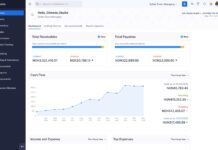
Nigerians can now track real-time food prices across multiple states with the assistance of a new mobile app released by the Bank of Industry (BOI). The software, which was released today, allows users to compare prices in wholesale and retail markets for staple foods including rice, beans, tomatoes, and maize.
It covers eight states. Customers can study and monitor changes in food prices with the use of this service, which is available via the Pricesense.ng web platform. It offers comprehensive pricing breakdowns by state and date.
Along with providing a thorough overview of market trends across the included states—Borno, Plateau, Rivers, Oyo, the Federal Capital Territory (FCT), Lagos, Enugu, and Kano—the app also gives users the ability to browse data by brand and quantity.
According to recent studies accessed by BrandSpur Nigeria news, food inflation in Nigeria has continued to climb and is expected to surpass 40% by June 2024. Numerous factors, such as unpredictable weather that affects harvests, ongoing insecurity in important agricultural regions, and the rising cost of farming inputs like fertilisers, are contributing to this growth.
The country’s deteriorating food situation has been acknowledged by international institutions such as the Food and Agricultural Organisation (FAO) and the World Bank. The FAO projects that by the end of 2024, up to 32 million Nigerians may experience food insecurity, while the World Bank has particularly noted that seven states in the country could experience acute famine. It is anticipated that vulnerable groups—women and children in particular—will be hardest hit by this crisis. The federal government has taken several steps to lessen the impact of skyrocketing costs in response to the current food crisis. These include the distribution of wheat among the 36 states of the federation and a temporary 150-day suspension of import taxes for food imports.
Also read: https://brandspurng.com/2024/10/04/former-flutterwave-employee-loses-900k-appeal/
To lower the cost of staple commodities, the government has now started to provide discounted rice sales, with a 50-kilogramme bag available for ₦40,000. Citizens draw attention to the possibility that these measures won’t be enough to address the systemic problems that the agriculture industry is facing.
The Federal Competition and Consumer Protection Commission (FCCPC), which is investigating price manipulation, has accused certain traders of increasing food prices artificially.
FCCPC Chairman Mr. Tunji Bello recently noted that local market cartels have played a major role in the steep increase in food prices, especially for staple products. Although the commission acknowledges the impact of external causes, such as the weakening naira and increased fuel prices, it has denounced certain market players for engaging in actions that it deems to be exploitative. Supermarkets that were accused of using unethical pricing techniques were shut down by the FCCPC earlier this year, and traders have been warned to lower their prices or risk facing penalties.
The FCCPC clarified that their order to cut prices was an attempt to stop dealers who were taking advantage of the current economic climate rather than an arbitrary demand.
