



The level of career satisfaction among employees has been the subject of several surveys. Many people are happy in their current roles and are excited to incorporate new technologies into their daily work. Some studies concentrate on how norms have evolved as Gen Z continues to enter the job and how generational differences exist in the workplace.
Companies are looking into ways to prevent burnout as employees continue to confront difficulties. Staff can be reenergized by improving health initiatives and workplace benefits and figuring out how to best convey them to workers.
The elements influencing productivity at work
Over the past year, workplace productivity has grown. Employing managers report available to BrandSpur business and economy news shows that staff training (31%) and better management techniques (33%) have increased business output. According to hiring managers, the use of new technology has grown. As a result, 37% of employees said that new technologies like generative AI have increased their productivity. Employees now have fewer time-consuming chores to do and more time for other initiatives thanks to new technology.
Flexibility has been given priority to motivate staff. 36% of employees reported logging more hours this year than in 2023 as a result of hybrid work options, windowed work options, and compressed weekly work schedules, according to 54% of workers.
In June 2024, over 2,500 U.S. workers participated in this study. Read more.
According to 71% of workers, AI has improved their level of job satisfaction. The vast majority of workers (79%) believe that having AI abilities will allow for quicker career advancement and greater chances within their companies. To further boost their professional development and career chances, 44% of respondents are making use of the time AI has saved them. Despite concerns that the growing usage of AI may result in employment losses, more than half of workers (61%) think it will create jobs. 89% of executives anticipate their company’s use of AI will grow by 2025, and 93% of executives think AI will become a permanent part of their organizations’ strategies.
2,015 people from the United States, the United Kingdom, Germany, and Australia participated in this study. Read more
Company swag increases staff retention and workplace satisfaction.
Does getting stuff from the company make you happier at work? 94% of workers who get business swag at least once a month report being extremely happy with their employers, according to Custom Ink. According to 93% of workers, receiving a favorite item would increase their likelihood of sticking with their employers for an additional year. Wearing workplace swag boosted their sense of community and connection, according to 92% of respondents.
According to one in four workers, clothing is their favorite swag item, with t-shirts (13%) and hoodies (12%) ranking highest. Backpacks (7%), drinkware such as travel coffee cups (7%), glasses or mugs (5%), water bottles (5%), and tote bags (5%), are other popular items. Over a happy hour or supper with their team, many employees say they would prefer to get a piece of merchandise that they love and use to commemorate a team achievement.
From August 30 to August 31, 2024, 1,064 adults in the United States participated in this study. Read more.
Young generations and women are suffering from high levels of burnout.
Burnout is still very common, even if it has declined since the early days of COVID-19. Employee workload continues to be the primary cause of burnout, with women reporting greater rates (49%) than men (41%). Burnout is most prevalent among younger workers, with 54% of Gen Z and 52% of Millennials reporting feeling overburdened.
Employees cite maintaining a work/life balance (41%), staff shortages (42%), and workload (51%), as the main causes of burnout. To address this, employees say they would feel less stressed if they had a four-day workweek (69%), greater flexibility (66%), a less workload (63%), and the ability to work from home (56%). The impact of covering the workload for vacant positions (83) is cited by those who blame staff shortages as the main cause of burnout, followed by the effects of training new hires (41%), recruiting and interviewing recruits (22%), and assisting others in learning their jobs (46%). Of workers who experienced burnout, 56% say they feel safe contacting their supervisor.
Between February 6 and 9, 2024, 1,247 respondents from the United States participated in this study. Learn more.
Hispanic workers deal with more stress and money worries.
46% of Hispanic employees said that their job stress levels were extremely high or high, up from 37% in 2023. Hispanic employees in the United States are nearly twice as likely as non-Hispanic employees to experience extremely high levels of burnout.
The number of workers who have felt anxious when considering the consequences of an unforeseen, significant medical condition is increasing. Unexpected medical bills of $1,000 are beyond the means of 51% of all employees. When faced with an unforeseen $1,000 medical bill, Hispanic employees (58%) and African American (59%) reported feeling more financially unstable.
2,000 workers and 1,003 employers from around the United States participated in this study. The employer survey was conducted between June 6–21, 2024, and the employee survey was conducted online from June 6–July 10, 2024. Learn more.
Gen Z starts working
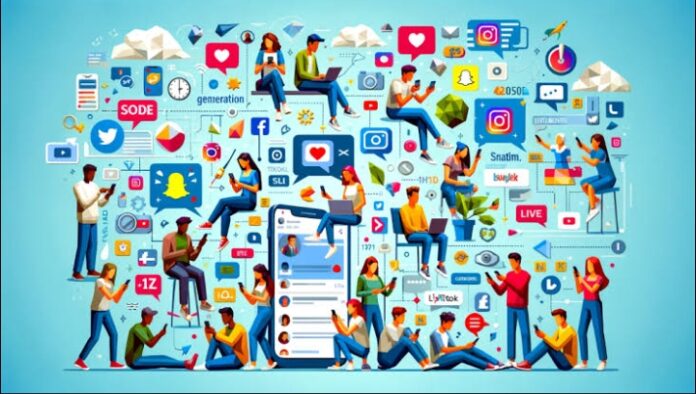
The emergence of return-to-office rules has prompted many Gen Z professionals who began their professional careers working remotely to identify and establish new workplace norms. Eight out of ten Gen Zers have produced romanticized social media posts about their workplace as they transition into the workforce, but half of them believe that writing about office life should be done with some professionalism.
Eighty-eight percent of young workers have customized their workspace and think it must represent their particular aesthetics and sense of style. According to 24% of respondents, the best part of their first day at work was organizing their desks and personalizing their workspace, while 43% indicated they have changed the look of their office in response to social media trends. Eighty-one percent of Gen Z agree that posting material about office life has helped modernize the office environment, and ninety-six percent think that social media has influenced how their peers navigate the job.
500 Gen Z office workers participated in the study. Read more.
Workers are not aware of or use workplace wellness programs to their full potential.
Programs for workplace wellness are desired yet neglected. Thirty-three percent of respondents claim that their employers do not provide benefits like preventative health screenings, mental health assistance, or reimbursement for gym memberships. Just 28% of people who have access to programs use them, with 23% stating they are unlikely to do so and 15% not knowing if their employer provides them. Twenty-five percent claim that they were not informed about wellness benefits or that they are unsure where to look for information about them. Although 48% of firms use email to convey their wellness benefits, some have begun to reduce the awareness gap by bringing them up during onboarding sessions (17%) and on collaboration platforms like Slack (10%).
In August 2024, 1,000 adults in the United States participated in this study. Read more.
