




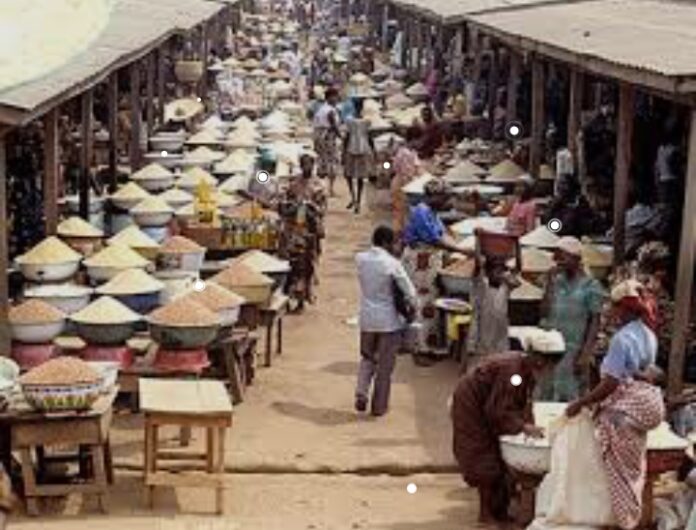
Notwithstanding a technical decline in the year-over-year national average, which was 21.14% in May 2025, food inflation is still putting a burden on household incomes throughout Nigeria.
A change in the base year, which impacts year-over-year comparisons, is mostly to blame for this steep decline from 40.66% in May 2024. However, due to persistent price pressures in certain food items, the month-over-month rate increased marginally to 2.19% from 2.06% in April. Food prices are rising sharply in several states at the subnational level.
The disparity between local production and affordability is further highlighted by the fact that many states with the highest food inflation are also significant producers of food crops. Real-time pricing pressures are getting worse in several states, even while statistical base effects seem to be reducing national food inflation. High transportation costs, insecurity, and supply disruptions continue to be major causes of food inflation in Nigeria.
Based on a market survey conducted, it was revealed that the prices for rice, yellow maize, semovita, and frozen fish marginally decreased, while prices for tomatoes, pepper, chicken, and palm oil increased. The broader market’s reactions, however, continue to indicate that food costs are still too high. The
The National Bureau of Statistics (NBS) reports that prices for staple foods such as maize, cassava, pepper, and yam are still high, with regional pressures differing. The top 10 Nigerian states with the highest annual food inflation in May 2025 are listed below, including information on local food dynamics and past inflation patterns.
BrandSpur Nigeria news desk, reports that these 10 states have the highest inflation prices in recent times
- 1. Borno (64.4%)
In May, Borno had the highest food inflation rate, rising to 64.4%, a 42.9% increase from April’s 21.5%. The state is well-known for producing sweet potatoes, guinea corn, rice, maize, sorghum, and millet. Even though a lot of crops, such as millet, sorghum, and sweet potatoes, are produced, the sharp price increases have been caused by insecurity, restricted market access, and disrupted trade flows. Additionally, the state has the highest monthly all-items inflation rate.
- 2. Bayelsa (39.8%)
Food inflation in Bayelsa surged from 19.7% in April to 39.8% in May, indicating a huge 20.1% surge. Despite being a producer of plantain, cassava, yam, rice, garden egg, pepper, banana, and cocoyam, the state’s supply networks and significant dependency on food imports from other regions could be contributing to this fast rise. The state made it among the top 20 highest all-items inflation rates for the month.
- 3. Taraba (38.6)
Taraba had 38.6% food inflation in May, compared to 20.3% in April—a differential of 18.3%. The state grows a wide assortment of food products, including cassava, plantain, yam, millet, beans, rice, and Irish potatoes, although logistics constraints and growing transportation costs may be hurting final consumer pricing. Insecurity in adjacent areas and road conditions regularly hamper commerce routes here. The state ranks as the fifth highest all-items inflation for the month.
- 4. Niger (30.3%)
Niger State’s food inflation rate increased by a moderate 6% from April to 30.3%. Being a major producer of rice, yams, cassava, and sorghum, the increase can be due to pressure from local markets or seasonal changes in food supply. The state has the second-highest all-items inflation in May.
- 5. Sokoto (27.6%)
Sokoto experienced a relatively moderate change, with food inflation increasing from 25.3% in April to 27.6% in May. Though the increase is marginal, the state still ranks among the top 10. In general, Sokoto has profited from consistent local production and produces cassava, plantains, bananas, yams, millet, cocoyam, rice, pumpkin, and bananas.
- 6. Cross River (27.3%)
Cross River experienced a steep monthly jump in food inflation, rising from 14.5% in April to 27.3% in May. That 12.8% increase may be tied to seasonal price pressures on cassava, yam, plantain, maize, garden egg, pepper, banana, and cocoyam, crops heavily traded in regional markets. The state ranks eighth highest in all-items inflation for the month.
- 7. Abuja (FCT) – (26.7%)
Food inflation in the Federal Capital Territory reached 26.7%, up 4.5% from 22.2% in April. Abuja also produces cassava, plantains, yams, millet, beans, rice, and Irish potatoes, but it imports a significant portion of its food from other states. The state has the fifth-highest all-items food inflation rate for May, and price pressures here might be a reflection of national patterns in food supply.
- 8. Ogun (26.54%)
Ogun’s inflation rate also increased significantly, rising 16.6% to 26.5% from 9.9% in April. Even though it produces rice, maize, and cassava and is close to food trade routes, there are still significant pressures on food prices. In terms of monthly inflation, the state is among the top 20 states in the nation.
- 9. Kogi (26.52%)
Kogi saw a 4.7% increase over the previous month, matching Ogun’s rate of 26.52%. Food inflation is still high even when yam, cassava, sorghum, and cowpea are produced; this could be because of limited market access or regional supply chain limitations. The state ranks among the top 20 states for all-items inflation in May.
- 10. Ebonyi: (25.9%)
With food inflation of 25.9%, Ebonyi completes the list, a sharp increase from 7.2% in April. Given that the state is a Southeast centre for rice production, the 18.7% increase is noteworthy. Even with its agricultural advantages, inefficient distribution and transportation still have an impact on costs. Known for producing rice, yams, beans, and cassava, the state is in the top 20 with the highest monthly all-items inflation rate.
