




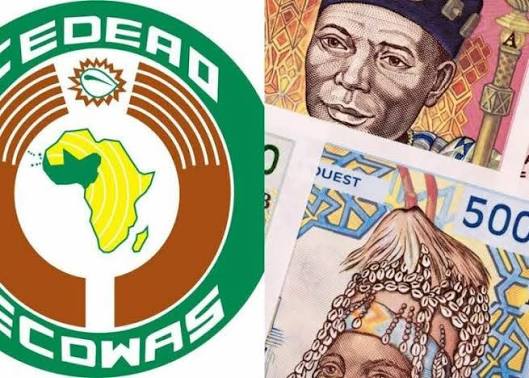
The Economic Community of West African States has fixed 2027 as the target year for introducing its long-awaited single currency, the ECO, but member nations must first satisfy a set of strict economic convergence criteria that have repeatedly delayed the project since its initial conception more than two decades ago.
The regional bloc’s latest timeline represents another attempt to breathe life into a currency initiative that has faced multiple postponements, most recently in 2020 when the COVID-19 pandemic disrupted fiscal planning across the region. ECOWAS leaders have maintained that the ECO would deepen regional trade, eliminate currency exchange costs among member states, and strengthen the bloc’s collective bargaining power in global markets.
For Nigerian businesses and travellers, the shift to a common currency could eventually mean an end to the constant need to convert naira when trading with neighbouring countries like Ghana, Benin Republic, or Côte d’Ivoire. Cross-border traders, many of whom operate informally, have long complained that currency volatility and exchange rate spreads eat into their margins.
Brandspur Banking News Desk understands that the convergence criteria include maintaining single-digit inflation, keeping fiscal deficits below a specified threshold of gross domestic product, and ensuring central bank financing of government budgets stays within prescribed limits. Other conditions cover gross external reserves and exchange rate stability.
The challenge lies in the divergent economic realities across the 15 member states. Nigeria, the bloc’s largest economy, has struggled with double-digit inflation and currency depreciation in recent years. Ghana faced a severe debt crisis that forced it to seek International Monetary Fund support in 2022. Smaller economies like Guinea-Bissau and Sierra Leone operate under vastly different fiscal constraints.
The ECO project dates back to 2000, when ECOWAS first announced plans for a single currency. The initial launch date was set for 2003, then moved to 2005, 2010, 2014, 2020, and now 2027. Each postponement has raised questions about whether the political will exists to match the technical ambition.
The West African Monetary Zone, comprising Nigeria, Ghana, Sierra Leone, Gambia, Liberia, and Guinea, was created to align with the existing West African Economic and Monetary Union, which already uses the CFA franc. The broader vision involves merging both zones into a single currency area.
Economists have pointed out that a successful currency union requires not just meeting numerical targets but also harmonising monetary policy frameworks, building shared payment infrastructure, and establishing credible regional institutions. Without these, the ECO risks becoming a currency in name only, vulnerable to the same pressures that have undermined other regional currency experiments.
The 2027 target gives member states roughly two years to close significant gaps in their economic fundamentals. Whether political cycles, external shocks, and the sheer complexity of coordination across 15 nations will allow that timeline to hold remains an open question.
