




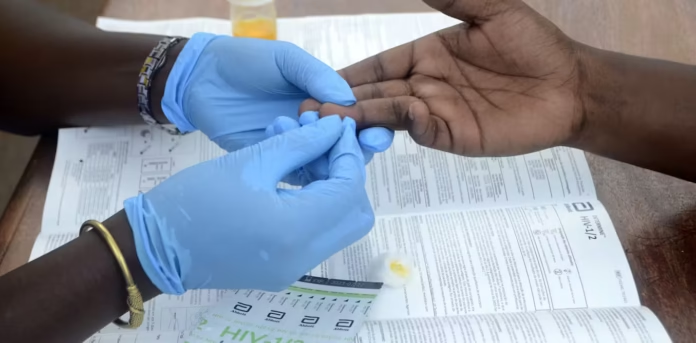
Nigeria’s HIV response continues to face a difficult challenge: while national efforts have expanded testing and treatment, certain groups remain disproportionately exposed to the virus, raising fresh concerns about prevention, access to care and the risks surrounding unprotected sexual contact and occupational exposure.
The concern is particularly significant among sex workers, who have consistently recorded HIV prevalence far above the national average. Data from the National Agency for the Control of AIDS shows that female sex workers recorded a 15.5 per cent HIV prevalence in the 2020 Integrated Biological and Behavioural Surveillance Survey, compared with about 1.4 per cent among adults aged 15 to 64 in the general population.
Brandspur Health News reports that the latest concern surrounding HIV infections among people involved in transactional sex should be viewed against this wider national picture. Although reports of increasing infections within a particular network require independent confirmation before they can be described as a confirmed surge, the underlying vulnerability of sex workers is already documented in Nigeria’s HIV data.
NACA’s 2024 annual HIV programme review found that 1,029,985 people from key populations were tested for HIV during the year, with 26,051 testing positive. The agency recorded a 15.5 per cent prevalence among female sex workers, alongside 25 per cent among men who have sex with men, 10.9 per cent among people who inject drugs and 28.8 per cent among transgender people.
The figures underline why prevention among key populations remains important to Nigeria’s wider HIV response. NACA’s national strategic plan estimates that the country had about 663,085 sex workers across the 20 states for which population estimates were available by the end of 2022. It also identified key populations as carrying a disproportionate HIV burden compared with the general population.
The risk, however, is not limited to sexual networks.
Healthcare workers can also encounter HIV occupationally when exposed to infected blood or body fluids. A 2020 study published in BMC Public Health examined 337 healthcare providers working at prevention of mother-to-child transmission facilities in Port Harcourt and found that 45.4 per cent reported occupational exposure to HIV in the preceding 12 months. The researchers recorded exposure through potentially infectious body fluids and needle-stick injuries among the reported routes.
The Port Harcourt study also found important gaps in workplace protection. While 77.7 per cent of the healthcare workers said personal protective equipment was available at their facilities, only 55.8 per cent reported that post-exposure prophylaxis was available. Just 54.3 per cent said they had access to PEP, while 38.9 per cent reported that their facility had no system for reporting occupational exposure.
The findings are significant because HIV exposure is not confined to deliberate risk-taking. Healthcare workers can be exposed through accidental needle-stick injuries, cuts or contact between potentially infectious body fluids and broken skin or mucous membranes. The Port Harcourt researchers consequently called for stronger infection prevention training, protective equipment and post-exposure measures.
For people who have a possible recent exposure, time is critical. Post-exposure prophylaxis, or PEP, is medication used after a potential HIV exposure and should be started as soon as possible, with guidance stating that it should begin within 72 hours. PEP can be considered after sexual exposure as well as certain occupational exposures.
Nigeria’s challenge therefore goes beyond simply counting HIV cases. Prevention also depends on whether people can obtain reliable information, test regularly, access condoms and other prevention services, and receive treatment quickly when they test positive or are exposed.
The national data show that progress has been made, but they also reveal where the pressure points remain. NACA has continued to identify sex workers and other key populations as important groups for targeted HIV prevention, testing and treatment services.
For the wider Nigerian public, the lesson is straightforward: HIV cannot be tackled effectively through fear, rumours or stigma. A suspected increase in infections in any community needs proper testing and epidemiological investigation, while individuals who may have been exposed need prompt access to confidential medical care.
With about 1.9 million people estimated to be living with HIV in Nigeria, the continuing response requires both prevention and treatment, alongside measures that protect people from avoidable exposure and ensure those at risk are not pushed further away from healthcare services.
